
Publications
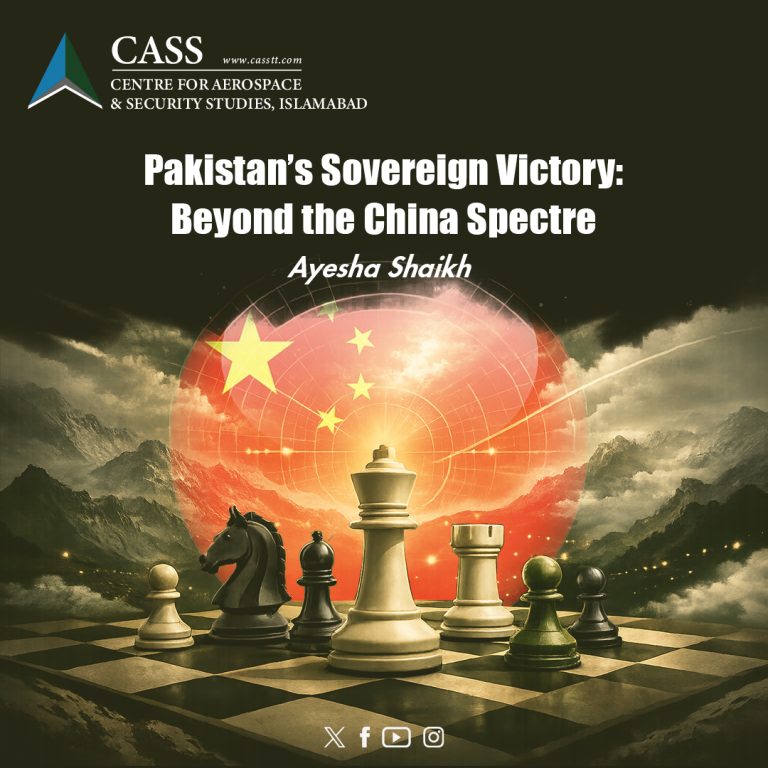
Pakistan’s Sovereign Victory: Beyond the China Spectre
In an annual bid to review U.S.-China relations, the U.S.-China Economic and Security Review Commission’s (USCC) report for the year 2024-25 has overplayed the role of China in the Indo-Pak conflict of May 2025 to play down Pakistan’s Sovereign victory.
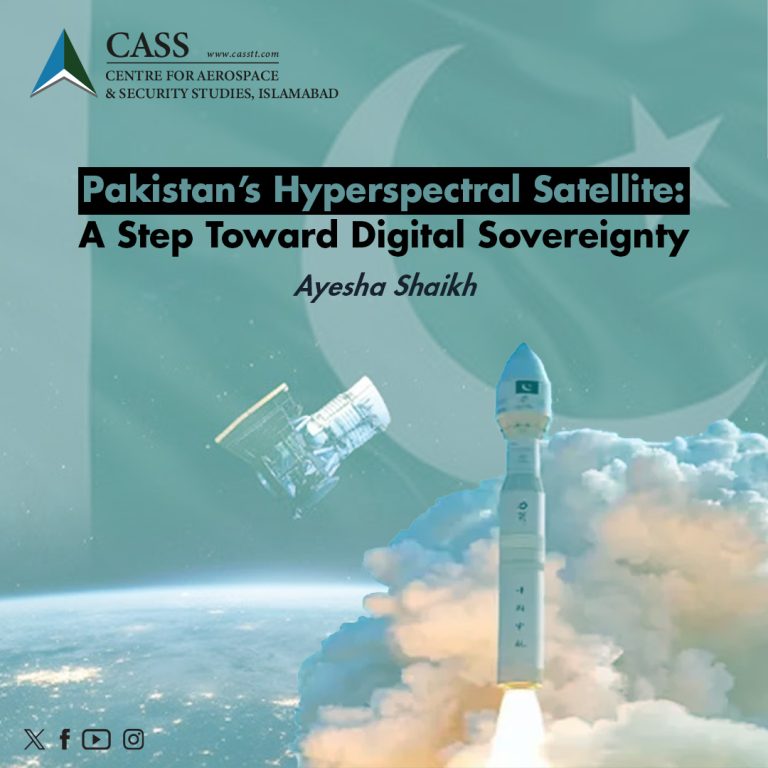
Pakistan’s Hyperspectral Satellite: A Step Toward Digital Sovereignty
Humanity’s expedition towards stars is inevitable. According to the organic state theory, states have a tendency to expand and occupy the available space, much like organic beings. Astropolitik has proved the same in the past few decades, as states have started expanding towards the cosmos.
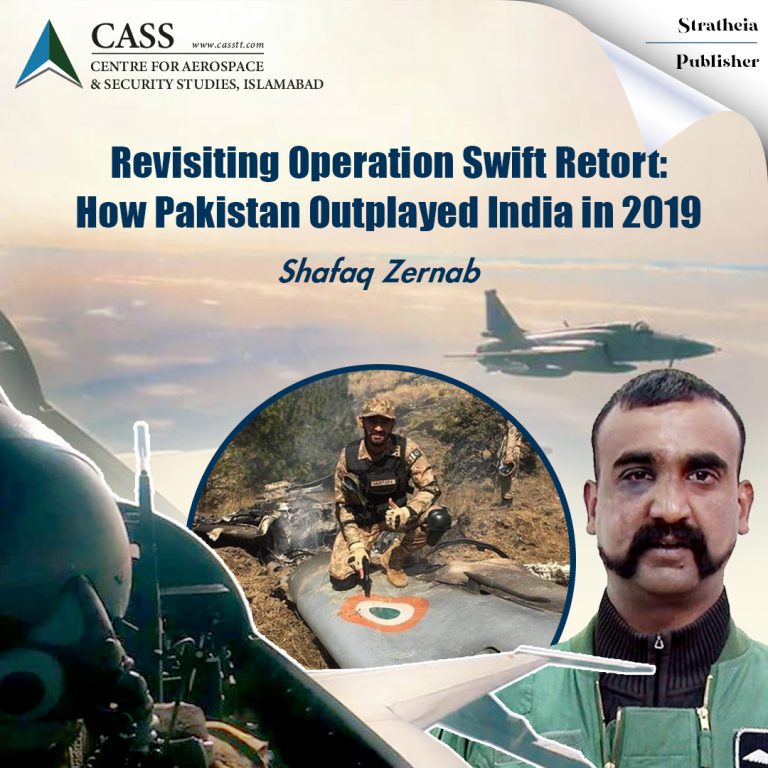
Revisiting Operation Swift Retort: How Pakistan Outplayed India in 2019
The crisis of February 2019 was far more than a transient border skirmish; it was a fundamental clash of two divergent conceptions of strategic thought under a nuclear overhang. Indian objectives were clear: to win the election and try to create space for punitive actions for bigger aims under the nuclear threshold with the pretext of labelling Pakistan as a terrorist-harbouring state.
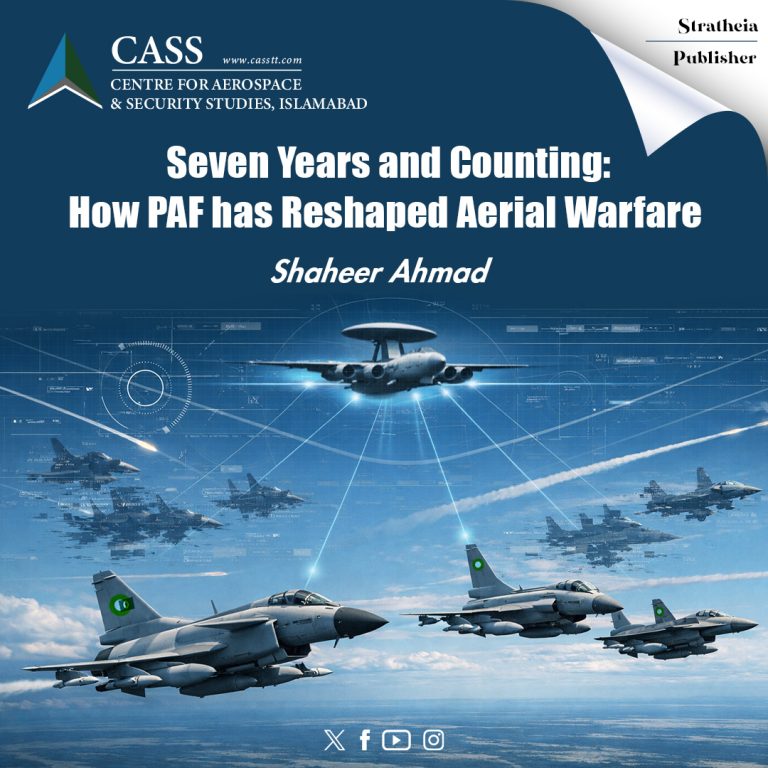
Seven Years and Counting: How PAF has Reshaped Aerial Warfare
‘What all could have happened if we had Rafale?’ This statement by Indian Prime Minister Narendra Modi surfaced after the 2019 India-Pakistan aerial showdown. The Indian Air Force’s (IAF) failed airstrikes near Balakot met a swift broad daylight response by the Pakistan Air Force (PAF) under Operation Swift Retort.
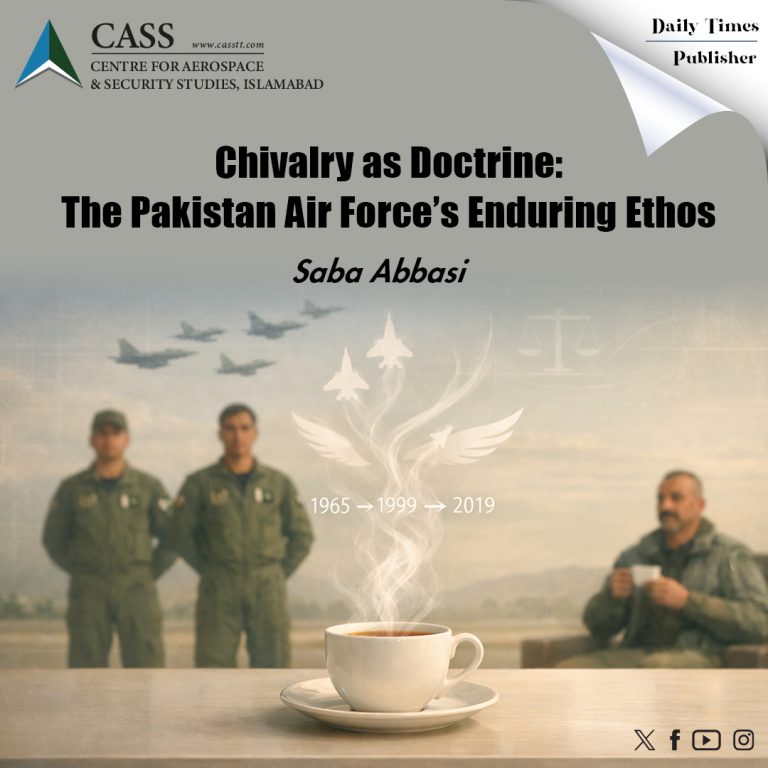
Chivalry as Doctrine: The Pakistan Air Force’s Enduring Ethos
Operation Swift Retort was the first time in decades since 1971 that the air forces of India and Pakistan were pitched against one another. It’s been seven years since the incident, but the memory of a captured Indian fighter pilot sipping tea on national television remains vivid to this day.
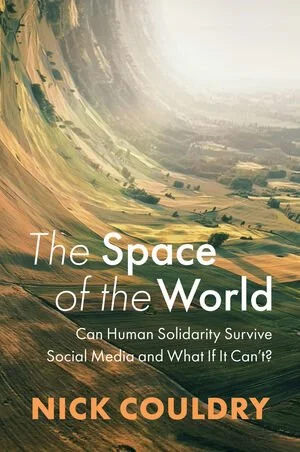
The Space of the World: Can Human Solidarity Survive Social Media and What If It Can’t?
Two to three decades ago, humanity committed an enormous mistake. We handed over the design of our social world to business, something we should have never done. Is it too early to rectify this mistake? Nick Couldry who is a professor of Media, Communications and Social Theory at the London School of Economics and Political Science, in his book, The Space of the World, asks the similar question.
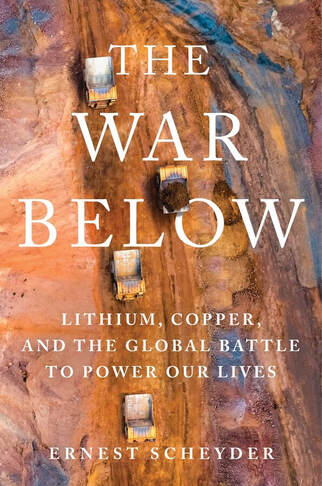
The War Below: Lithium, Copper, and the Global Battle to Power Our Lives
In today’s age of technology, marked by ever-increasing digitisation and a new shift towards green energy, the topic of critical and rare earth minerals has become increasingly prevalent. From fighter jet engines and submarines to MRI machines and computer screens, critical minerals such as lithium and cobalt form the backbone of contemporary technology.
