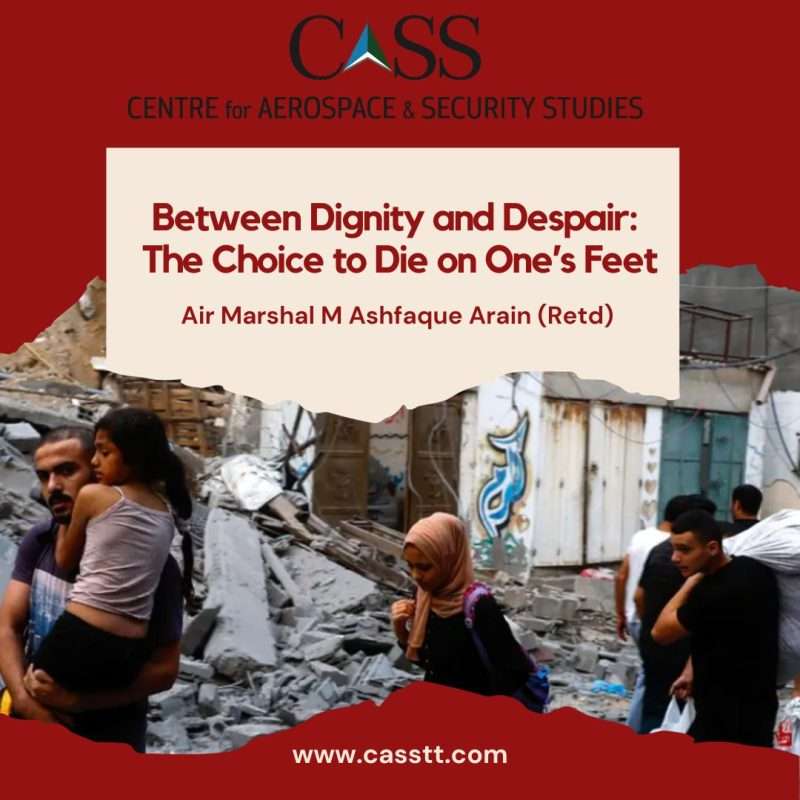
The attack by Hamas on the Israeli mainland on Saturday morning caught many by surprise, evoking memories of the unexpected assault by Egypt and Syria in 1973. The latest death toll stands at 576 Palestinians and at least 800 Israelis killed. Additionally, a large number of civilian and military personnel were taken hostage and shifted to Gaza. While the Hamas fighters also suffered casualties in combat, the death toll of civilians in Gaza is rapidly rising because of Israeli air raids. Regardless of the end result, the conflict has very serious consequences for the region as well as for the people of Gaza.
Gaza, situated in the North East of the Sinai peninsula, spans an area of roughly 360 square kilometres. Sharing an approximately 37km border with Israel, it is bordered by both Egypt and Israel. Movement of goods and people into Gaza is heavily regulated by these two nations. While Israel oversees the primary commercial crossings with rigorous inspections or restrictions on certain goods, Egypt controls the Rafah crossing, mainly facilitating the movement of people. Over the years, while many items have faced restrictions due to security concerns, a variety of goods and humanitarian aid have been permitted entry, subject to specific limitations.
In the face of the profound suffering endured by the Palestinian people, rather than urging the occupying nation to halt its oppressive actions, several countries, including the United States and United Kingdom, have labeled Hamas as a terrorist organisation. Hamas leadership remains in the crosshairs of Israel’s Intelligence Based Operations (IBOs), deepening the complexities of the situation.
It is, therefore, surprising to see what Hamas has achieved under the strict watch of Israeli forces and intelligence agencies in a very small territory such as Gaza. It was able to make large-scale preparations and amass and store equipment and ammunition while maintaining secrecy of its plans. The collection of a large number of rockets, rocket launchers, paragliders, and weapons, therefore, not only indicates a failure of Israeli intelligence but also a failure of the intelligence agencies of many of its allies and supporters, including the US.
The Hamas offensive showcased not just meticulous planning but also an unparalleled level of sophistication, scale, and coordination. This operation caught the Israeli forces off guard, challenging the perceived invincibility of Israel’s renowned ‘Iron Dome’ air defence system. Hamas executed strikes at nearly two dozen locations, venturing as far as 15 miles into Israeli territory. Their ability to overpower Israeli border troops, taking almost 100 hostages back to Gaza through what was deemed an ‘impenetrable’ barrier, underscores glaring vulnerabilities in Israel’s military apparatus. This incident raises significant questions about the professional competence of the Israeli army and challenges long-standing narratives about their invincibility.
Such a massive security failure can partly be attributed to the politics of division in Israel. Prime Minister Benjamin Netanya’s push against the judiciary has fractured both, Israeli society and the military. His emphasis on diminishing the oversight of the Israeli Supreme Court over its government, combined with the utilisation of military and intelligence agencies for domestic politics, relegated national defence to a secondary priority. This diminished attention and societal divisions have led to a significant setback for both the Israeli government and its defence forces. In a bid to counteract this humiliation and potentially save face in forthcoming investigations post-conflict, it is highly probable that the Israeli government will deploy maximum force against Hamas (the ‘total blockade’ of Gaza being one such extreme measure). Regrettably, it is the civilian population that is likely to bear the brunt of this retaliation.
The Israel-Hamas conflict will also have many regional and extra-regional ramifications. The conflict has dealt a serious blow to the Israel-Saudi Arabia rapprochement, which is likely to go into cold storage, at least for the time being. While the conflict will not affect India’s bilateral trade with regional countries, it will certainly impact the recently proposed India-Middle East-Europe Economic Corridor. If the conflict prolongs, it will seriously impact Ukraine’s war effort as similar weapons from the same benefactors would be required by Israel as well. Additionally, a prolonged conflict may also draw in regional countries in one form or the other.
While many Western countries have condemned Hamas for its action, for a long time, they failed to take note of the brutalities of the Israeli forces. Support from Western countries has made Israel violate all United Nations (UN) resolutions and international norms with impunity. With this attitude, regardless of the use of force, such conflicts will continue to erupt, making lives of both, the Palestinian and Israeli people difficult. It is, therefore, time for the regional countries as well as influential global leaders to exert their influence to contain the conflict and save the lives of the people of Gaza. To bring enduring peace to the region, they must help find a solution in accordance with the UN resolutions.
Undoubtedly, orchestrating such a meticulously coordinated attack signifies an unwavering determination from a populace fully aware of the imminent, tragic repercussions. Their decision, steeped in the agonising reality of facing intensified hardships, speaks volumes for their resilience.
The residents of Gaza have endured unyielding brutality and suffocation for an extended period. This latest episode is a testament to their indomitable spirit and resolve. History reminds us repeatedly: when pushed to the edge, even the most subjugated will invariably choose to ‘die on their feet rather than live on their knees’.
The author is a retired Air Marshal of the PAF who served as Pakistan’s Air Advisor at New Delhi from 2002-2006, presently working as Director Technologies and International Coordination at Centre for Aerospace & Security Studies, Islamabad, Pakistan. The article was first published in The Nation. He can be reached at [email protected]
Design Credit: Mysha Dua Salman