Zahra Niazi

Research Associate


Zahra Niazi

Professional Experience

Zahra Niazi is a Research Associate at the Centre for Aerospace & Security Studies (CASS), Islamabad, Pakistan. Her research interests span Sustainable Development, Peace and Development, and Development Economics. She has contributed to high-impact journals, including in the Environment, Development and Sustainability. She holds a Master’s degree in Development Studies, with a specialisation in Peace, Conflict, and Development, from the National University of Sciences and Technology (NUST), Pakistan.

Publications

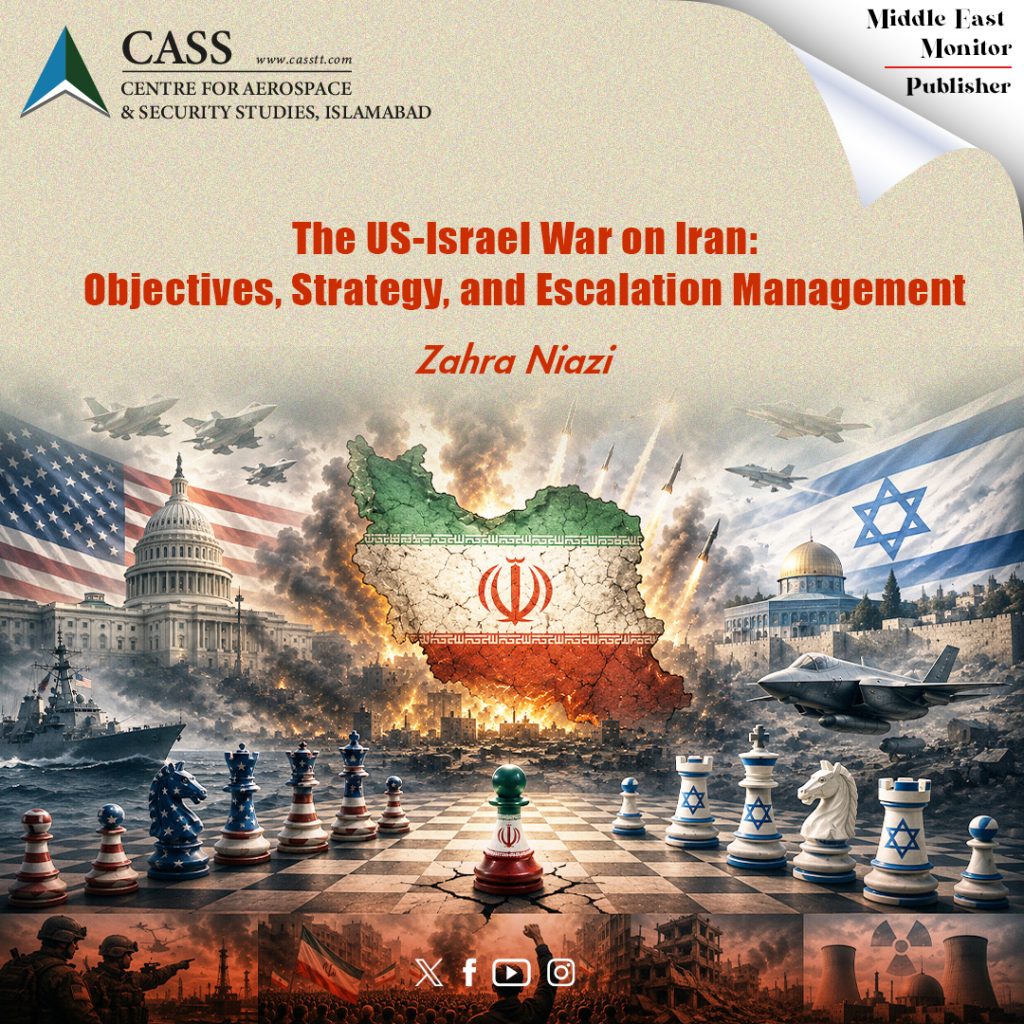
The US-Israel War on Iran: Objectives, Strategy, and Escalation Management

Zahra Niazi
‘States tend to overestimate themselves or the benefits and swiftness of war, and to underestimate their opponents’ capabilities, intentions, or the costs and duration of war.’ If anything, the 2026 war initiated by the United States and Israel against Iran shall be remembered in the annals of warfare among the most visible manifestations of this dynamic.
The war, immediately preceded by the January mass protests in Iran, did not represent a sudden rupture but rather the continuation of a 47-year-long confrontation and a more intense phase of the June 2025 war.
The US Secretary of War, Pete Hegseth, defined the war’s objectives as being laser-focused: to destroy Iran’s missile capabilities and its security infrastructure, while ensuring that it could never develop nuclear weapons. Beyond these stated objectives, among the priorities on the continuum also lay the objective of regime change, with both President Trump and Prime Minister Netanyahu explicitly calling on the Iranian population to take over the government at the outset of the war.
Read More »

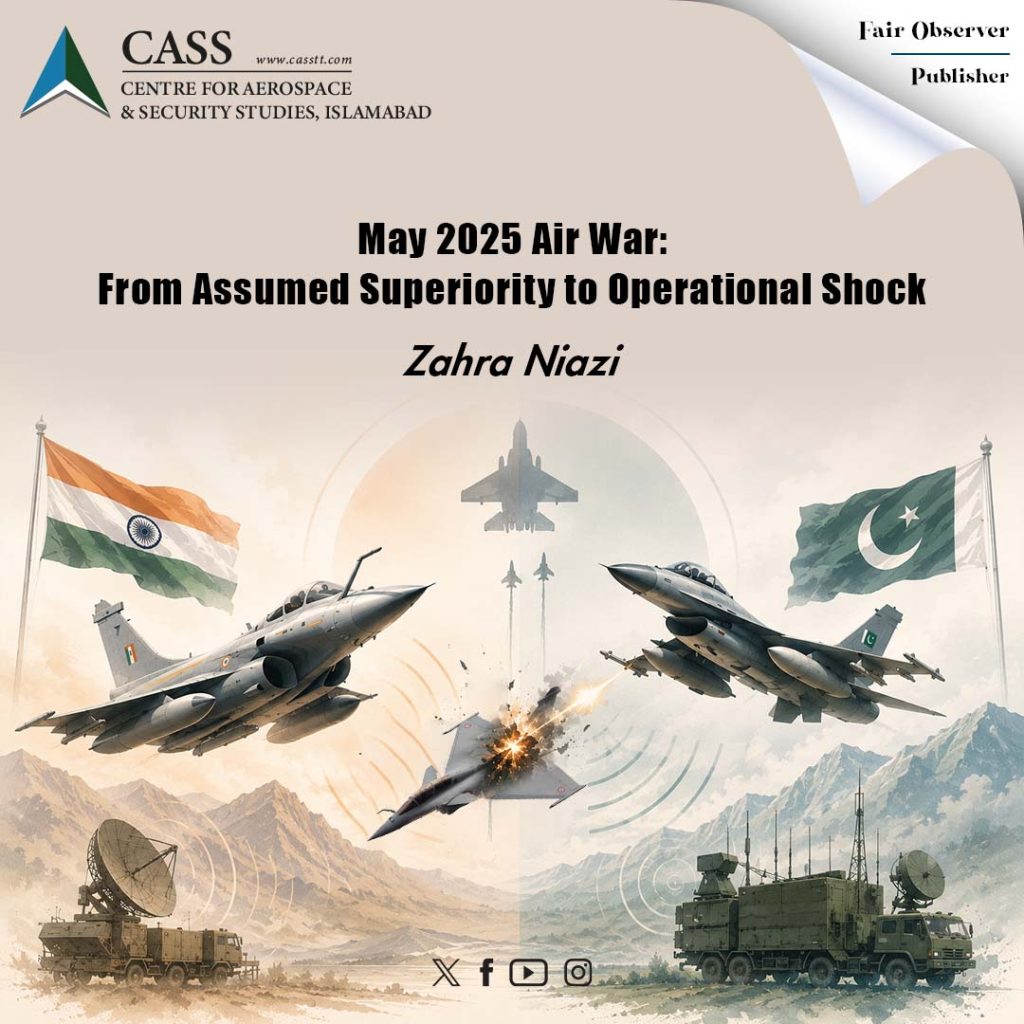
May 2025 Air War: From Assumed Superiority to Operational Shock

n the night of 6-7 May 2025, the Indian Air Force (IAF) faced an unprecedented setback. Pakistan Air Force (PAF)’s downing of seven Indian aircraft during a high-intensity aerial engagement that night, including four state-of-the-art Rafale fighters, regarded as the linchpin of India’s air power modernisation, was a game-changing event.

The outcome represented the breakdown of an assumption that had shaped Indian strategic thought in the period following the 2019 India-Pakistan crisis, that is, the belief that advanced fighter aircraft platforms could decisively shape future battlefield outcomes in India’s favour.

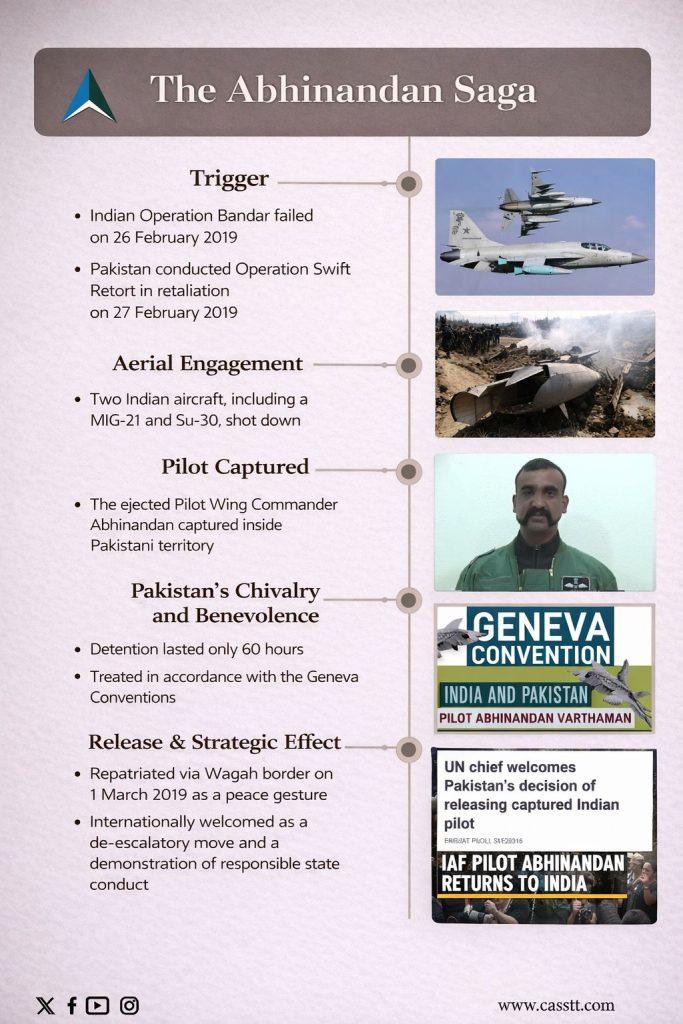
In 2019, PAF downed IAF’s Sukhoi-30MKI and a MiG-21 Bison in a retaliatory air operation following the Indian Balakot strike, with the MiG-21 crashing in Azad Jammu and Kashmir (AJK), resulting in the capture of its pilot, Wing Commander Abhinandan Varthaman. While Abhinandan was released 60 hours after his capture as a ‘peace gesture,’ the episode marked the first major shock for the IAF, which had been outmanoeuvred by a rival force despite possessing advantages in terms of fleet size, budgetary resources, and force depth.  

The lesson was thus unmistakable: conventional military superiority alone cannot guarantee battlefield success.

Rather than internalising this implication, the IAF, aligning with the government’s position, underplayed the losses while perpetuating the narrative that the acquisition of more advanced platforms can shape future battlefield outcomes in India’s favour. The then Chief of Air Staff, Air Chief Marshal BS Dhanoa,

Read More »

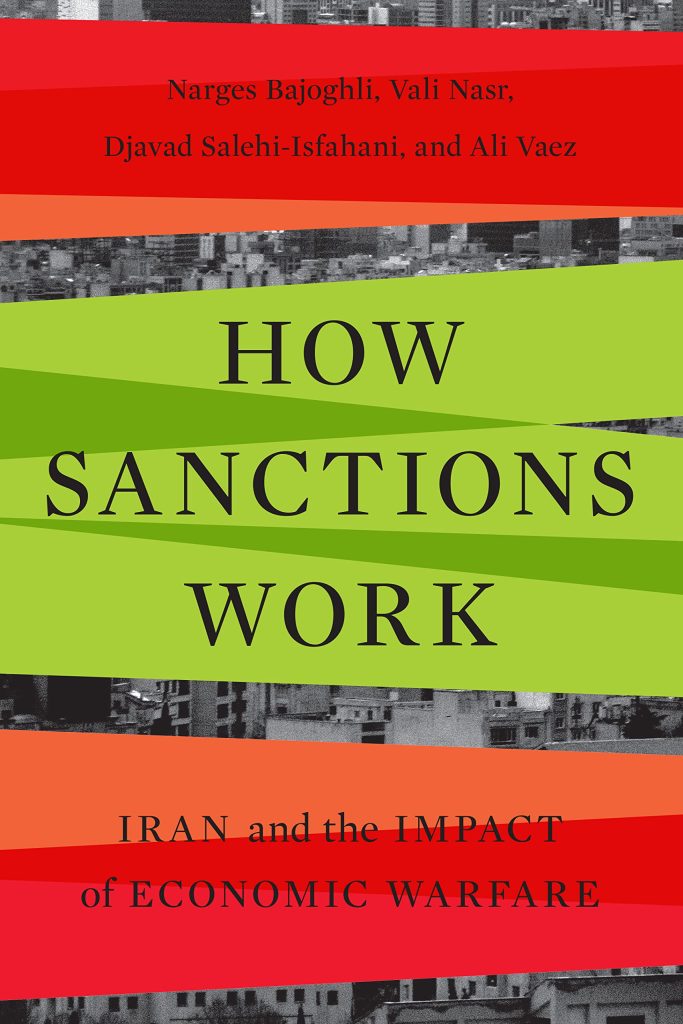
How Sanctions Work: Iran and the Impact of Economic Warfare

The ongoing war between the United States, Israel, and Iran has brought several critical questions to the fore: What lies at the root of the grievances that triggered a protest movement in Iran earlier this year, exploited by the US and Israel? How widespread are the sentiments of resentment towards the regime among the Iranian population? How did Iranian society not collapse, and what prevented the sanctions from incapacitating the Iranian economy, thereby preserving Tehran’s ability to resist today?
How Sanctions Work: Iran and the Impact of Economic Warfare effectively answers these questions from different angles. It is written

Read More »

How Sanctions Work: Iran and the Impact of Economic Warfare

The ongoing war between the United States, Israel, and Iran has brought several critical questions to the fore: What lies at the root of the grievances that triggered a protest movement in Iran earlier this year, exploited by the US and Israel? How widespread are the sentiments of resentment towards the regime among the Iranian population? How did Iranian society not collapse, and what prevented the sanctions from incapacitating the Iranian economy, thereby preserving Tehran’s ability to resist today?
How Sanctions Work: Iran and the Impact of Economic Warfare effectively answers these questions from different angles. It is written by Narges Bajoghli – an anthropologist with expertise in media, power, and military dynamics, Vali Nasr – a political scientist

Read More »

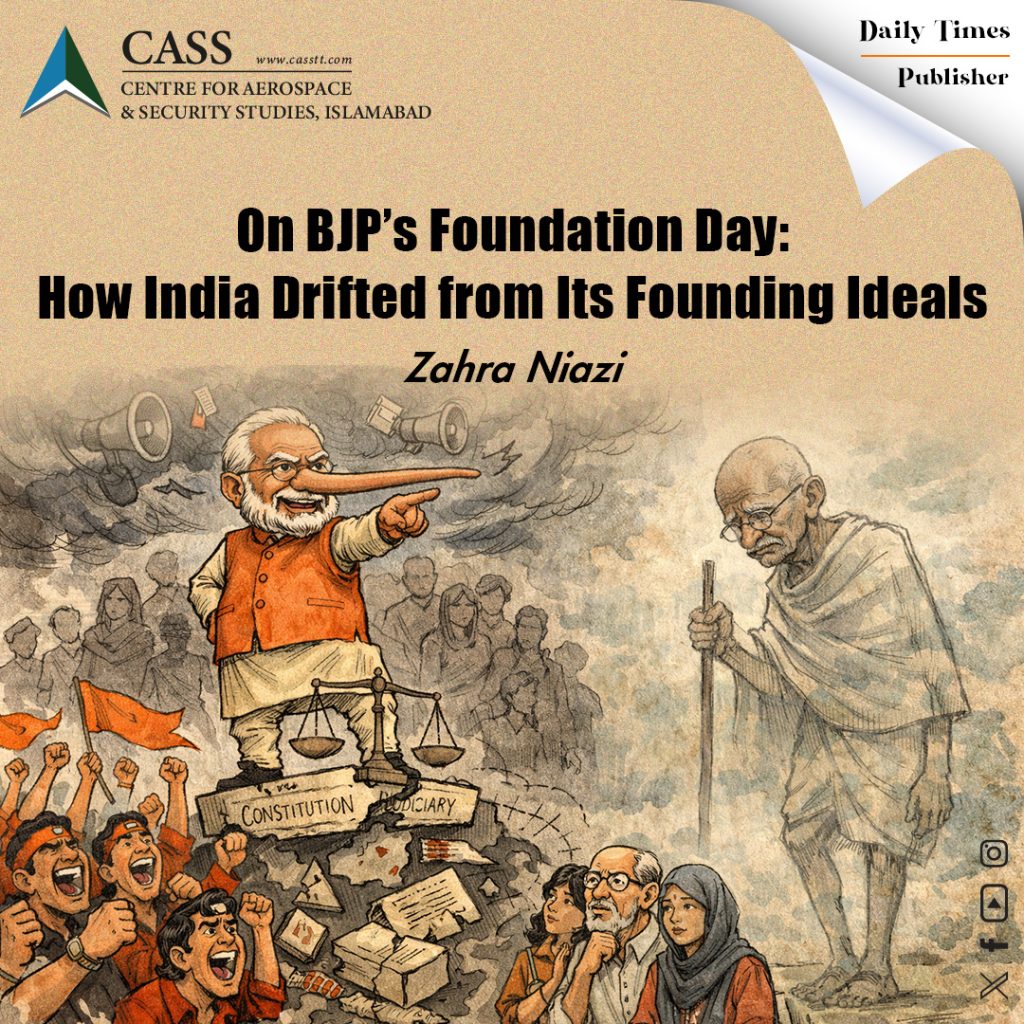
On BJP’s Foundation Day: How India Drifted from Its Founding Ideals

India projects itself as one of the most vibrant democracies in the world, but its rankings in global risk indices present a fundamentally different picture. Notably, in 2025, India ranked fourth among 168 countries at risk of future mass killings of civilians, behind Myanmar, Chad, and Sudan.
One is compelled to ask: How did a country, founded on the Gandhian principles of non-violence and the welfare of all, lose its moral direction? And how, if at all, can these ideals be rebuilt?
6 April, the foundation day of the Bharatiya Janata Party (BJP), offers

Read More »