The renowned US columnist Charley Reese once compiled a ‘Pop Quiz on Middle East’ which was published in ‘Orlando Sentinel’ – the leading newspaper of Orlando, Florida, on 8 February 1998.
The quiz served to further Reese’s objective which in his own words was to ‘stimulate, and if necessary, provoke people into thinking for themselves.
The Quiz consisted of a series of questions directed towards identifying the Middle Eastern country which had a history of committing blatant acts of violations of the United Nations Charter, its resolutions, international norms, treaties, and other acceptable standards of state conduct in the region – an obvious reference to Israel.
Reese then went on to expose the irony of international politics by noting that in spite of its perpetual record of bad behaviour, Israel continued to get a pat on the back, while another Middle Eastern country was routinely threatened for ‘not obeying’ UN resolution/s.
The Quiz was a satirical reminder to the reader about the harsh realities of international politics.
The column reflected the geopolitical situation of the time. Ironically, while the current environment may have changed, the larger framework of international relations which is shaped by the policy of extending a country’s power and influence through all possible means, including force remains intact.
This framework and the ensuing policies remain the chief determinant of which acts of aggression are to be condoned and which will be seen as violations of international law.
Charley Reese, whom Dr Eqbal Ahmad once called ‘a journalist guerrilla, who like all maquisards shoots from a less obvious, unexpected place’ is not alive today (he died in 2008), but in his spirit of ‘stimulating and provoking people into thinking for themselves’, it would be in order to write a sequel to his signature Quiz.
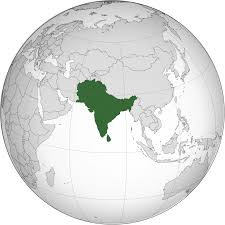
The obvious title in this case is ‘A Pop Quiz on South Asia.
’ Taking a lead from Reese’s piece, the pertinent questions would be as follows:
Q.Which South Asian country continues to sit on the oldest UNSC resolution (Resolution 48) which is still waiting to be implemented?
A.India.
Q.Which South Asian country has been forcibly annexing States and territories and altering its borders since its inception against international laws and norms?
A.India.
Q.The current Prime Minister of which South Asian was barred to travel to US for failing to stop anti-Muslim riots during his tenure as Chief Minister of Gujarat?
A.India.
Q: Which country initiated the race for nuclear weapons, ballistic, and cruise missiles in South Asia?
A.India.
Q.EU DisinfoLab, exposed which South Asian country for the dubious use of media, NGOs, fake identities, impersonation, resurrection of dead think-tanks, and even dead people to malign Pakistan?
A.India.
Q.The President and Founder of Genocide Watch identified which country in South Asia where the early warning signs of genocide are present, with a special mention of discriminatory legislation like Citizenship Amendment Act (CAA)?
A: India.
Q.According to Human Rights Watch, which South Asian country has legitimised discrimination against religious minorities and enabled violent Hindu nationalism?
A.India.
Q.A serving Naval officer of which South Asian country was apprehended while working undercover as a spy in Pakistan, for his involvement in espionage and sabotage activities?
A.India.
Q.Which South Asian country has been given a waiver to accommodate entry into the Nuclear Suppliers Group?
A.India.
Q.Which South Asian country has repeatedly been in the news for frequent incidents of loss and theft of nuclear and radioactive material?
A.India.
Q.Which South Asian country is a likely candidate for waiver in’ Countering America’s Adversaries Through Sanctions Act’ (CAATSA) after the delivery of Russian S-400 Surface to Air Missiles?
Q.Which South Asian country fired a nuclear-capable cruise missile into a neighbouring country, jeopardising air traffic and human lives on ground, and then covered it up with a casual and much delayed admission of technical malfunction?
A.India.
This Quiz is incomplete but long enough to determine that India, in spite of its poor record of fulfilling international obligations, pursuing state-sponsored policies of genocide, and growing religious and communal intolerance, continues to get away from international scrutiny because of the emerging geopolitical situation in the region.
This is a stark reminder that biased motives and perceived interests continue to override the larger considerations of peace and stability at the international level.
The resulting surge in instability and chaos, both in South Asia and globally is hardly surprising.
Air Marshal Farooq Habib (R) is presently working as Senior Director at the Centre for Aerospace & Security Studies (CASS), Islamabad, Pakistan. The article was first published in Pakistan Observer. He can be reached at [email protected]
Image Source: https://www.lankabusinessonline.com/category/industry/trade/page/10/