‘What we do in life, echoes in eternity.’
Maximus Meridius (fictional character)
Life is but a transit through this worldly impermanence that every soul has to bear through. Rumi very aptly described it when he said, ‘Every mortal will face death but only some will taste life.’ In our own life, we come across a few who affect us with their style, manners, beliefs and acts in a fashion that they leave a lasting trace behind. These personalities are mostly those who, in one form or the other, have led us in thought, belief or action. Military commanders do not usually fall in any such categories unless they have risen to the status of a leader. And there certainly remains a definite distinction between both. Military commanders, more often than naught, order and enforce their desired / planned course of action through military rules and regulations; while leaders (of all consequence) cause their devotees to follow, through their moral, intellectual, or professional ascendency. John Quincy Adams, the sixth President of the United States, described the effects of good leadership by saying, ‘If your actions inspire others to dream more, learn more, do more and become more, then you are a leader.’ Air Chief Marshal Farooq Feroze Khan (Late) was one such leader.
I personally did not know him as we only met on a couple of occasions, but those few instances left an everlasting influence on my perception of leadership qualities. The very first exposure was him as Base Commander Sargodha and us as second-termers in PAF College, Sargodha. We, as young cadets, had witnessed a disturbing accident – a fighter plane crash at the base. When he came to know about the tragedy which we had been exposed to, he personally came to PAF College and logically briefed us about the realities, expectations, responsibilities and probabilities in life that we were about to embark upon. It was the impact of discourse, his convincing belief in destiny and the greatness of our purpose that most of us remained determined to continue the course that we had chartered for ourselves.
‘A true leader has the confidence to stand alone, the courage to make tough decisions, and the compassion to listen to the needs of others. He does not set out to be a leader, but becomes one by the equality of his actions and the integrity of his intent. (Douglas MacArthur)
My second exposure took place at the time when ACM Farooq Feroze Khan, generally called FF Khan, had assumed the command of Pakistan Air Force (PAF) as Chief of the Air Staff (CAS) and I was a young Flying Officer, a nascent fighter pilot in a combat squadron. New CAS (normally known as Air Chief) customarily visit all under-command bases upon assumption of their command. Air Chief was coming to our base for his inauguration visit. Our Squadron Commander (Sqn Cdr) of that time (one of the finest human being, fighter pilot and a commander, who later embraced shahadat) planned to put forward a chronic HR problem that had given him several sleepless nights, to the Air Chief. One coveted young fighter pilot, a Sword of Honour holder, was facing the most terminal problem of his career. Not only was the promotion of that officer withheld but his officer-commission was also in peril. The problem was beyond local or regional command’s jurisdiction as the objection raised was not only quite bizarre, but also from the Ministry of Defence (MoD). Actually, upon completion of his time and qualifications, the officer’s case was forwarded to AHQ for promotion to Flight Lieutenant (Flt Lt) rank. The Financial Advisor to PAF, while going through the case, had pointed towards the extraordinarily young age of the officer and forwarded the case to MoD. MoD, on her part, dug out the entire history of the officer and objected to his pre-age induction in PAF College as well as pre-age commissioning as an officer in the PAF. It was directed that those who had recruited the subject officer in PAF College and those responsible for his commission should be punished and only after confirmation of that punishment, further disposal of officer be sought from the MoD. Unfortunately, all those people had retired and gone beyond organisational jurisdiction. Thus, the case for the officer’s career was hanging in limbo, giving dreadful distress to the concerned officer.
And there comes the Air Chief’s visit, along with all his Principal Staff Officers (PSOs). When FF Khan (CAS) arrived at the Squadron for a formal briefing and informal chat with the aircrew, he was informed of the problem in the aircrew room while he was sipping tea from a mug. There was no reaction, not even a frown on his forehead – he kept sipping tea. In the coolest manner, he asked his PSOs the details of this case. They briefed him about the case and the steps AHQ had taken towards its resolution. He was still drinking tea. At the end, he calmly said, ‘I want to bestow ranks on this officer before I leave this Squadron. Let’s work to make it done.’ It was the most silent nuclear detonation that we had ever heard. We saw the entire group of PSOs vanishing into the Squadron’s alley, looking for telephones (highly scarce in those days). For consecutively two hours, we snooped upon PSOs, frantically calling all channels and digging possibilities to address this sudden strike. Meanwhile, Air Chief had asked the Sqn Cdr to arrange the shoulder ranks for promotion of that officer. After hours of hectic activity, head of the Personnel Branch came forward with an interim solution along with a promise of the earliest resolution of the case. The ranks could be awarded by the Chief. FF Khan himself promoted the officer on-spot by putting his ranks on his shoulders. The threat to the officer’s career was over. This officer ultimately concluded his career from the PAF as an accomplished Air Vice Marshal.
The episodes of personal professionalism, bravery, farsightedness, devotion to assignment and responsibilities etc. are many in case of PAF Air Chiefs, but the gifts of personal touch, care and service to under-command are the qualities that raised ACM Farooq Feroze to a higher pedestal. It elevated the commander to the level of a leader. Now that he is with his most benevolent Creator, we, in and outside PAF, pray for his eternal peace and high place in Heaven, for his selfless leadership and unending humanity.
Air Vice Marshal Faheem Ullah Malik (Retd) is presently working as Director at the Centre for Aerospace & Security Studies (CASS), Islamabad, Pakistan. The article was first published in Dawn News Sunday Supplement. He can be reached at [email protected]
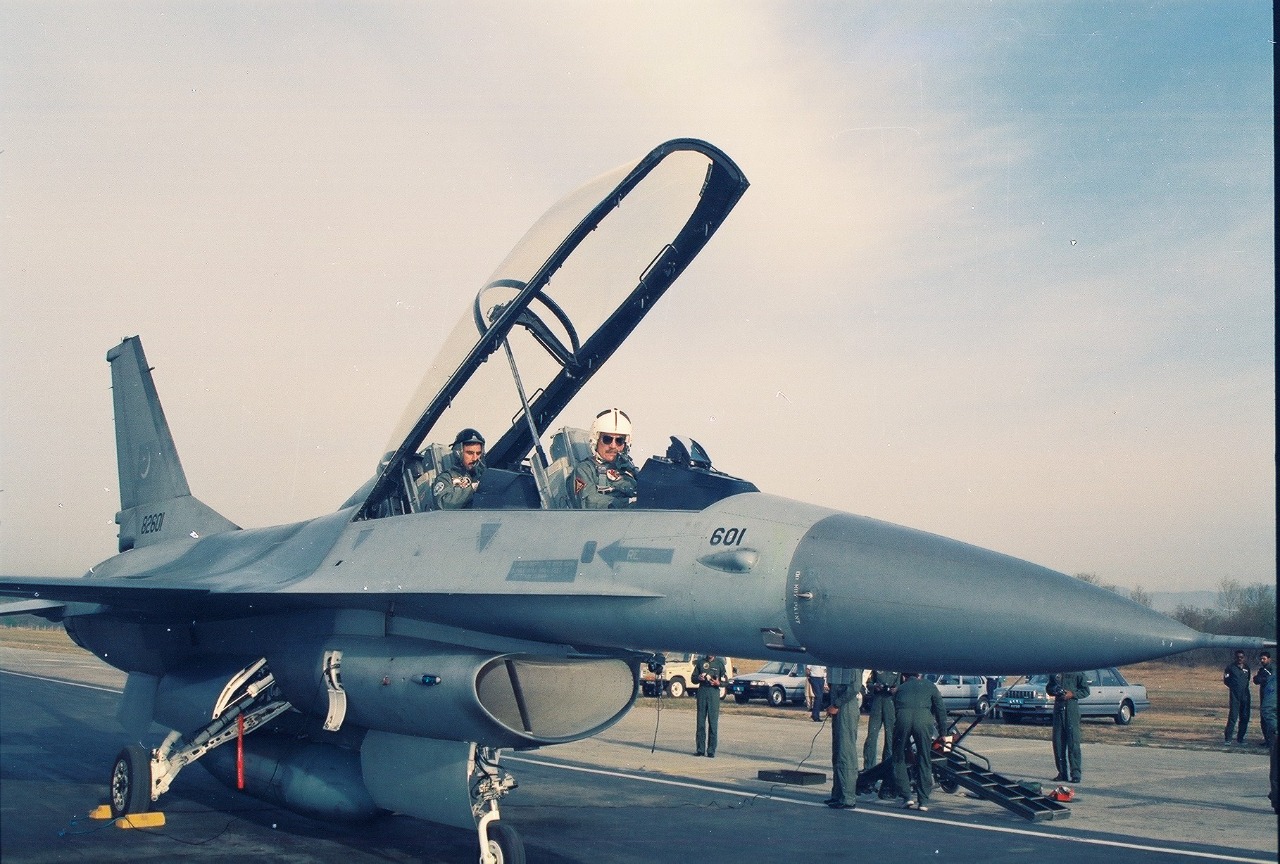
Image Source: PAF Archives