Share this event

Facebook
Twitter
LinkedIn

Objectives

  1. To discuss the political, diplomatic, and economic elements of the US-Pakistan relationship going forward
  2. To highlight the major domestic, regional, and global considerations shaping the US and Pakistani interests
  3. To share a Pakistani perspective on the changing contours of the bilateral relationship under the next administration.
  4. To sensitise the Pakistani diaspora in the U.S. about the issues critical to Pakistan’s future and seek their inputs in the conduct of diplomacy and advocacy.

Abstract

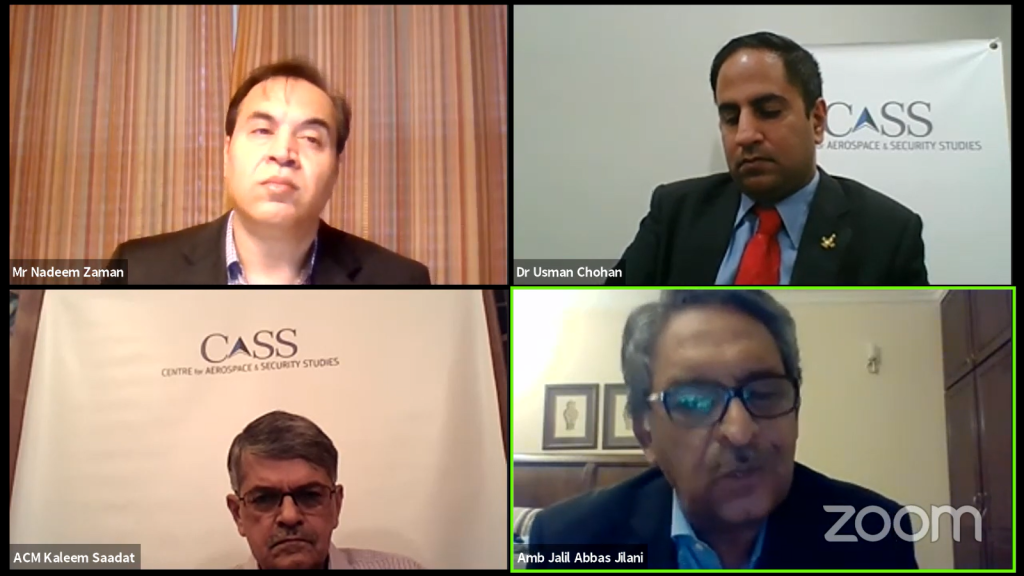
As the US elections approach, there is a need to take stock of US-Pakistan relations through the Pakistani perspective using three lenses: politics, diplomacy, and economics. Whether Democrats or Republicans hold the White House and Congress, there are many considerations that will determine the direction and magnitude of engagement between both countries. Some of these considerations are domestic, while others will be shaped by larger regional and global interests. In this talk, CASS directors Amb. Jalil Abbas Jilani and Dr. Usman W. Chohan will shed light on key factors that will influence the contours of US-Pakistan engagement. Issues of special importance will include:

  1. US-China Rivalry
  2. Sino-Indian tensions
  3. Stability in Afghanistan
  4. Coronavirus contagion
  5. US domestic polarization
  6. International bodies (FATF, IMF, etc.)
  7. CPEC Progress
  8. Pakistan’s economic fundamentals

Event Press Release

Other Events

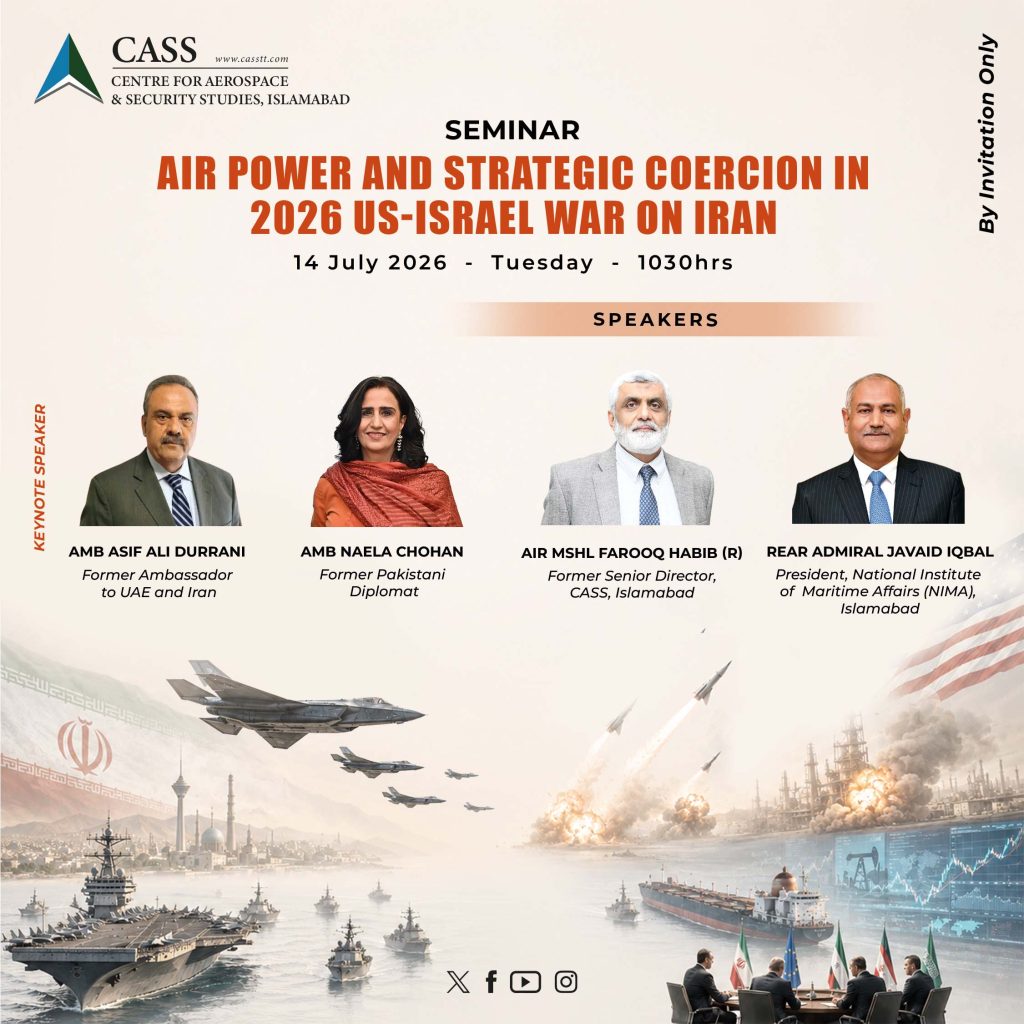
Air Power and Strategic Coercion in the 2026 US-Israel War on Iran

The 2026 U.S.-Israel war on Iran emerged as a defining security event in the Middle East, carrying significant military, political, economic, and geopolitical implications. The conflict did not occur in isolation but evolved from the unresolved tensions, competing strategic objectives, and fragile deterrence environment that persisted after the June 2025 Twelve-Day War. As regional rivalries intensified and diplomatic efforts failed to address core security concerns, the region witnessed a renewed cycle of escalation that culminated in large-scale hostilities. The conflict highlighted the growing role of air and missile power as instruments of strategic coercion.

Read More »

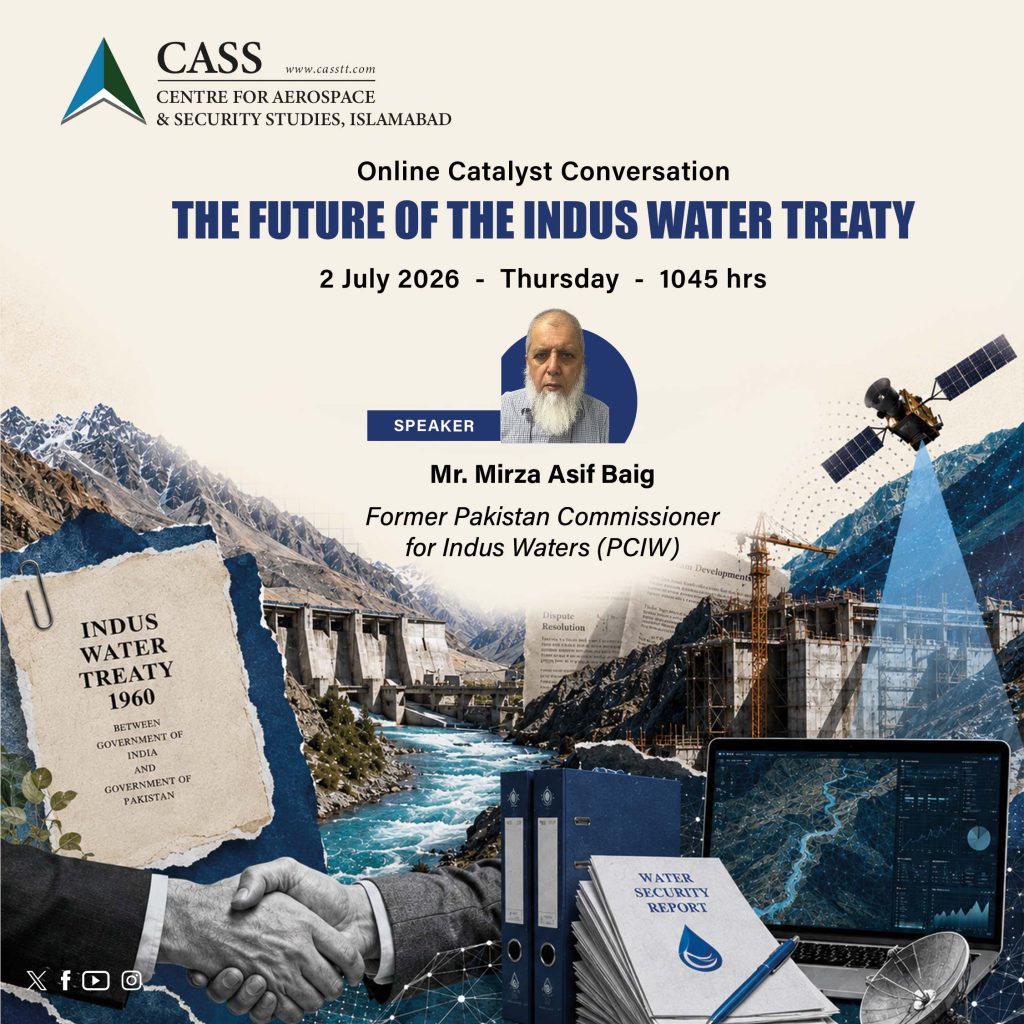
ONLINE CATALYST CONVERSATION THE FUTURE OF THE INDUS WATER TREATY

For more than six decades, the Indus Water Treaty (IWT), signed in 1960 between Pakistan and India, remained as one of the most enduring transboundary water-sharing agreements in the world. Despite multiple wars, political crises, and prolonged periods of bilateral hostility, the treaty largely continued to govern the allocation and management of the waters of the Indus BasinFor more than six decades, the Indus Water Treaty (IWT), signed in 1960 between Pakistan and India, remained as one of the most enduring transboundary water-sharing agreements in the world. Despite multiple wars, political crises, and prolonged periods of bilateral hostility, the treaty largely continued to govern the allocation and management of the waters of the Indus Basin

Read More »

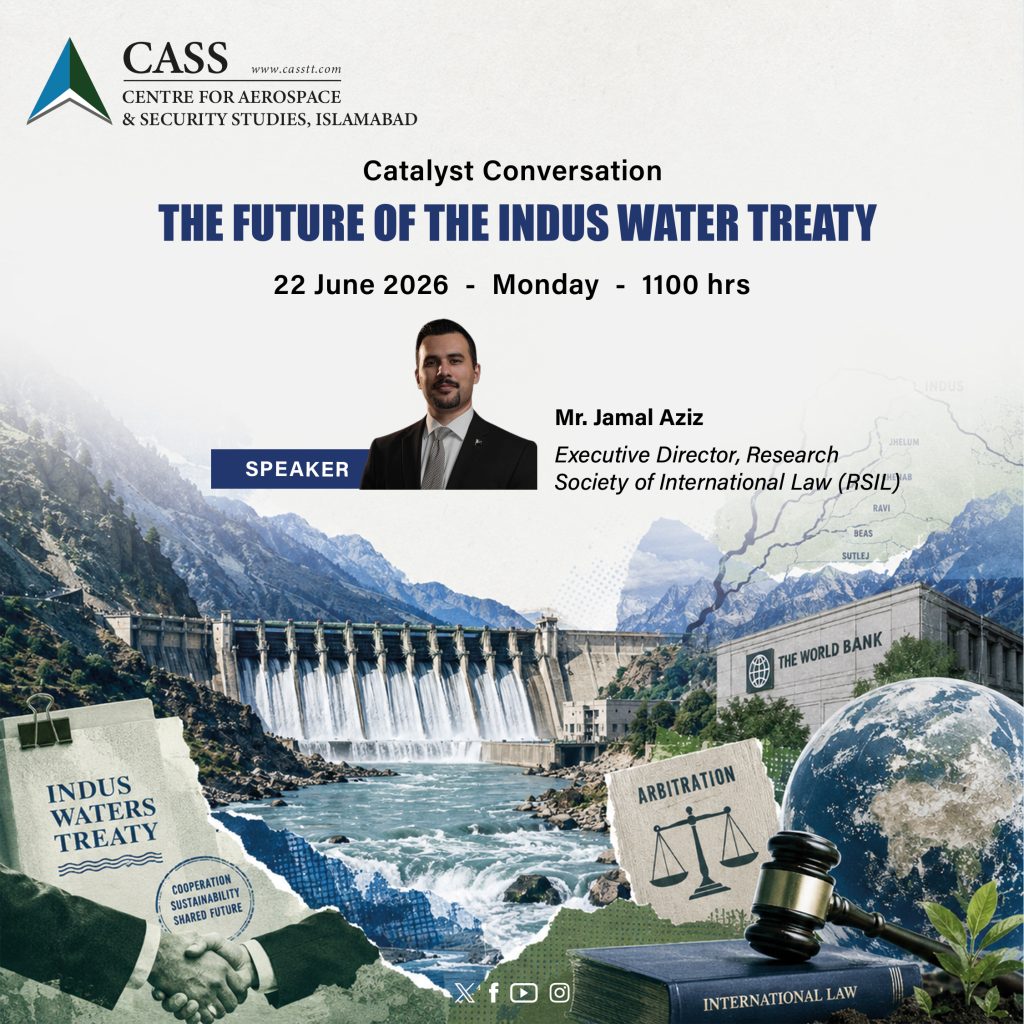
THE FUTURE OF THE INDUS WATER TREATY

For more than six decades, the Indus Water Treaty (IWT), signed in 1960 between Pakistan and India, remained as one of the most enduring transboundary water-sharing agreements in the world. Despite multiple wars, political crises, and prolonged periods of bilateral hostility, the treaty largely continued to govern the allocation and management of the waters of the Indus Basin

Read More »