Objectives
- To discuss the political, diplomatic, and economic elements of the US-Pakistan relationship going forward
- To highlight the major domestic, regional, and global considerations shaping the US and Pakistani interests
- To share a Pakistani perspective on the changing contours of the bilateral relationship under the next administration.
- To sensitise the Pakistani diaspora in the U.S. about the issues critical to Pakistan’s future and seek their inputs in the conduct of diplomacy and advocacy.
Abstract
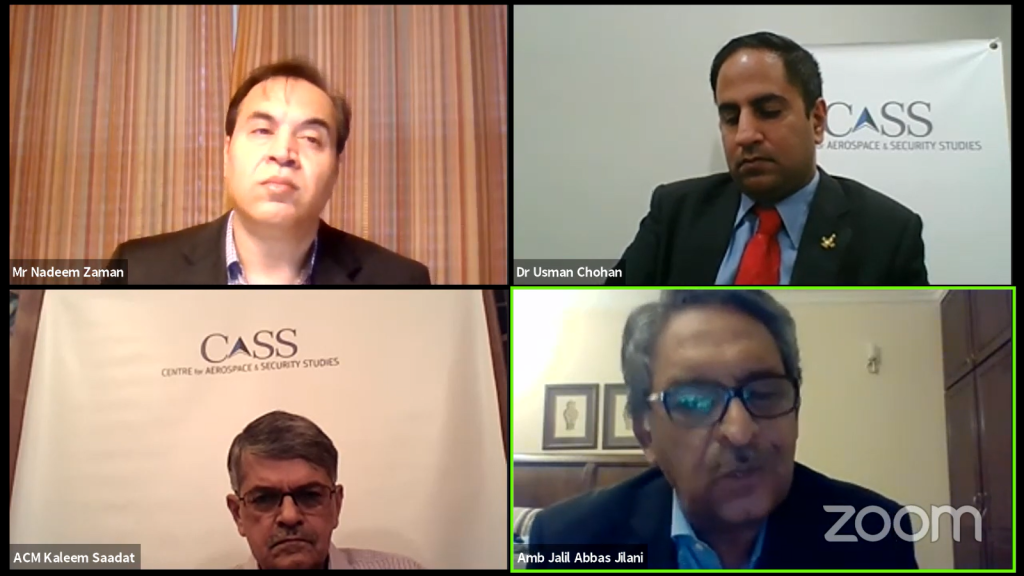
As the US elections approach, there is a need to take stock of US-Pakistan relations through the Pakistani perspective using three lenses: politics, diplomacy, and economics. Whether Democrats or Republicans hold the White House and Congress, there are many considerations that will determine the direction and magnitude of engagement between both countries. Some of these considerations are domestic, while others will be shaped by larger regional and global interests. In this talk, CASS directors Amb. Jalil Abbas Jilani and Dr. Usman W. Chohan will shed light on key factors that will influence the contours of US-Pakistan engagement. Issues of special importance will include:
- US-China Rivalry
- Sino-Indian tensions
- Stability in Afghanistan
- Coronavirus contagion
- US domestic polarization
- International bodies (FATF, IMF, etc.)
- CPEC Progress
- Pakistan’s economic fundamentals