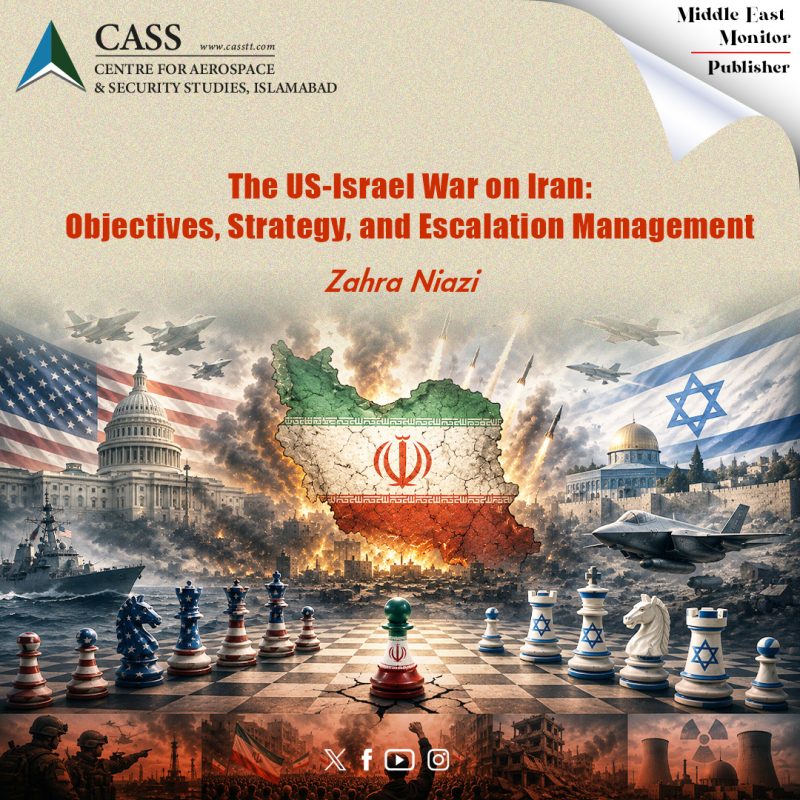
‘States tend to overestimate themselves or the benefits and swiftness of war, and to underestimate their opponents’ capabilities, intentions, or the costs and duration of war.’ If anything, the 2026 war initiated by the United States and Israel against Iran shall be remembered in the annals of warfare among the most visible manifestations of this dynamic.
The war, immediately preceded by the January mass protests in Iran, did not represent a sudden rupture but rather the continuation of a 47-year-long confrontation and a more intense phase of the June 2025 war.
The US Secretary of War, Pete Hegseth, defined the war’s objectives as being laser-focused: to destroy Iran’s missile capabilities and its security infrastructure, while ensuring that it could never develop nuclear weapons. Beyond these stated objectives, among the priorities on the continuum also lay the objective of regime change, with both President Trump and Prime Minister Netanyahu explicitly calling on the Iranian population to take over the government at the outset of the war.
According to an article published in The New York Times, which drew on extensive interviews conducted on the condition of anonymity, Mossad’s intelligence indicated that disillusioned Iranians would take to the streets and be better positioned, unlike before, to topple the government with the agency’s support. The expectation was premised on the idea that an intense bombing campaign would destabilise the regime and cripple the institutions that had earlier acted as counters to any uprising. At the same time, Netanyahu is said to have presented an idealistic plan to the American administration making them believe that Iran’s ballistic missile program could be destroyed within a matter of weeks and the regime weakened to the extent of being unable to retaliate meaningfully–a plan that was reportedly well-received by President Trump.
Consistent with this expectation of achieving a swift victory, the military strategy adopted was one of ‘shock-and-awe,’ involving massive, coordinated strikes on multiple targets, ranging from decapitating the leadership to destroying the command and control (C2) infrastructure, internal security institutions, ballistic missile and drone infrastructure, air defence systems, naval facilities, air bases, and nuclear infrastructure. This was followed by sustained high-tempo strikes, with many of the latter targets also increasingly involving civilian sites in clear violation of international law. Moreover, unlike in many traditional campaigns, cyber and electronic warfare operations played a prominent role in both the battlefield-shaping phase as well as during active war, aimed at jamming radar frequencies, generating false targets, disrupting C2 communications, and suppressing enemy air defences to amplify the effectiveness of kinetic operations.
Yet, even after a month of intense operations, before a fragile ceasefire was agreed upon on 8 April, there were no signs of large-scale internal uprising, and Washington’s own intelligence assessments concluded that the Iranian people had rallied behind the leadership and the regime remained stable, with Tehran still retaining the ability to respond meaningfully. At home, the Pentagon had already asked the White House to approve a funding request of more than USD 200 billion to present to Congress less than three weeks into the war, while anti-war protests had begun to erupt in the US.
But it was not a flaw in the military planning that shaped this outcome, but rather an inability of the decision-makers to reconcile with the realities of Iranian strategic thinking, influenced by its experiences during the Iran-Iraq War of the 1980s. Iran learned that victory against a conventionally superior adversary was defined less by battlefield success and more by the ability to endure and persist while imposing escalating costs on the adversary, particularly through asymmetric means. This would ultimately compel the adversary to disengage due to exhaustion. As a result, Iran, during the war and in the subsequent decades, expanded the requisite capabilities, including developing an indigenous arms industry and underground missile facilities. The Iranians also introduced a decentralised military architecture under its Mosaic defence doctrine to ensure operational continuity under conditions of leadership decapitation, expanded asymmetric naval capabilities, and invested in a regional network of allied groups across the Middle East, among other things. The latter also constituted the core pillar of Iran’s ‘forward defence’ doctrine, premised on confronting threats beyond its borders.
Iran’s strategy during the war to preserve its independence and sovereignty–its core objective–reflected the same strategic thinking of endurance and cost-imposition. The decentralised military architecture was immediately activated in response to the decapitation strikes. Rather than seeking immediate destruction, Iran began by targeting radar and early-warning systems, followed by strikes against air defence interceptors using low-cost drones and missiles. Meanwhile, it began disrupting traffic through the Strait of Hormuz and targeting the Gulf’s energy and other economic infrastructure to generate economic pressure. The pattern of infrastructure targeting, particularly in the Gulf, also reflected a strategy of escalation management, ensuring that costs were imposed while preventing a full-scale regional war, which was important for endurance. After degrading defensive systems to a degree, Iran switched to the use of more advanced missiles to increase impact, with its underground facilities ensuring that it had the capability to do so. In parallel, Hezbollah was already engaging Israel on an additional front, while Houthis continued to signal the intent to retaliate should the conflict escalate.
Alongside Iran’s resolve to outlast its adversaries, another factor the US and Israel failed to reconcile with was that externally waged wars more often feed into pro-regime sentiment rather than reinforce anti-regime sentiment. In addition, as in much of the Muslim world, the Iranian society also holds strong anti-Israeli sentiments, and rising up against the regime during or after the war would have been tantamount to siding with Israel.
Any further coercive military campaign waged now, months down the line, or years later is unlikely to coerce a resilient nation into submission or produce any different results. And whatever Washington achieves at the table after the war would involve things it may never have had to negotiate for had it not waged the war, and things it may have been able to secure Iranian agreement on, and perhaps on more favourable terms, without a war.
Zahra Niazi is a Research Associate at the Centre for Aerospace & Security Studies (CASS), Islamabad.The article was first published in Middle East Monitor. She can be reached at [email protected].