Share this event

Facebook
Twitter
LinkedIn

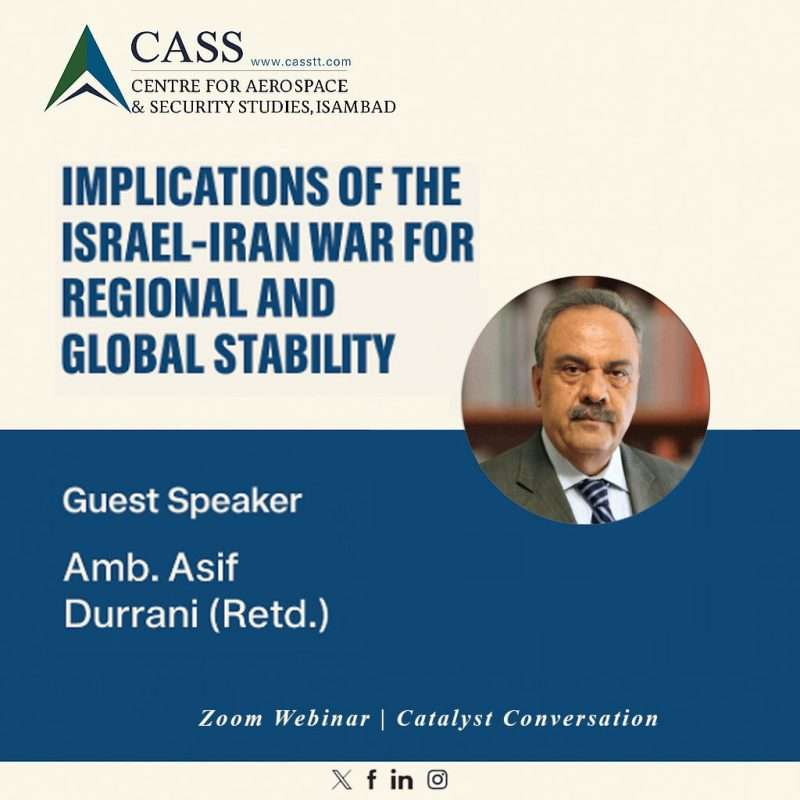
The recent outbreak of hostilities between Israel and Iran marks a significant escalation in an already volatile region. With Iran’s regional influence and Israel’s strategic alliances with Western powers, the war has the potential to spiral into a broader conflict.

For countries like Pakistan, situated at the crossroads of the Middle East and South Asia, the implications are both strategic and geopolitical. This talk aims to critically examine the strategic objectives of both Israel and Iran, assess the capabilities involved, and explore how the conflict could reshape regional alliances and challenge the credibility of international diplomatic institutions. Following questions would be addressed in this talk:

  1. What are Israel’s strategic objectives and possible endgame in its confrontation with Iran
  2. How capable is Iran in sustaining a direct conflict with Israel?
  3. How has Israel-Iran war impacted the effectiveness of existing international diplomatic frameworks and multilateral organizations?
  4. What lessons can South Asia learn from the rapid escalation between Israel and Iran?
  5. How can Pakistan position itself diplomatically in this conflict?
Other Events

ONLINE CATALYST CONVERSATION THE FUTURE OF THE INDUS WATER TREATY

For more than six decades, the Indus Water Treaty (IWT), signed in 1960 between Pakistan and India, remained as one of the most enduring transboundary water-sharing agreements in the world. Despite multiple wars, political crises, and prolonged periods of bilateral hostility, the treaty largely continued to govern the allocation and management of the waters of the Indus BasinFor more than six decades, the Indus Water Treaty (IWT), signed in 1960 between Pakistan and India, remained as one of the most enduring transboundary water-sharing agreements in the world. Despite multiple wars, political crises, and prolonged periods of bilateral hostility, the treaty largely continued to govern the allocation and management of the waters of the Indus Basin

Read More »

THE FUTURE OF THE INDUS WATER TREATY

For more than six decades, the Indus Water Treaty (IWT), signed in 1960 between Pakistan and India, remained as one of the most enduring transboundary water-sharing agreements in the world. Despite multiple wars, political crises, and prolonged periods of bilateral hostility, the treaty largely continued to govern the allocation and management of the waters of the Indus Basin

Read More »

Fiscal Survival or Economic Reform? Decoding Pakistan’s Budget Priorities

Pakistan’s annual budget is more than a fiscal document; it is a reflection of the country’s structural economic constraints, political choices, and shifting development priorities. The tension between fiscal survival and meaningful economic reform has become increasingly pronounced amid rising debt servicing obligations, limited fiscal space, and recurring dependence on external financing. In this context, budget-making often appears reactive—focused on stabilisation and compliance with short-term macroeconomic targets—rather than transformative, aimed at broad-based productivity, institutional reform, and sustainable growth.

Read More »