economy


Share this event

Facebook
Twitter
LinkedIn

Concept Note

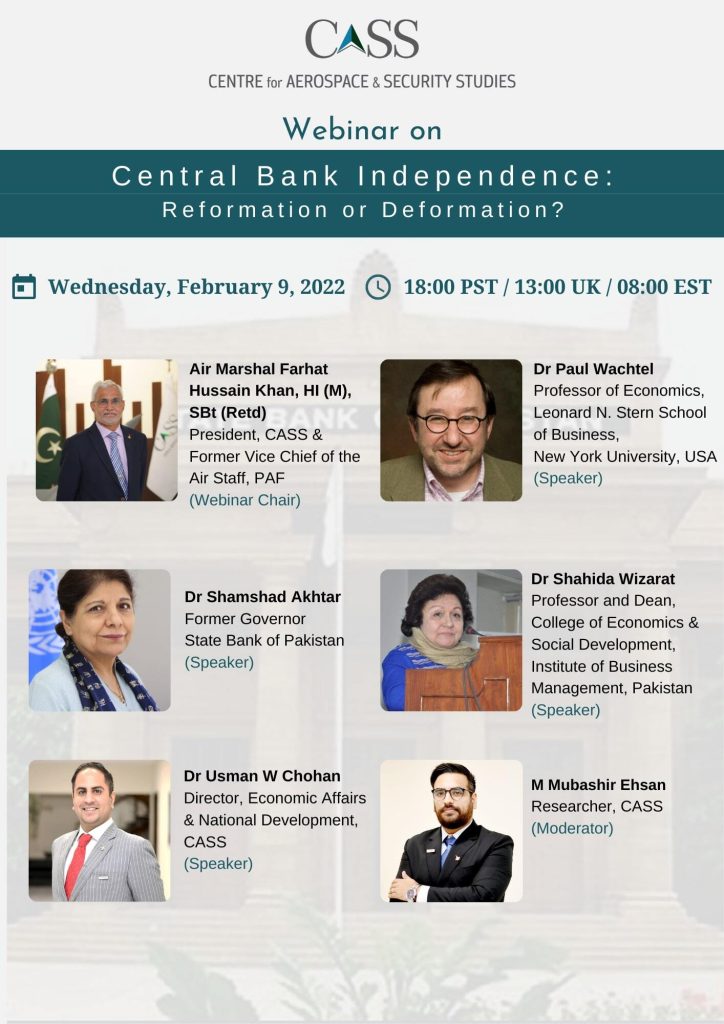
Central Bank Independence (CBI) has become an important issue in Pakistan’s contemporary economic context. Globally, this subject has been debated at length, particularly after the 2008 Global Financial crisis. Following a 40-year trend towards greater CBI, some countries are considering the reduction of such autonomy, while in Pakistan it is an external stipulation from the IMF to increase CBI. Therefore, it is important to understand the global evolution of the CBI debate, and assess both its merits and demerits across a wider canvas, before contextualizing it in Pakistan’s context and rendering judgments on its appropriateness for the country’s future economic trajectory. To inform our understanding of the complex issue at hand, we will be joined by eminent economists who share a profound understanding of CBI’s nuances at this webinar hosted by CASS.
Other Events

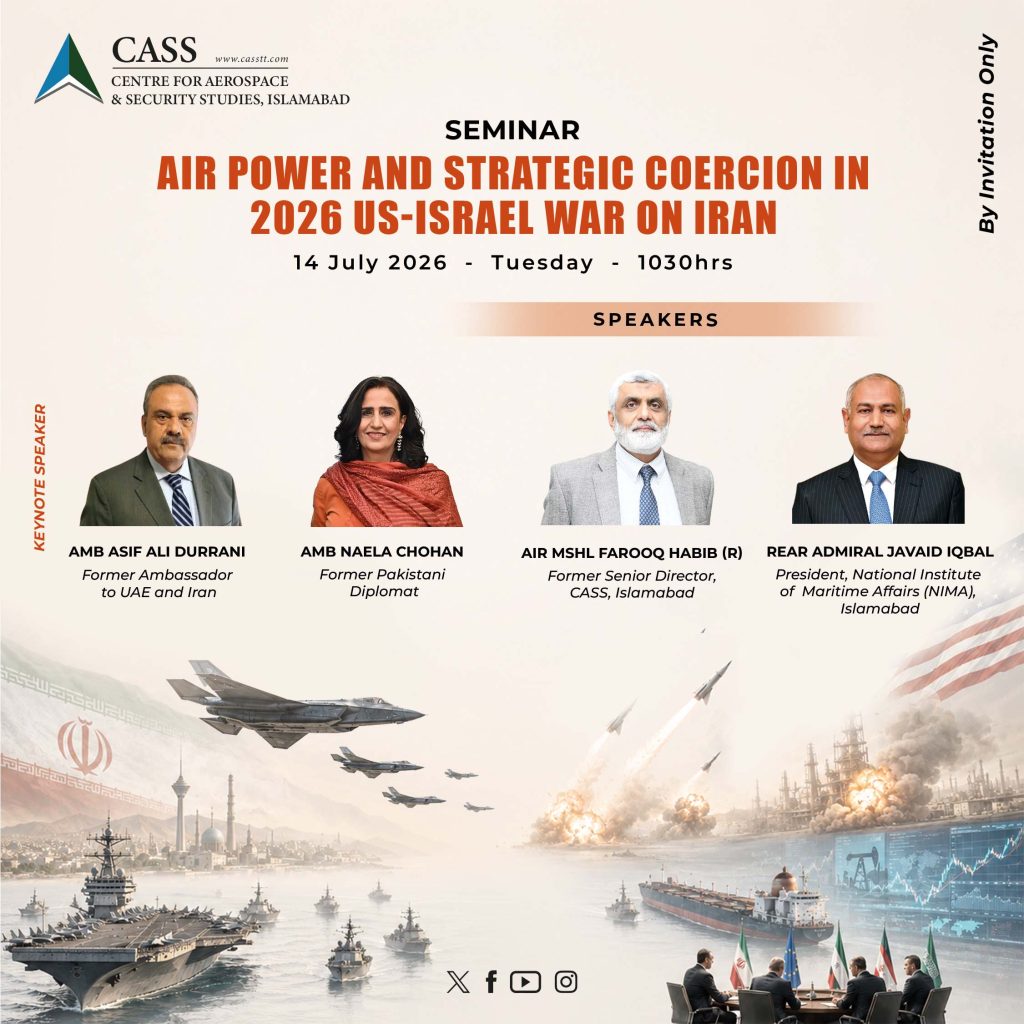
Air Power and Strategic Coercion in the 2026 US-Israel War on Iran

The 2026 U.S.-Israel war on Iran emerged as a defining security event in the Middle East, carrying significant military, political, economic, and geopolitical implications. The conflict did not occur in isolation but evolved from the unresolved tensions, competing strategic objectives, and fragile deterrence environment that persisted after the June 2025 Twelve-Day War. As regional rivalries intensified and diplomatic efforts failed to address core security concerns, the region witnessed a renewed cycle of escalation that culminated in large-scale hostilities.

The conflict highlighted the growing role of air and missile power as instruments of strategic coercion. Precision strikes, long-range aerospace operations, intelligence, surveillance and reconnaissance (ISR) capabilities, cyber and electronic warfare, integrated air and missile defence systems, and unmanned platforms shaped both the conduct and outcome of military operations.

Read More »

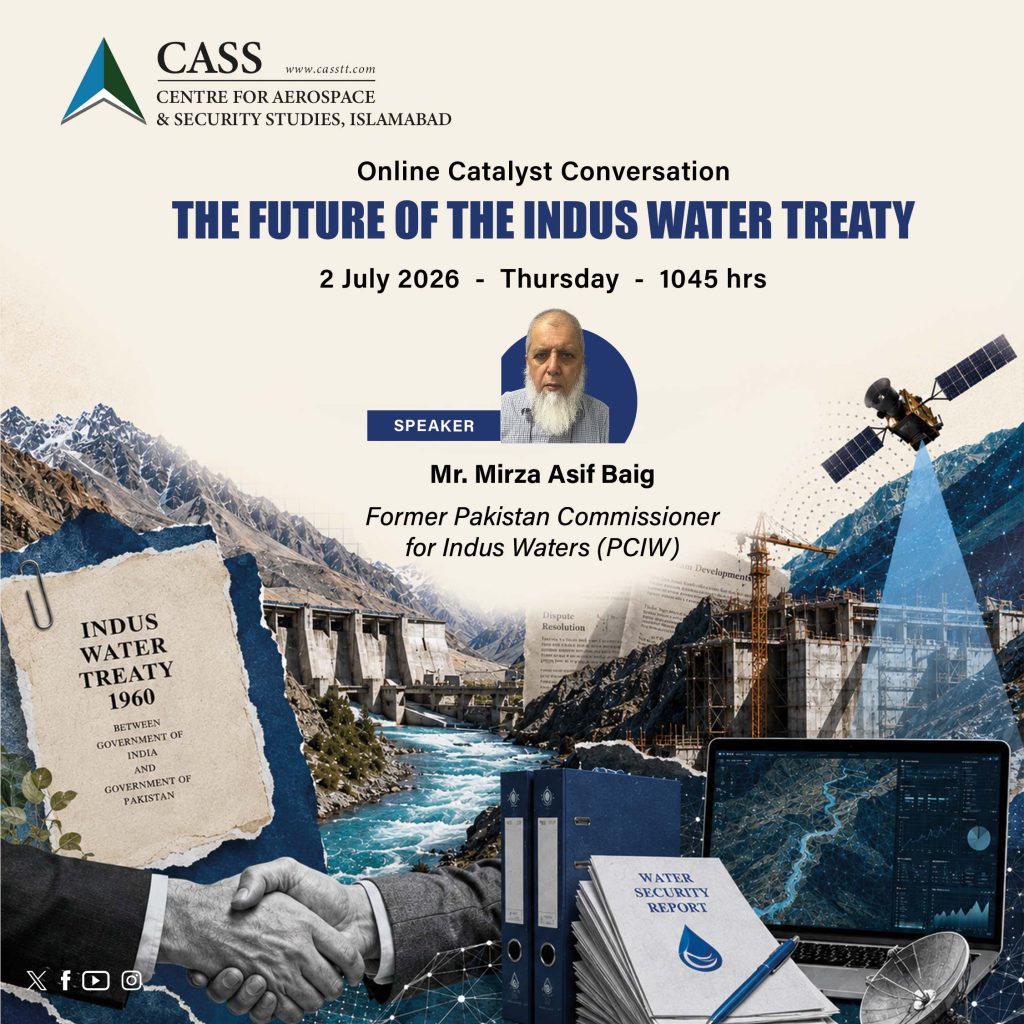
ONLINE CATALYST CONVERSATION THE FUTURE OF THE INDUS WATER TREATY

For more than six decades, the Indus Water Treaty (IWT), signed in 1960 between Pakistan and India, remained as one of the most enduring transboundary water-sharing agreements in the world. Despite multiple wars, political crises, and prolonged periods of bilateral hostility, the treaty largely continued to govern the allocation and management of the waters of the Indus BasinFor more than six decades, the Indus Water Treaty (IWT), signed in 1960 between Pakistan and India, remained as one of the most enduring transboundary water-sharing agreements in the world. Despite multiple wars, political crises, and prolonged periods of bilateral hostility, the treaty largely continued to govern the allocation and management of the waters of the Indus Basin

Read More »

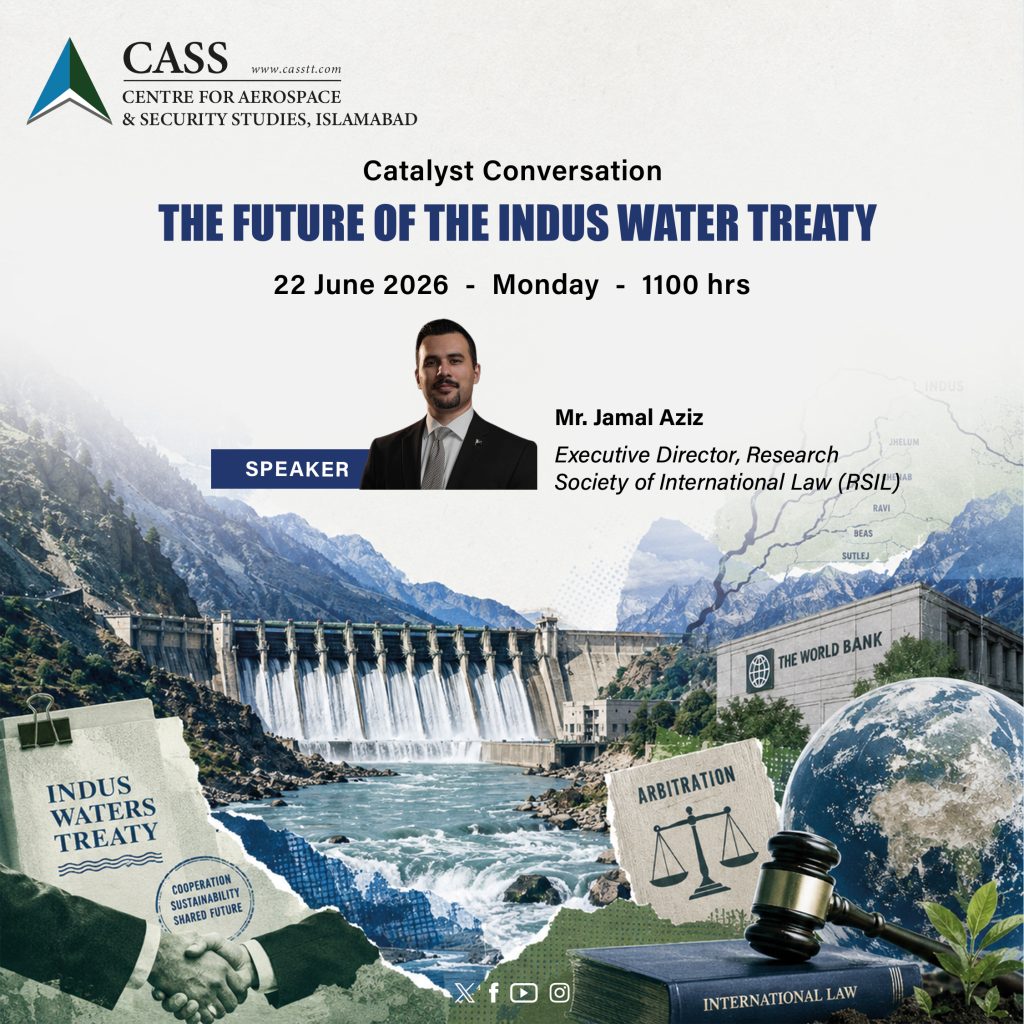
THE FUTURE OF THE INDUS WATER TREATY

For more than six decades, the Indus Water Treaty (IWT), signed in 1960 between Pakistan and India, remained as one of the most enduring transboundary water-sharing agreements in the world. Despite multiple wars, political crises, and prolonged periods of bilateral hostility, the treaty largely continued to govern the allocation and management of the waters of the Indus Basin

Read More »