The territorial integrity of any sovereign state remains a vital interest for which it can go to war with any adversary. Historically, territorial disputes were the main source of wars and conflicts between nations until the Treaty of Westphalia was signed between the European powers of the time in 1648. The Treaty formally recognised the sovereignty of a state over its territory and ended the prolonged wars between Spain and the Dutch, who were later joined by the Germans as well. While territorial disputes still remain the most compelling cause of military conflicts among nation-states, evolving concepts of security have added newer causes, irritants and threats to states’ survival and well-being of their people.
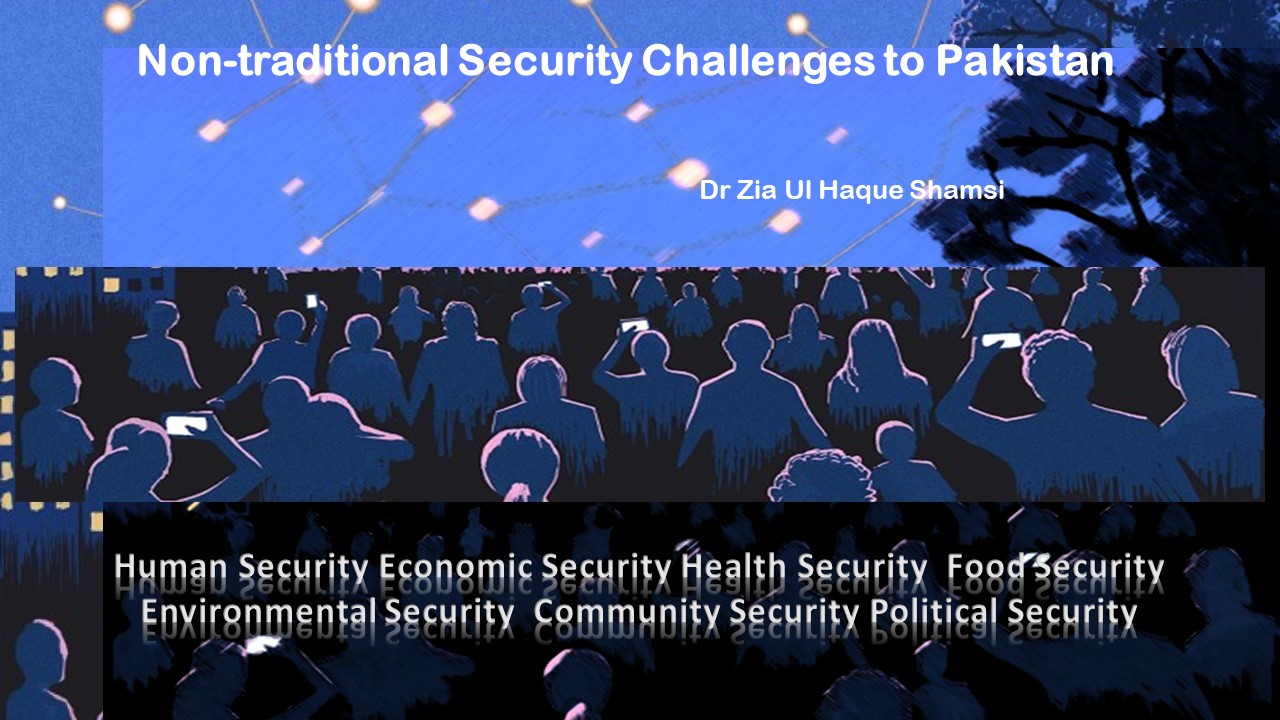
Whereas the importance of territorial security cannot be overemphasised, the significance of human security has gained more prominence in the changed paradigm. According to the 1994 UN Report, every element of human security-economic, health, food, environmental, personal, community and political security-has an impact on the national security of the state. However, an NTS-Asia study on non-traditional security has included climate change, resource scarcity, natural disasters, infectious diseases, irregular migration, drug trafficking and people smuggling as important contributors to the challenges to national security.
Pakistan faces nearly all of the above-mentioned challenges to its national security. While the Armed Forces of Pakistan have valiantly defended territorial integrity and sovereignty successfully over time, non-traditional security challenges are fast emerging as serious concerns to its overall security in the medium- to long term. Uncontrolled population growth, lack of national integration, increased intolerance in society giving rise to extremism and terrorism, lawlessness, corruption, air pollution, and cyber security also form part of the long list of serious security concerns for Pakistan.
While each element of non-traditional security merits attention, this article will focus on the growing population and its corresponding compound impact on the national security of Pakistan.
Pakistan is the fifth most populous country in the world with over 220 million people and an alarming growth rate of 2 per cent. According to a World Bank report, only a handful of African countries and Afghanistan have a greater population growth rate than Pakistan. The lack of basic amenities like health, education, nutrition, infrastructure, job opportunities etc. has all contributed to the backwardness of Pakistan. According to the Ministry of Federal Education and Professional Training, the current literacy rate of Pakistan stands at 62.3 per cent, meaning over 60 million people are illiterate and perhaps facing extremely hard living conditions to sustain themselves.
Although Pakistan is striving to achieve the Sustainable Development Goals (SDGs) with its focus on the 3 Ps ‘People, Planet and Prosperity’, the focus and practical steps needed to control population growth are lacking due to which the SDGs objectives of ending poverty and hunger would remain a far cry in case of Pakistan. Likewise, ‘Prosperity’ as part of desire alone cannot be achieved in a country where some 24 per cent of people are living below the poverty line. Moreover, demographic make-up reflects that over 60 per cent of the population is between the ages of 15-64, whereas 35 per cent are below the age of 14 years. The average age in Pakistan hovers around 22 years, suggesting that Pakistan’s young population urgently needs education, health, job opportunities, and an extremely careful direction in life with regards to societal values. An educated and socially aware youth can be an asset to the nation, but an uneducated and directionless populace can become a serious national security threat in an evolving regional security environment. There is a need for religious moderation under true Islamic teachings to avoid the repeat of mob-lynching incidents of minorities. Then, rising poverty forces children to stay out of schools due to lack of affordability, and assist their parents by doing menial domestic jobs which contributes to frustration, inequality, and illiteracy.
Another factor that is seriously affecting effective control of population growth and numerous other factors related to non-traditional security threats is related to legal and constitutional bindings on the state. Most of these subjects now fall in the domain of Provincial Governments, and therefore the commitments that the Federal Government makes with International Institutions are not accomplished uniformly in time and in the desired manner. Unfortunately, domestic politics at times override serious national objectives and priorities.
There is a need to give equal importance to non-traditional security challenges to ensure that they are addressed with the same vigour and priority as territorial security, so that adversaries are unable to exploit fault-lines, and overall national security of the state is not compromised.
Dr. Zia Ul Haque Shamsi is Director Peace and Conflict Studies at the Centre for Aerospace & Security Studies (CASS), Islamabad, Pakistan. The article was first published in Daily Times. He can be reached at [email protected].
Image Source: Etfa Khurshid Mirza