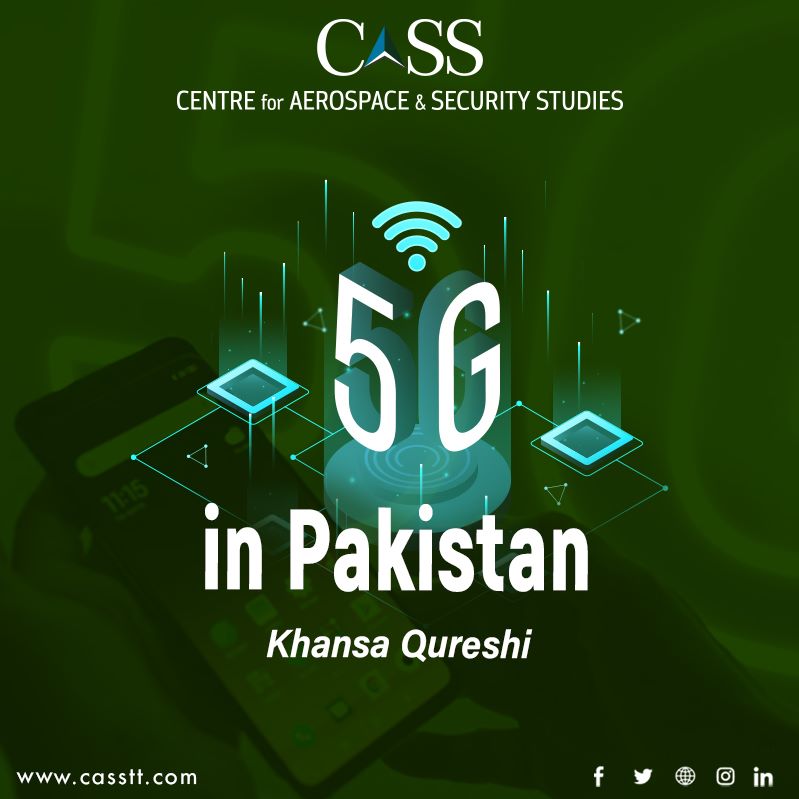
In February 2023, during the annual Mobile World Congress – the world’s biggest and most influential meeting for the mobile tech industry – Huawei’s representative in a keynote speech revealed that milestones achieved by the 5G mobile networking technology in the first three years since its launch were ‘equivalent to those that 4G made in its first five years.’ Globally, over 240 5G networks have been put into commercial use. During the first round of deployment of this technology, the Average Revenue Per User (ARPU) of the world’s top 20 5G operators increased by 10%. The number of 5G users worldwide exceeded one billion by December 2022.
5G is harnessing a digital revolution by providing ‘1,000 times higher mobile data volume per area, 100 times the number of connected devices, 100 times higher user data rate, 10 times longer battery life for low-power massive-machine communications and five times reduced end-to-end latency.’ Since this ultrafast technology vies to offer higher internet speed, and more intelligent internet systems, nations across the world are adopting this fifth generation technology for a host of communication, commercial, as well as military purposes.
A study by the PwC analysed use cases of 5G in healthcare, smart utilities, media, industrial manufacturing, and financial services. Although, the economic impact of 5G will vary by industry and country based on adoptive capacity, the study found that adoption of 5G would add USD 1.3 trillion to global GDP by the year 2030. Moreover, a report by GSMA, analysed ‘the socio-economic benefits of mid-band 5G services’ and predicted that in South Asia, the GDP contribution generated by the latter would be more than USD 32 billion by 2030, with India claiming the major chunk at 84%, Bangladesh 9%, and Pakistan only 5%.
Even after three years of its launch, 5G has still not been introduced in Pakistan. An official document of the Ministry of Information Technology and Telecommunication (MoITT) announced that 5G would be launched commercially in three big cities of the country in the first quarter of 2023. However, last month, the same Ministry told a parliamentary panel that the launch of 5G technology would not be possible. The reasons cited for this rather indefinite postponement included recent electricity price hikes and minimum profit margins for the telecommunication firms due to the prevailing economic crisis. Moreover, the financial crunch rendering banks unable to furnish letters of credits hampered cellular companies’ efforts to import telecom-related gadgetry. Low 5G-supported handset penetration (less than 1%), low optic fibre cable penetration across the country, rising operating expenses (OPEX), and higher taxation are also hindering telecos.
According to the Pakistan Telecommunication Authority’s recent data, the number of 3G/4G users had crossed 121 million by the end of 2022. Out of Pakistan’s 220 million population, 60% include young people. When one has a large, young population, which is aware and familiar with mobile technologies, the launch of 5G would better equip them to exploit the benefits of the digital age. For example, with a growing e-sports and video gaming potential in the country, fast internet technologies will help Pakistani gamers and developers to enhance their revenues. 5G can also generate newer revenue streams in e-health and 3-D print.
Companies around the world are already discussing the 5.5G era. Unfortunately, Pakistan does not even seem to be interested in even crawling towards the 5G era, let alone catching up with 5.5G. Although, the economic crisis is inhibiting the ability to harness futuristic technologies, failure to execute the later has direct impacts on the economy too as the country misses out on the monetary benefits promised by the same. This generates a never ending loop of crisis-causing-lags and lags-causing-crisis which reverberates for many years to come, as one lag leads to another and so on.
It also needs to be pointed out that at the root of the 5G launch delay also lies in bureaucratic inefficiencies prevalent across the board, not just the economic situation. Resultantly, mismanagement and policy short-sightedness come at the cost of innovation and technological sophistication. It is ironic that in a country like Pakistan, crucial ministries like ITT and Science and Technology are considered ‘spare’ and in political gimmicking, assigned to return or garner political favours.
Geoffrey Chaucer said, ‘Time and tide wait for no man.’ With the rapid pace of technological advancements, this is more true now than it was back in the 15th Century. If Pakistan fails to get on board the tech revolution now, as a nation, we may never be able to catch up.
Khansa Qureshi is a Research Assistant at the Centre for Aerospace & Security Studies (CASS), Islamabad, Pakistan. She can be reached at [email protected].