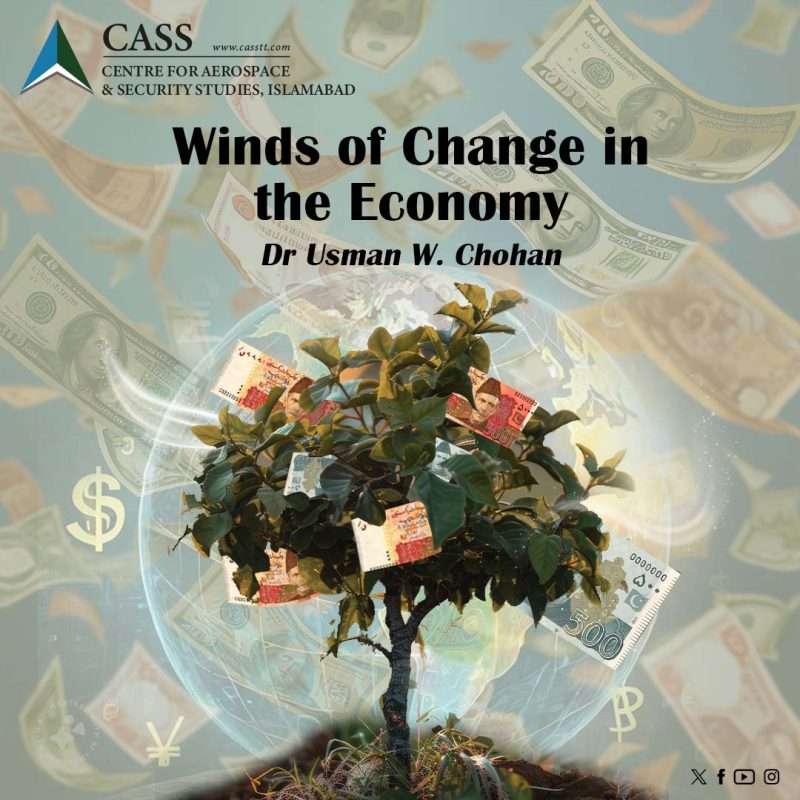
After two years of extremely challenging international economic conditions, there are signs of reprieve for the Pakistani economy that emanate from a broader cooling and monetary easing in the world economy. Both the US and China are witnessing slowing economic activity, which is calming commodity markets and reducing inflationary pressures worldwide. As these inflationary pressures subside, it becomes increasingly possible for highly-cyclical emerging markets like Pakistan to find the breathing space to restore financial stability. In that regard, there are four positive signs in the local economy that warrant particular attention: lower inflation, lower fuel prices, rising remittances, and rising exports.
The great problem of inflation, long the boon of emerging markets, and particularly troublesome for Pakistan over the past two years, has brought in a dramatically lower reading than was expected, at 9.6% year-on-year (yoy) for the month of September 2024. This has provided the State Bank of Pakistan (SBP) with a chance to slightly ease the monetary tightening policies put in place since 2022. It has thus lowered the base interest rate from 19.5% to 17.5%. I believe that this quantum of easing is not aggressive enough, and that the SBP should be more proactive in reducing rates. This is a view shared by much of the business community, which is eager to restart economic activity after two moribund years of muddling through. Yet the SBP has proceeded cautiously due to reticence about the future path of inflation. On that front, it is far more probable that the global inflationary pressures shall continue to fall as both the United States and China face recessionary pressures.
It is important to note that the US economy is exhibiting signs of fatigue due to the tight monetary conditions imposed by the US central bank (Fed) since 2022. The Fed had raised rates two years ago to an astronomical level not witnessed in half a century, and then it kept rates high to deliberately cool down the economy and curb inflation. It appears to have been successful at this task, as both consumer spending (retail) figures (essentially flat at 0.1% yearly comparison) and unemployment figures (4.2% vs. 3.8% last year) are weakening in tandem. This cooling effect has now given the Fed room to reduce rates more quickly with the confirmation that the economy has cooled enough, and it also gives oil market futures a downward signal. This economic cooling down and fall in rates is helping many countries including Pakistan that have grappled with severe inflation. The Fed is expected to continue to lower rates, and many countries including Pakistan will follow suit.
Meanwhile, the Chinese economy was recently also showing multiple areas of slowdown, including: higher unemployment, lower housing values, lower factory output and lower manufacturing investment. The Chinese government was avoiding the usage of economic stimulus to engineer extra growth, and in 2023 it successfully exceeded its growth target without resorting to stimulus or without creating too much inflation. It is a credit to their economic management that they did not resort to artificial economic boosters and instead deployed organic economic power to drive growth. However, as the Chinese government has sought to maintain robust growth this year along similar lines, the challenge is much greater now because of slowing US and other end-market demand. As a result, the Chinese government has recently announced a significant stimulus package to spur consumption and drive demand though specific economic sectors.
Chinese growth targets have held strong symbolic value for both China and for the world at large because, barring the Covid-related setback of 2020-22, China has consistently beaten GDP targets since 2000, thus delivering a message to the world of consistent economic strength. Because of the broader cooling effect in the world economy (commodity prices falling and inflation falling overall), and the expectations of monetary easing (stronger business activity), we can expect better conditions for emerging markets such as Pakistan over the near-term. Therefore, the government has passed on some of the decline in global oil prices to domestic consumers, with a 4% cut in petrol from PKR 259 to PKR 249/ltr. This is both symbolically important for boosting sentiment, as well as practically valuable given that citizens have felt their incomes severely compressed in the recent past, not least because of IMF stipulations on taxes and electricity tariffs. If international oil prices continue to decline, it will have a positive impact on Pakistan’s import bill (improve foreign reserves), add to currency stability, while also translate to higher incomes if consumers see further cuts in fuel prices.
Additionally, a very important positive sign has been in the rising remittances, which are considerably higher (+44%) for the first two months of the new fiscal year, at USD 5.9 billion vs. USD 4.1 billion in the same period last year. This is the product of a severe crackdown on currency hoarding and smuggling, which is a very appreciable step, along with the export of labour to other countries, translating into a larger volume of inflows. Certain measures by the government to streamline remittance inflows have also helped. Remittances are very important in addressing the current account deficit, and in shoring up foreign reserves, and the rise in remittances is thus an encouraging step. At the same time, Pakistan’s exports are noticeably higher (+15%) for the first two months of the new fiscal year, at more than USD 5 billion. Complementing the rising remittances, higher exports also bode well for the current account balance and foreign reserve holdings. However, the nature of the higher exports is confined to a few sectors, notably foodstuffs, which is low value-added. A stronger export strategy is required, and as business activity recovers once the SBP reduces interest rates to reasonable levels, greater export revenues are likely to follow.
Finally, it is also important to mention the approval of the Extended Fund Facility (EFF) by the IMF board, which paves the way for a USD 7 billion emergency disbursement. The IMF programme was difficult to negotiate and carried heavy stipulations, but thankfully, as the domestic economy improves, the urgency of that disbursement shall decline. Insofar as the reform efforts of the government along the lines urged by the IMF are concerned, the government has attempted to take bold steps but is facing resistance from various vested interests. The burden of the austerity agenda has thus fallen disproportionately on a few sectors (e.g. salaried class), which is not a sustainable reform approach. Therefore, bold measures are required to spread the burden of reform more equitably among national stakeholders, which will naturally translate into more sustainable and lasting reform.
One must also note that, irrespective of the IMF’s strictures, it is important to reengineer the unproductive and bloated structure of the domestic political economy to drive economic growth. In other words, it is not for us to receive the tough demands of the IMF to fix our own economic system, we must do that anyways and of our own accord. Even if current global circumstances continue, (easing commodity prices, lower inflation, cooling major economies), we must not be entirely reliant on favourable international winds for our domestic conditions to be favourable. Global cooldowns, tough IMF conditions, and/or US interest rates cannot be the sources that drive growth in our national economy. Instead, we must set the right political, social, institutional, and economic conditions for growth to materialise sustainably and naturally. In such circumstances, we will not merely see the inklings of positive signs, but the resounding evidence of a positive economic path for our nation.
Dr Usman W. Chohan is Advisor (Economic Affairs and National Development) at the Centre for Aerospace & Security Studies, Islamabad, Pakistan. He can be reached at [email protected] .