The former chair of the US Federal Reserve, Alan Greenspan, attempted in his mea culpa, The Map and the Territory to explain why central banks failed to foresee the 2008 financial crisis, and argued that the frameworks and knowledge that the Fed drew upon (the “map”), did not and could not capture the fullness or complexity of economic reality (the “territory”). Grudgingly recognising the role that the Fed played in engineering the economic bubble that led to the 2008 meltdown, Greenspan explained that economic variables are also shaped by non-economic factors, and that they interacted in complex ways, which is why simplistic maps of the economy would invariably err.
Since that time, there has been an increasing challenge to the authority of independent central banks in the developed world. All central bankers faced increased questioning after 2008, but in Europe the sovereign debt crisis (2012) further challenged the European Central Bank (ECB), while the Covid-19 pandemic has led to heightened scrutiny regarding central bank strategies to counter global inflation. The recent inflationary problem has heightened the stakes for central bank credibility, since the minimum objective that is assigned to all central banks is price stability.
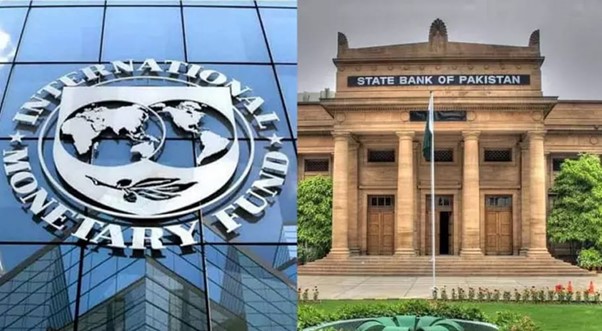
It is in that context, of the gradual buildup of doubts about the merits of assigning an all-powerful monetary role to central banks that gives them full autonomy (and impunity), that the question of central bank independence has fallen on Pakistan’s shoulders as well. As part of the Extended Fund Facility (EFF) of $6 billion negotiated between Pakistan and the International Monetary Fund (IMF), Pakistan signed into law the State Bank of Pakistan Amendment Act (SBPAA) of 2022. Under the amendments, there are major changes to the role, objectives, and power of the SBP. At its essence, the amendments create a new pole of power in the country, where the Governor and high officials of the SBP are made immune from any form of prosecution (including anti-corruption), endowed with a much narrower mandate, and effectively disassociated from the government’s fiscal mandate.
Until now, the SBP had engaged in “quasi-fiscal operations” which boosted the role of the bank in meeting government economic objectives. These operations included credit to agriculture, housing credit, industrial credit, and other such vehicles. During 2020, the SBP played a major positive role in generating the stimulus that the economy needed to remain afloat, and in fact do relatively well. These sorts of quasi-fiscal operations will now stop under the SBPAA. Moreover, Pakistan will lose the coordination between its fiscal and monetary requirements, which should work in unison to realise national objectives. Pakistan instituted the Monetary and Fiscal Policies Coordination Board (MFPCB) in 1994 to promote better synchronicity between the two areas, but this would be abolished under the act.
Furthermore, the Prime Minister’s Office had raised the correct objection in 2021 that the PM would not, under new legislation, be allowed to consult with the Governor SBP when required, since the Governor could invoke a privilege to refuse consultation. More gravely, the government would not be able to engage in new net borrowing from the SBP, and would then need to borrow from the private banking system or external sources, thus crowding out private borrowers and assuming higher interest rates. The government’s inability to borrow would therefore compress its fiscal space further, and thus lead to greater problems including currency weakness, spending cuts, and a greater amount of debt servicing.
The question is, above all, one of economic sovereignty. As Greenspan’s argument on the prominence of non-economic factors in shaping economic complexity explains, there is a latent political calculus behind the IMF’s imposition of central bank autonomy. It has tried to impose such laws in other crisis-hit countries (such as during the Thai Baht Crisis of 1998), but other countries resisted such harsh conditions.
Although there are merits in the abstract for an apolitical central bank, the IMF is creating a new pole of power that may well be extremely political, whether through the SBP’s actions, or even through inaction during economic crises.
In my book, Reimagining Public Managers: Delivering Public Value, I have sought to examine the merits of central bank independence in terms of the value-creating possibilities for the public. From that level of analysis, it appears to me that the merits espoused for a fully-autonomous central bank are far outweighed by the need for coordination among all arms of government to promote economic security, which lies at the heart of our geo-economic pivot and is the core of our national security, as detailed in the new National Security Policy.
To draw upon Greenspan’s motif of a map and a territory, with the new SBP arrangement, we will be using someone else’s map to understand our economic territory. Realising this, there has been a strong push back to this legislation from many corners including the opposition, media, academics such as myself, and even many pillars of the government. We must therefore consider the question as one of national security: would we use someone else’s map to understand and secure our own economic territory?
Dr. Usman W. Chohan is the Director for Economic Affairs and National Development at the Centre for Aerospace & Security Studies (CASS). He can be reached at [email protected]. The article was first published in The Nation.
Image Source:Yousuf, T. 2022, “SBP Amendment Act: Why is the Institutional Reform Controversial?” News: The Unbiased Perspective, March 8, https://mmnews.tv/sbp-amendment-act-why-is-the-institutional-reform-controversial/.