The targeted marginalization of Indian Muslims is not novel for those who follow Indian politics. The repeated repressive attitude towards minorities, specifically Muslims has become an accepted norm in the Indian society. The ICC T20 World Cup marked another recent example which has exposed the extremist state India has become today. Indeed, the tournament was a thrilling adventure for cricket fans across the world. However, one of the disturbing aspects which was observed during the tournament was the dismissive attitude of the Indian state and people towards the Indian Muslims over their country’s performance in the cricketing premium event, especially its defeat at the hands of Pakistan.
During the tournament, Pakistan was able to beat its arch-rival India with exceptional performance in batting, bowling and fielding on 24th October after a lapse of four years. This also marked the first time India was outplayed by Pakistan in any World Cup match. The defeat was not taken lightly in our neighborhood, where the reaction was outrageous.
The Indian Muslim player, Muhammad Shami was trolled extensively on social media. He was blamed for deliberately not bowling well enough. His various social media profiles were bombarded with abusive messages where he was called a‘traitor’ and ‘A Muslim Sided with Pakistan’ extensively. A large number of Indian cricket supporters demanded his ouster from the team disregarding his previous performance and also the fact that there were others in the Indian side who also performed well below par.
The Indian team failed to put up a good game as a whole yet only the Muslim player had to face the brunt. This backlash against the Muslim player is indicative of the growing intolerance creeping in the Indian society against the minorities where Muslims are targeted the most. Ironically, before the match, the Indian team took the knee to show solidarity with the Black Lives Matter movement. However, except the team captain, Virat Kohli none of the teammates raised their voice in support of Muhammad Shami when he was being targeted solely due to his religion. Virat Kohli himself had to encounter severe threats for standing with Muhammad Shami.
Equally concerning was the fact that Muslims in various parts of India, were punished for allegedly celebrating Pakistan’s victory. One Muslim teacher, and several employees were removed from government jobs. Numerous Kashmiri students on the suspicion of supporting Pakistan were expelled from universities and were charged under terrorism acts.
This trend is not surprising under Prime Minister Modi and his extremist cronies. It is the state’s responsibility to protect the rights of its minorities, but it is widely seen that Indian Muslims are considered a threat for the state itself. Over the years, the Indian government has carved out such an environment which is not only fueling hatred towards Indian Muslims but also squeezing the level of their acceptance. On the one hand, different tools such as the Citizenship Amendment Act (CAA) are orchestrated to deprive them of Indian citizenship, whereas on the other hand, the Indian government is apathetic to the various crimes that are committed against Muslims. It is the deliberate silence of the government officials over these incidents which has emboldened hardliners to take the law into their own hands.
Indian Muslims are now considered unpatriotic, and they have to prove their patriotism for the Indian state, the failure to do so earns them pro-Pakistan labels. When they speak for their rights, they are asked to go to Pakistan. With each passing day, it is being communicated to Indian Muslims that if they want to live in India, they must compromise on their religion, and accept Hindu supremacy.
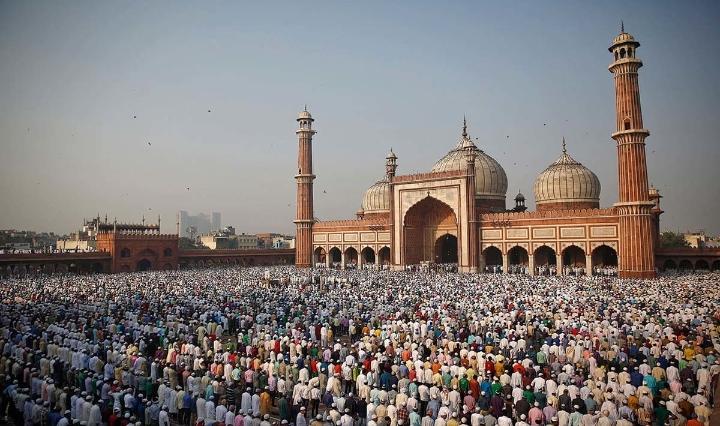
During this month, Muslims in Gurgaon were not allowed to offer their Friday prayers and the location was used for Hindu festivities instead. In addition, the local government also withdrew permission for offering prayers on eight out of the thirty-seven designated prayer (Namaz) grounds in the state. Similarly, lynching incidents against Muslims continue to be witnessed widely in northern India. It is also a common practice that Indian Muslims are denied the permission to own/rent property in affluent residential areas.
It is not just the ordinary citizens who have to deal with this discriminatory treatment. Last month, Aryan Khan, son of leading Indian actor, Shah Rukh Khan was jailed for around 22 days on the allegation of being part of an international drug conspiracy with no concrete evidence. The message signaled was simple that life can be made difficult even for the elite Muslims of India.
The anti-Muslim sentiment has now been strongly knitted in Indian society as a whole and the status of Indian Muslims is declining with each passing day. They don’t even have the independence to support and cheer for the sports team of their choice which is something beyond understanding. The Indian Muslims cannot be denied representation in society merely because of their religion. History is witness that they have made significant contributions for India in technology, politics, education, media industry and sports. If they are constantly repressed, they will not be able to progress proportionately.
In today’s India, it is quite clear that it has become increasingly difficult for minorities, especially Muslims, to preserve their identity in this so-called ‘secular’ state.
Shaza Arif is a Researcher at the Centre for Aerospace & Security Studies (CASS), Islamabad, Pakistan. She can be reached at [email protected]
Image Source: Kirmani, Nida. How oppressed are Muslims in India? Herald. August 2, 2016. http://herald.dawn.com/news/1153473/how-oppressed-are-muslims-in-India