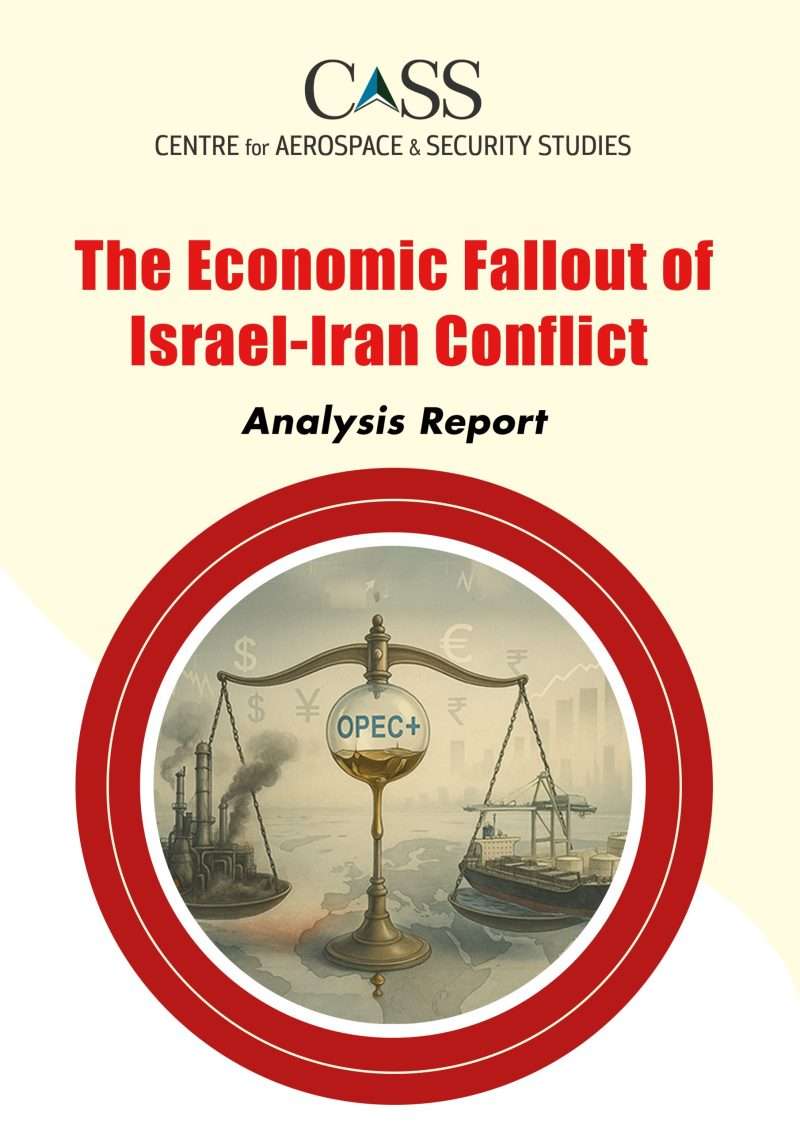
The recent military escalation between Israel and Iran amid Israeli aggression reignited fears of major disruptions in global energy markets. With key oil and gas infrastructure in Iran and Israel coming under attack and risk of disruption in the Strait of Hormuz – a critical chokepoint for 20% of the world’s oil supply – investors and policymakers were increasingly concerned about the economic ripple effects of regional instability. A significant drop in oil and gas supply, combined with limited spare capacity among Organization of the Petroleum Exporting Countries (OPEC)+ members, could have pushed oil prices to unsustainable highs and strain already fragile economies.
In view of this, the Centre for Aerospace & Security Studies (CASS) organised a Webinar on 25 June 2025 on ‘The Economic Fallout of Israel-Iran Conflict.’ This webinar aimed to provide timely, multi-perspective analysis of how the conflict could reshape global energy dynamics, increase market volatility, and impact inflation and trade flows. It also aimed to explore the readiness of OPEC+ to respond, vulnerabilities of energy-importing nations, and the long-term risks to global energy security.
The distinguished subject matter experts who spoke at the webinar included:
- Dr Einar Tangen, Senior Fellow, Taihe Institute, Beijing
- Dr Manzoor Ahmad, Senior Fellow, Pakistan Institute of Development Economics (PIDE), Islamabad
- Dr Usman W. Chohan, Advisor, Economic Affairs and National Development, Centre for Aerospace & Security Studies (CASS), Islamabad
The discussion was moderated by Zahra Niazi, Research Associate at CASS with Concluding Remarks by President CASS Air Marshal Javaid Ahmed (Retd).