
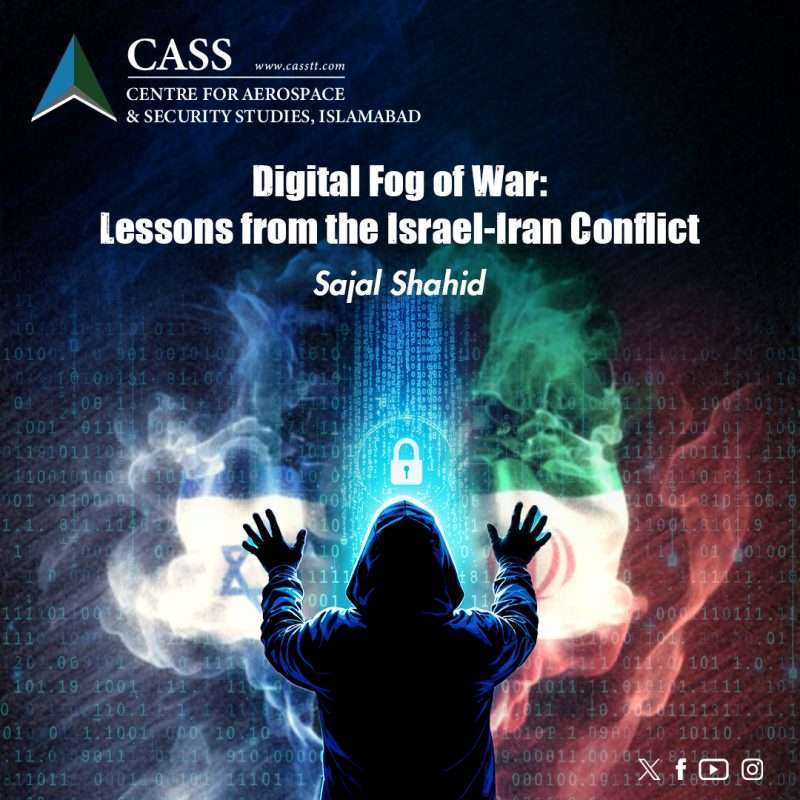
On 18 June, a volley of Israeli missiles burst over Iran’s skies, plunging the nation in digital darkness – cutting off the country’s virtual connection with the rest of the world. Similarly, panic swept across Israel as its citizens received spoofed alerts of shelters being bombed. This was not mere happenstance; it was a deliberate attempt from both sides to obfuscate the truth and blur the lines of reality and shape public perceptions. In other words, this was information warfare. From state censorship and disinformation campaigns to symbolic cyber strikes targeting financial systems, the recent Israel-Iran conflict prominently featured information warfare as a key domain of combat adding a new electronic component to the ever-present ‘fog of war’.
While the traditional Clausewitzian concept of the ‘fog of war’ has been limited to military operations, its modern interpretation extends far beyond the battlefield, and into society. Contemporary conflicts now place as much emphasis on manipulating perceptions and clouding reality through digital means as on kinetic measures, making its examination all the more relevant.
The recent case of Israel and Iran serves as a particularly interesting case study considering the active employment of digital tools by both parties. This is exemplified by the cyber offensives, which began almost immediately following the commencement of active hostilities. With the Israeli affiliated hacktivist group ‘Predatory Sparrow’ launching multiple attacks targeting Iran’s financial systems, including Bank Sepah, its oldest domestic bank, leading to mass disruptions in customer services. The psychological impact of this attack was amplified on social media, with the group claiming to have ‘destroyed all data’. The same group went on to hack Iran’s largest crypto exchange, Nobitex, rendering upwards of USD 90 million worth of assets inaccessible. It is interesting to note that this currency was ‘burnt’ rather than stolen, suggesting a focus on psychological impact rather than any monetary gain.
Iran similarly engaged in symbolic cyber warfare, with affiliated hacktivist groups launching Distributed Denial of Service (DDoS) attacks against Israel’s key government, manufacturing and telecom facilities. While disruptive, these strikes appeared primarily aimed at psychological impact rather than causing any lasting damage. This is supported by other Iranian digital tactics such as dissemination of spoofed alerts and messages regarding fuel shortages and bombed shelters. All of which, similar to Israel, were seemingly aimed at undermining the morale of the enemy population.
Censorship and disinformation also played a key role in this conflict, with both sides actively shaping perceptions by restricting the flow of information to their respective populations. Iran notably cut off internet access during the peak of escalations, and urged its citizens to delete popular communication platforms, WhatsApp and Instagram, due to concerns regarding potential Israeli spyware. This resulted in citizens being entirely dependent on state media for information regarding the conflict. Israel, on the other hand, engaged in similar media censorship by outlining strict new regulations, prohibiting journalists from documenting and disseminating information related to missile and drone strikes under the threat of detention.
While these restrictions were ostensibly placed as safeguarding measures, they in turn allowed both states to shape narratives by limiting public access to external sources of information. According to Radware, a US-based cybersecurity agency, this conflict saw a ‘parallel information war’ being fought, marked by the use of AI-generated, doctored or otherwise misleading media. With the onset of hostilities, pro-Israeli and pro-Iranian actors flooded social media with a slew of misinformation and recycled imagery, ranging from old protest footage framed as mass dissent against Iran’s leadership to AI-generated images of missiles striking Tel Aviv – all adding yet another layer to the growing fog of war.
This digital dimension of the Israel-Iran conflict demonstrates a new reality where the battlefield is not only physical but virtual as well. A trend likely to intensify with advancements in generative technology, such as AI, which allows users worldwide to contribute towards the spread of disinformation with the click of a button. As the boundaries between fact and fiction shrink, so do the ones between war zones and narrative domains. Policymakers must prepare for this hybrid reality, where vigilance from state institutions to ordinary citizens is imperative.
Sajal Shahid is a Research Assistant at the Centre for Aerospace & Security Studies (CASS), Islamabad, Pakistan. The article was first published in The News International. She can be reached at [email protected]



