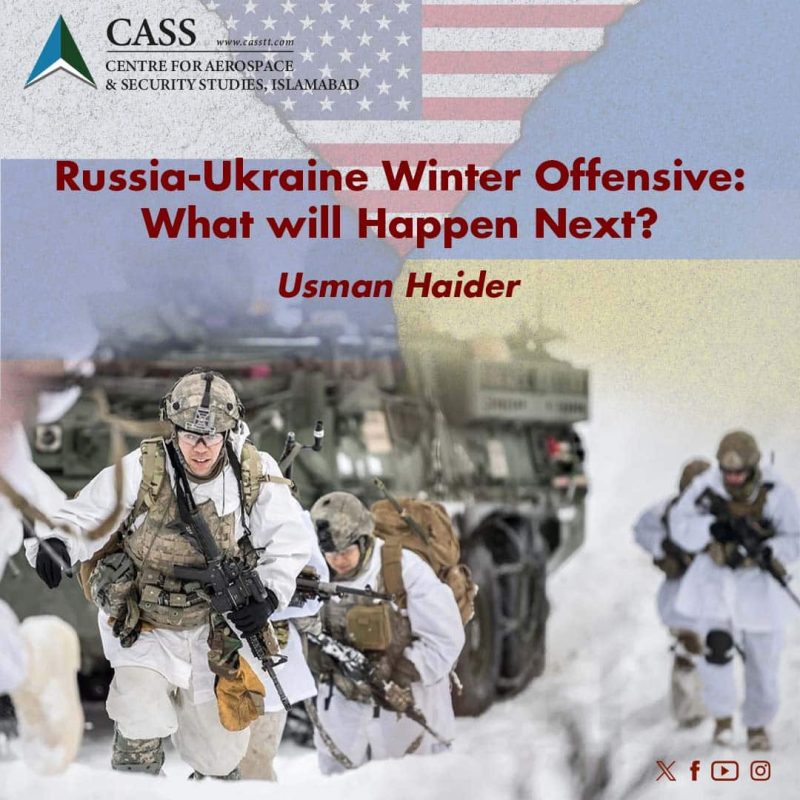
The latest Russian offensive in the eastern Donetsk region targets the strategically important city of Pokrovsk. To this end, Russian forces captured the rural town of Hrodivka a few weeks ago. This is a part of Kremlin’s broader strategy to take control of as much of Kyiv’s territory as possible before winter impedes the ground offensive. On the other hand, Ukraine seems committed to holding its positions, including the ones inside Russian territory, and avoid incurring further losses. Both sides realise the importance of captured territories which could be used as bargaining chips for future negotiated settlements. The possibility of a truce remains alive with Donald Trump winning the 2024 US Presidential election.
While the war nears its third year, the impact of approaching winter looms large on both sides. Rainfall associated with the early winter season is expected to affect operations due to muddy conditions which reduces manoeuvrability and slows down troops and vehicles. Once snowfall begins, sub-zero temperatures and piles of snow will make it difficult to establish new defensive positions as digging trenches becomes a highly challenging task. In addition, barren trees limit natural camouflage, leaving soldiers more exposed to enemy firepower.
Kremlin’s current military strategy focuses on three key objectives: take back control of the Kursk region, further advance inside Ukraine, and intensify pressure on Kyiv’s forces stationed along the international border. In the Kursk region, the on-ground situation suggests that Moscow is making significant progress, having reclaimed 46 percent of the captured territory, with Vovchenko being the latest village to fall to Russian forces. Meanwhile, the Russian troops continue to put pressure on Ukrainian defences to break through their frontlines and regain control of the remaining territory.
In a bid to advance further into Ukrainian territory, Russian combat troops are prioritising the swift capture of Pokrovsk. The city hosts a key regional logistics base, and its fall would heavily influence the battle on the Eastern front. If Pokrovsk is taken, it would mark a major setback for Ukraine, opening the path for Russian forces to push deeper into the remaining Donetsk region.
President-elect Trump has consistently voiced his opposition to the ongoing conflict pledging to prioritise a swift resolution. In this context, he has urged both sides to seek peace and bring an end to hostilities. Trump suggested that President Zelenskyy focus on achieving peace rather than reclaiming lost Ukrainian territory. In response, Zelenskyy expressed Ukraine’s hope to end the conflict through diplomacy by the following year. Similarly, Trump engaged with President Putin, advising him to embrace peace and avoid further escalation.
Amid the uncertainties of weather and politics, the real challenge lies in determining the future of this protracted war. As the battlefield evolves, two outcomes seem most likely: a prolonged conflict or a Russian victory – both leaving Ukraine at a disadvantage.
The chances for an outright Ukrainian victory are slim as its beleaguered forces are not in a position to launch a successful counteroffensive to oust Russian troops. Even if Ukraine chooses to resist, it lacks the necessary manpower and resources to match Russia’s war stamina. It is a grinding war of attrition that Ukraine is unlikely to sustain especially as the West appears to be losing interest in its support.
As hopes for Ukrainian success diminish, maintaining Western support – critical for Ukraine’s survival – has become increasingly difficult. Meanwhile, Russia has ramped up its war industry output, positioning itself to endure and prevail in a prolonged conflict. Amid these challenges, there is a growing acceptance among the Ukrainian population for peace talks with Russia, as reflected in polls conducted a few months ago.
The next few months are crucial for the ongoing conflict. Harsh winter conditions in Ukraine, coupled with Donald Trump’s re-election, could play a decisive role in the protracted conflict. Ultimately, both sides may have to agree to a hard negotiated settlement to avoid further losses which have already taken a heavy toll.
Usman Haider is a Research Assistant at the Centre for Aerospace & Security Studies (CASS), Islamabad, Pakistan. He can be reached at: [email protected].