Concept Note
‘Few individuals significantly alter the course of history. Fewer still modify the map of the world. Hardly anyone can be credited with creating a nation-state. Mohammad Ali Jinnah did all three.’
–Stanley Wolpert
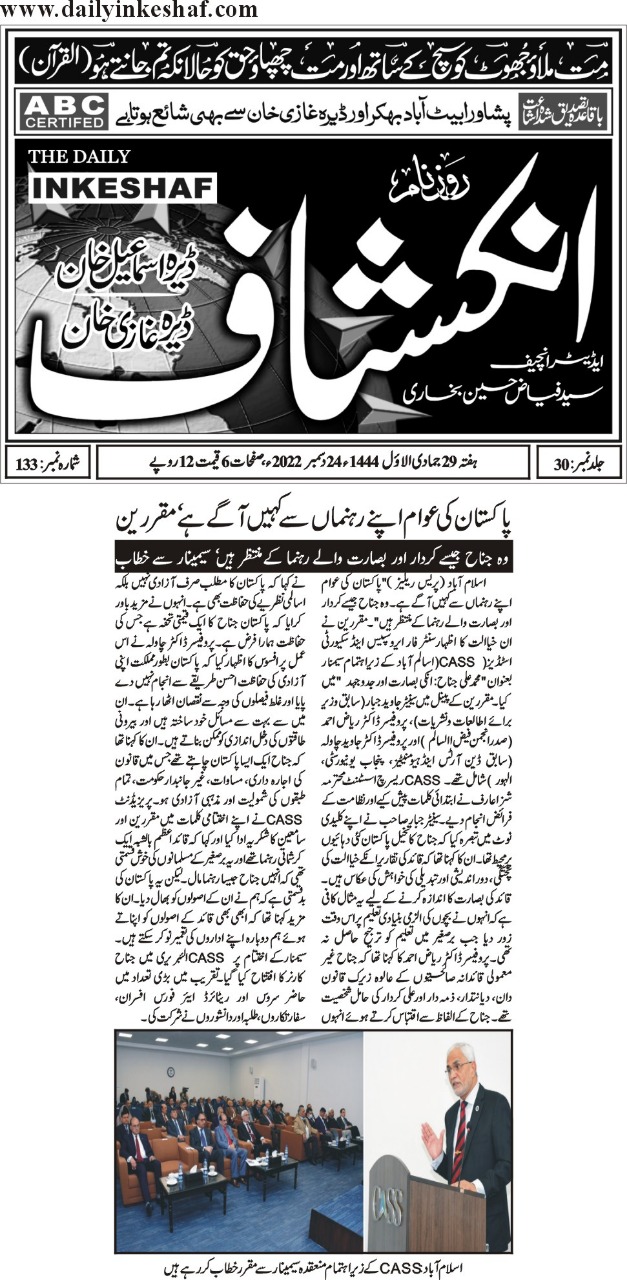
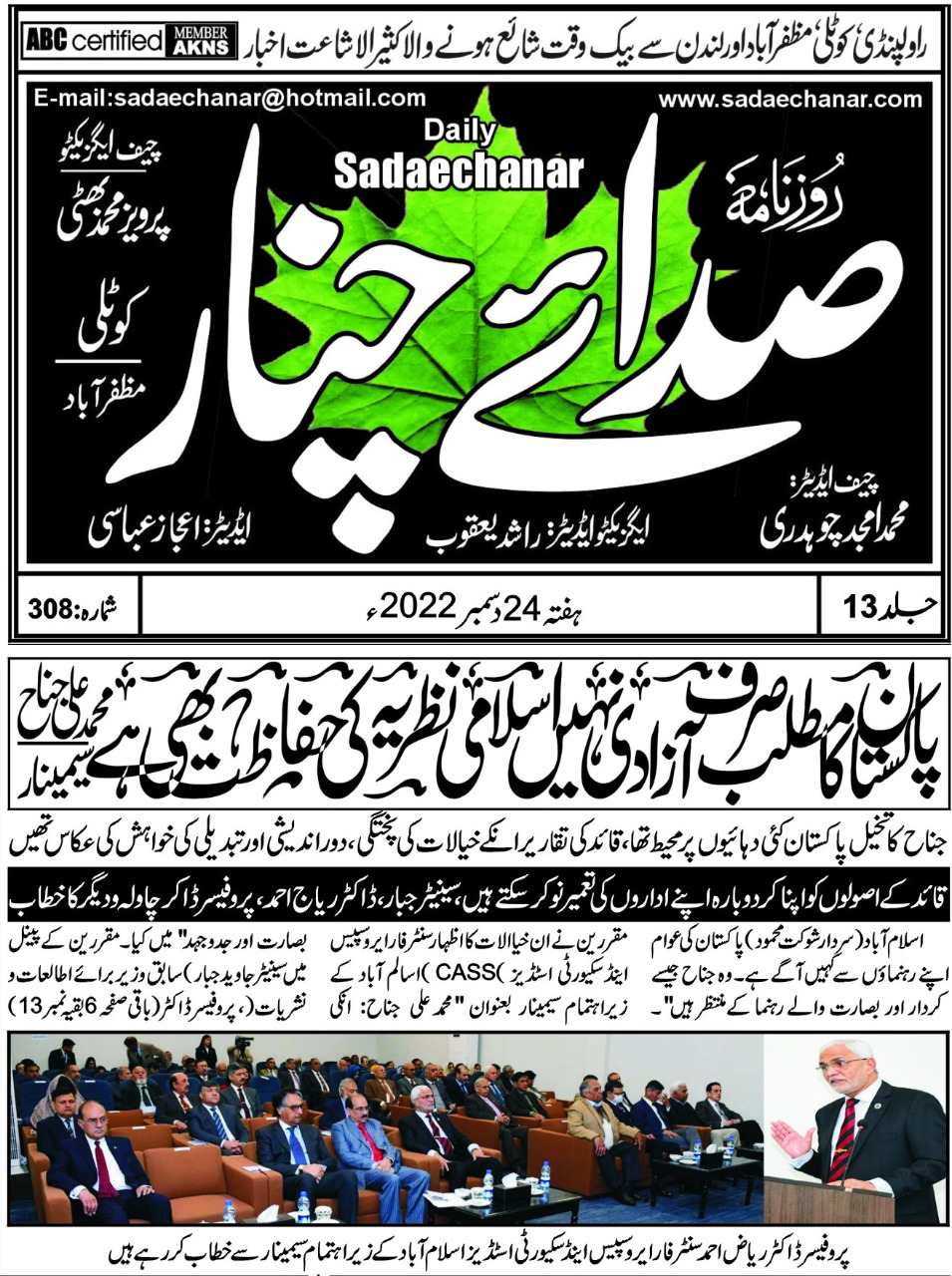
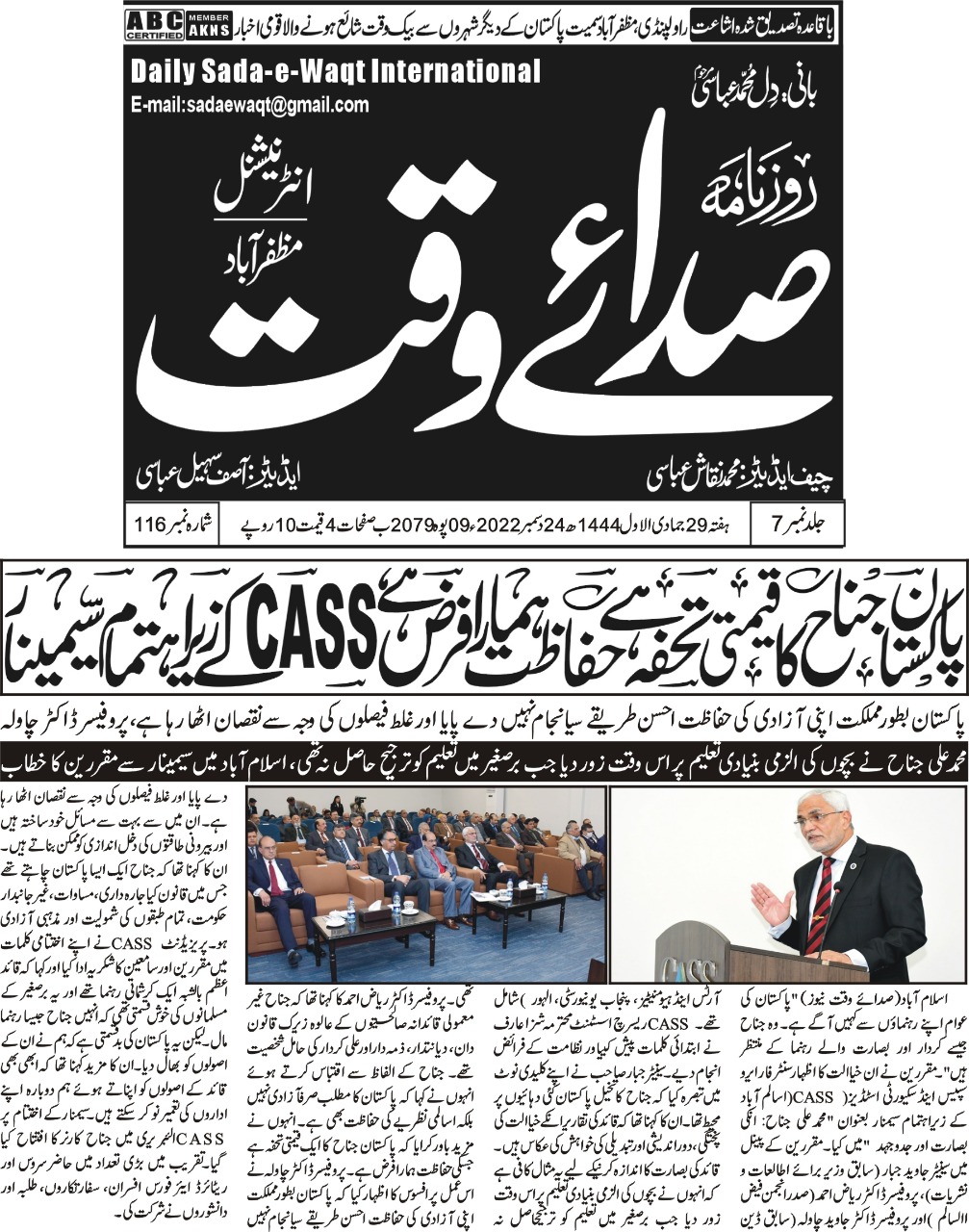
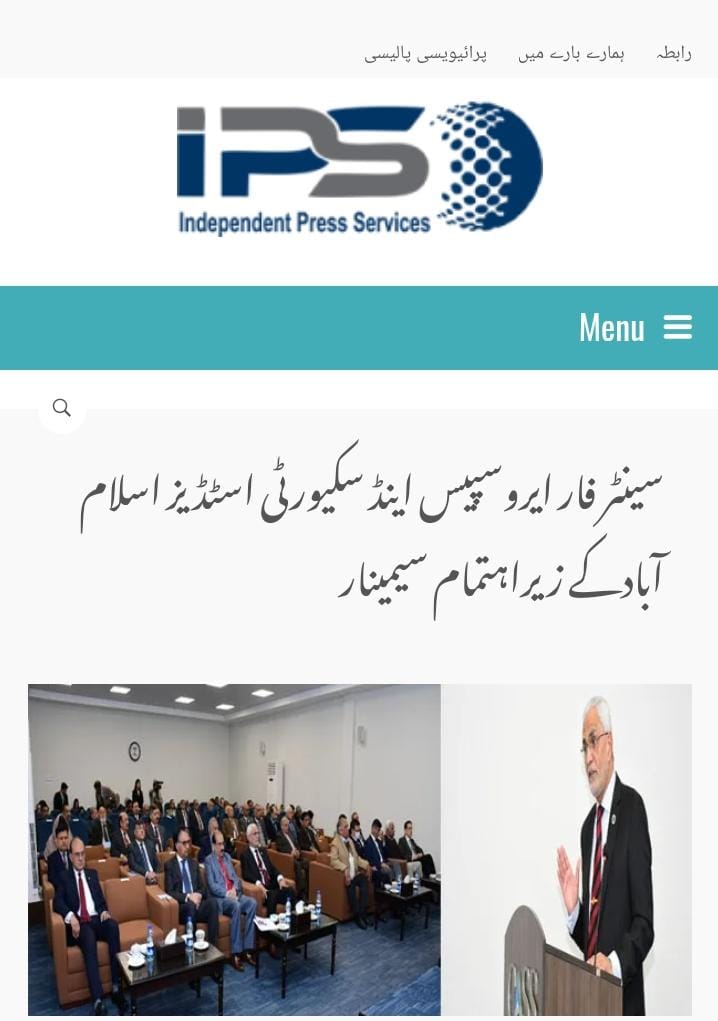
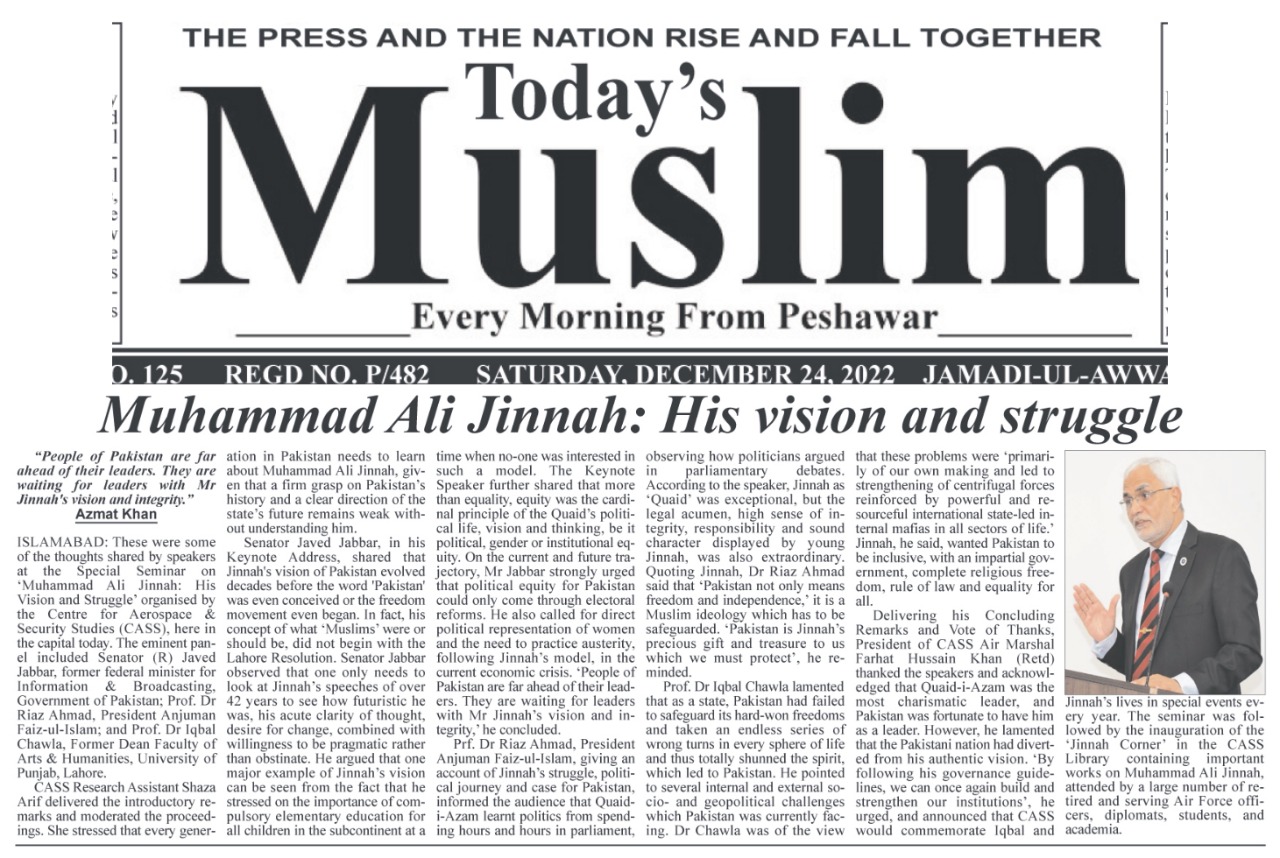
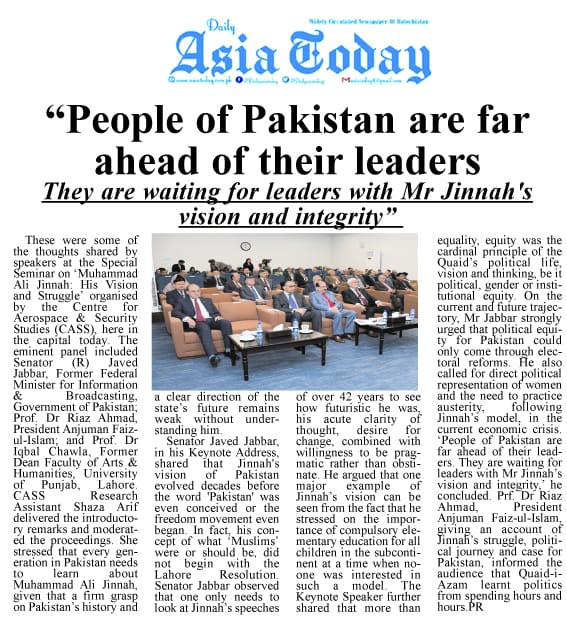
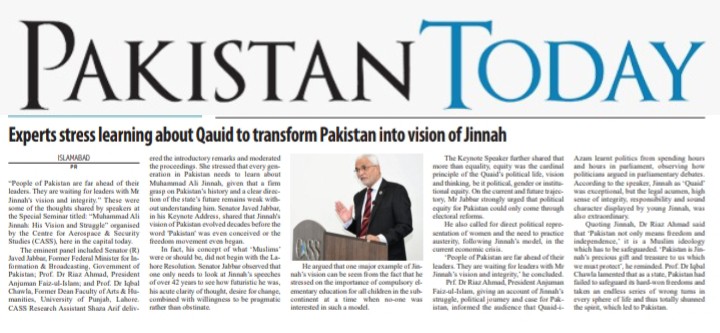
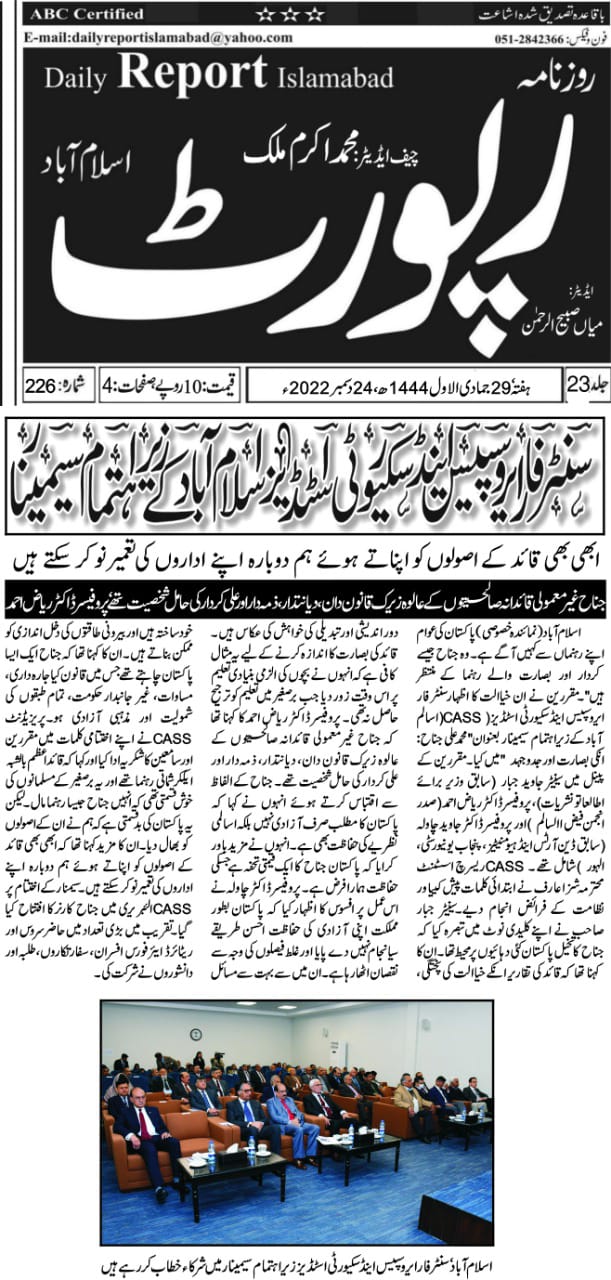
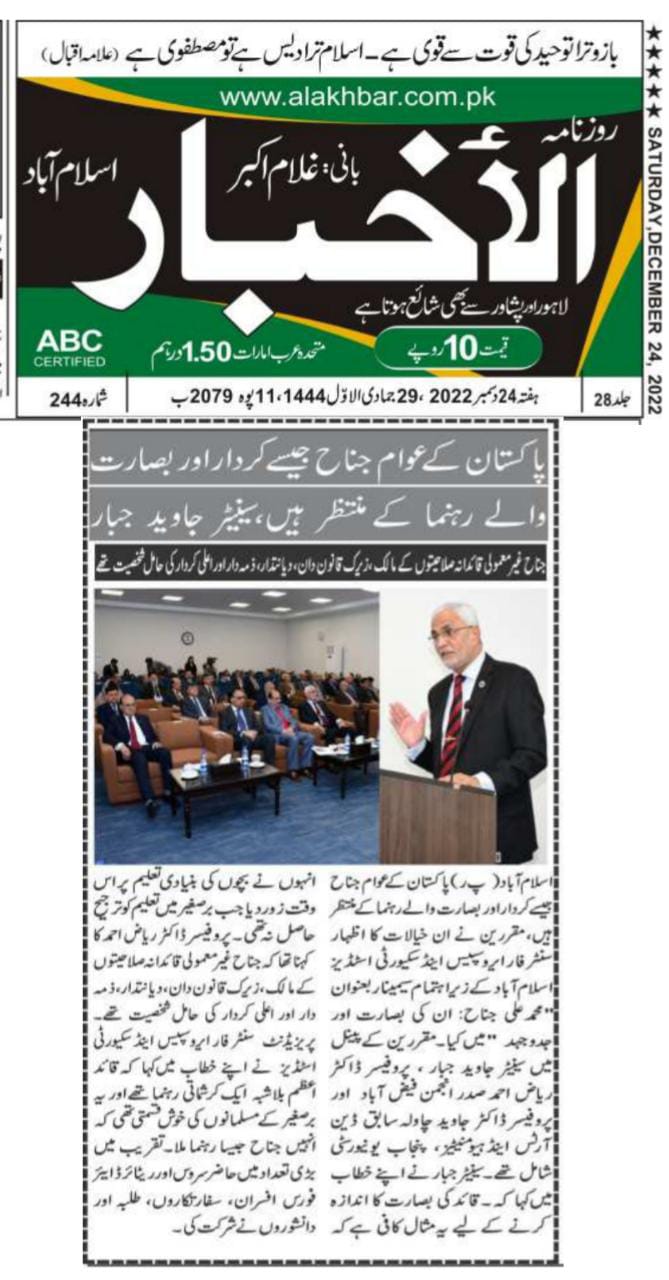
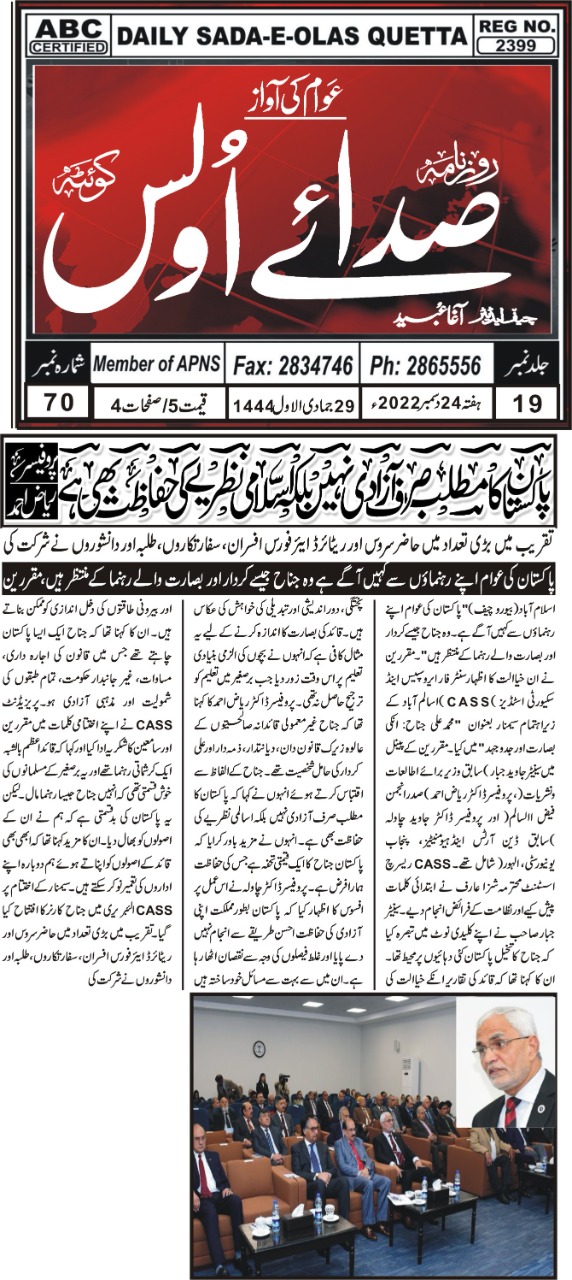
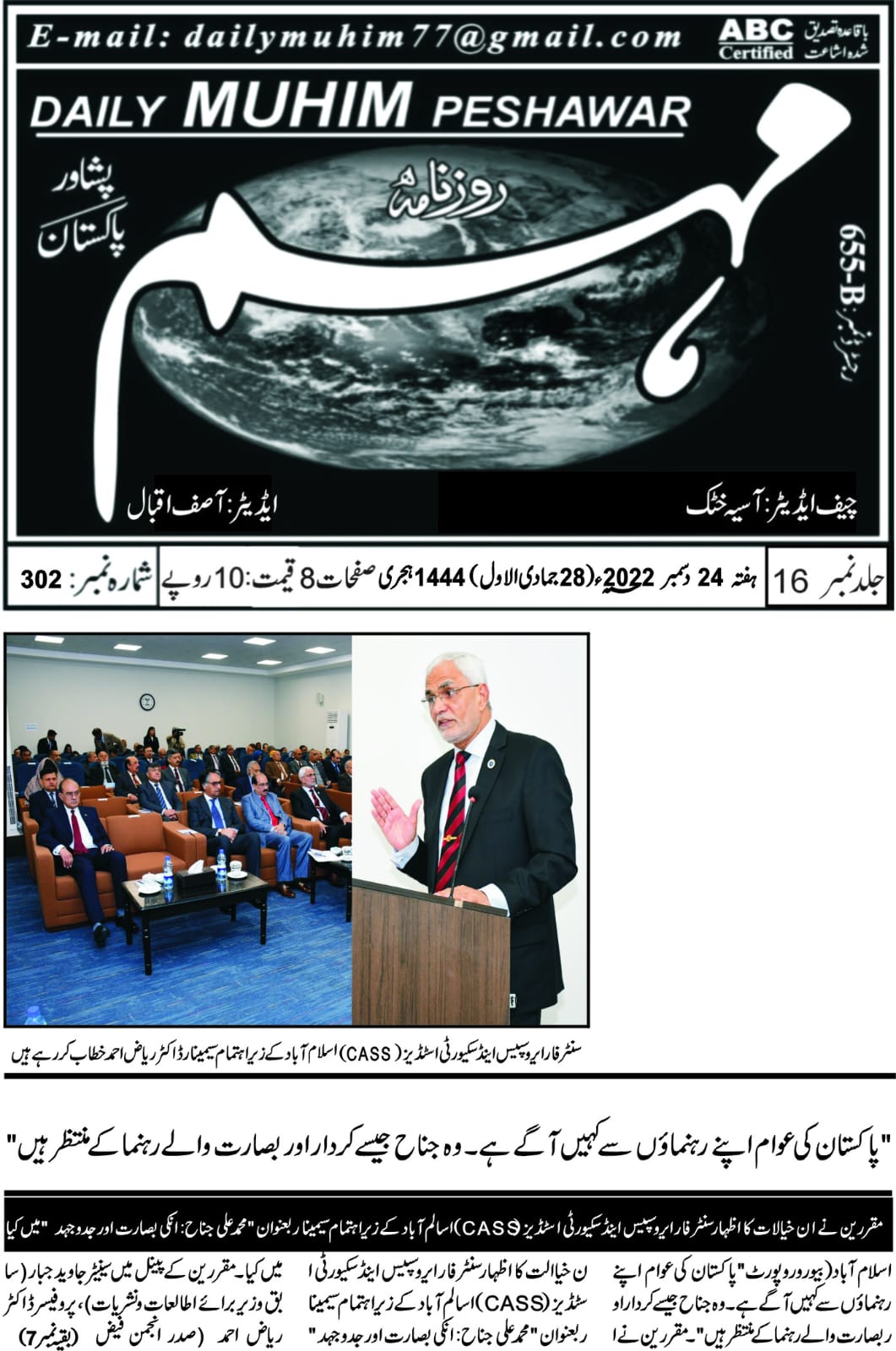
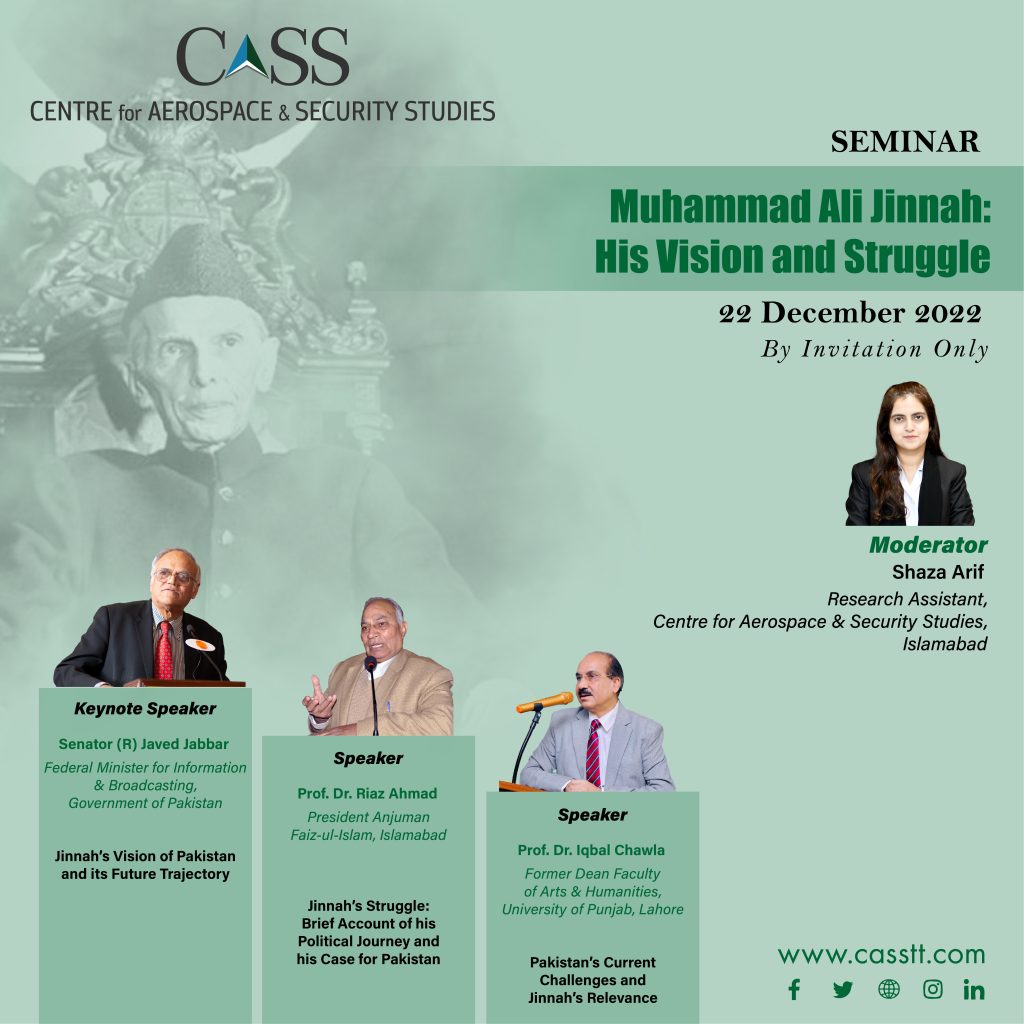
The Centre for Aerospace & Security Studies (CASS) is organising a seminar titled ‘Muhammad Ali Jinnah: His Vision and Struggle’ on 22 December 2022 at CASS, Islamabad.
Every generation in Pakistan needs to learn about Muhammad Ali Jinnah, given that a firm grasp on Pakistan’s history and a clear direction of the state’s future remains weak without understanding him. His political life, spanning over four decades, was dedicated to the service of the then-Indian people without any religion-based discrimination. From the power-sharing arrangement between Muslims and Hindus to the partition of India, his struggle was directed toward bringing a smaller nation on equal footing with a larger one.
Although his political journey witnessed many ups and downs, his values, principles, and firm resolve were a bulwark against criticism and opposition from different communities, even from staunch Muslim segments of the time. His charismatic personality, consistent focus, relentless hard work, skillful diplomacy, visionary leadership, and strategy for political mobilisation of Muslims altered the boundaries of the subcontinent against all odds on 14 August 1947.He passed away shortly after Pakistan’s independence, leaving a political vacuum in the newly established state. Like that time, Pakistan today stands at a critical juncture, and there is a need to recall the lessons of history and the legacy of the Father of the Nation ‘Quaid-i-Azam’.
As a nation, we must study his personality, political journey, and vision of an independent Pakistan. Likewise, his concepts about nationhood, democracy, and politics need to be revisited so that lessons can be learnt and applied to our present times. After 75 years of independence, there is a glaring need to assess the existing social and political challenges confronted by Pakistan and identify the measures to address them in accordance with the principles and vision laid out by the Quaid.
Event Press Release
News Coverage
Post Event Report
Powered By EmbedPress