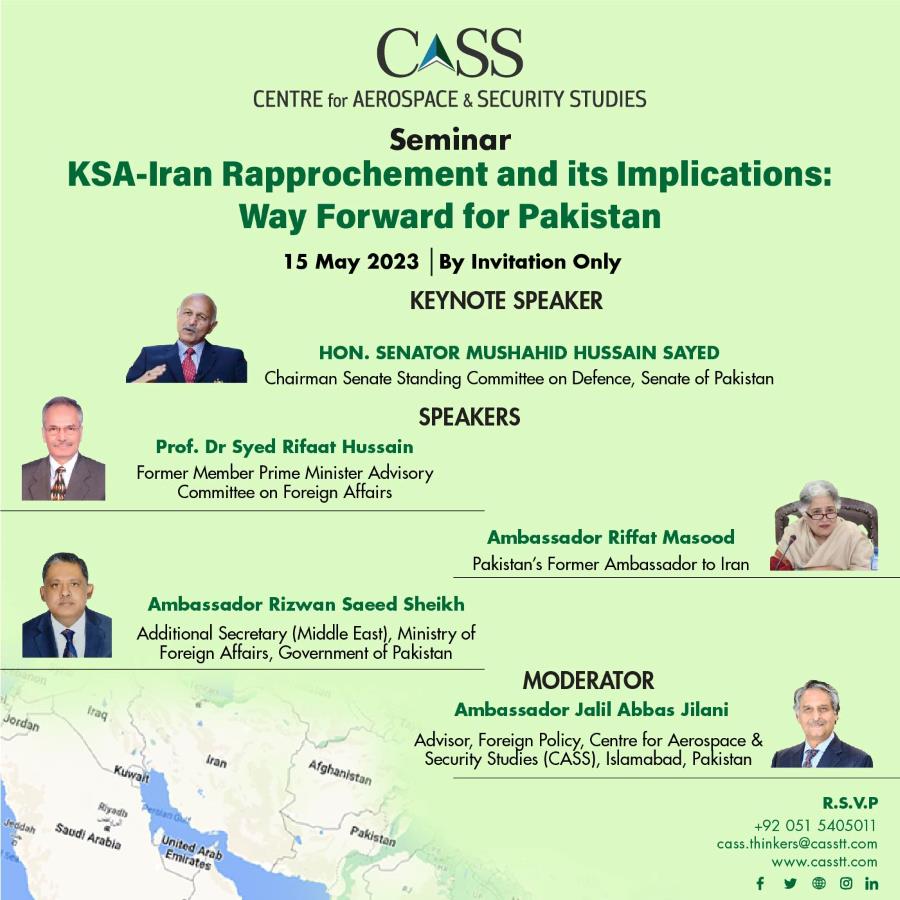
Concept Note
The Chinese-initiated agreement between Iran and Saudi Arabia signed in Beijing on 10 March 2023 to restore diplomatic relations has far-reaching implications for Middle East politics. The rapprochement reflects a geopolitical shift whereby China is likely to assume a larger role in the Middle East – a region where the United States had been a dominant power for a long time.
Besides the Middle East where the Saudi-Iran rapprochement will help resolve several conflicts and forge greater economic and political cooperation, the agreement will also auger well for Pakistan. Pakistan enjoys close and fraternal relations with both Iran and Saudi Arabia. However, Saudi-Iranian tensions of the past remained a major constraining factor in advancing greater economic and political cooperation with the two important countries in the Islamic world. The rapprochement will help lessen tensions and mitigate competing economic, political and security priorities in the Middle East.
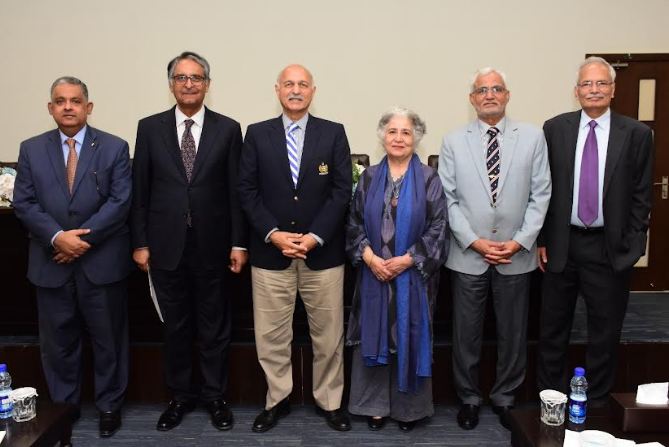
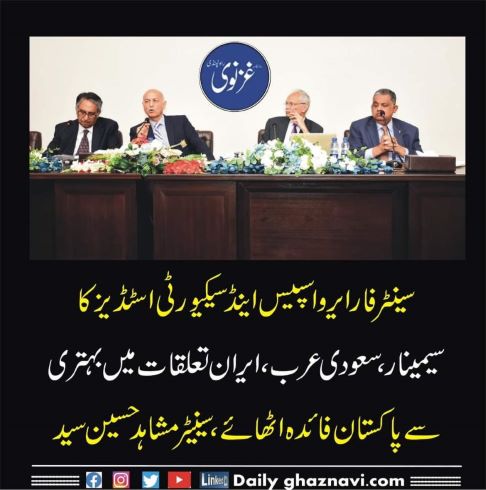
In order to discuss the impact of this rapprochement on the broader Middle Eastern politics as well as the economic opportunities that it provides, this CASS seminar addressed important questions related to the role of major powers in Middle East; future of geopolitical alignments in the region; future of the Islamic world, as well as potential avenues for economic cooperation.
Themes
- Iran-Saudi Rapprochement and Pakistan
- Iran-Saudi Rapprochement and its Impact on Middle East Politics
- Iran-Saudi Rapprochement: Future Prospects
- Iran-Saudi Rapprochement: Impact on Regional Security, Economic Development & Way Forward for Pakistan
Youtube Link: https://www.youtube.com/watch?v=XiBd9y0BivY&t=4430s
Press Release
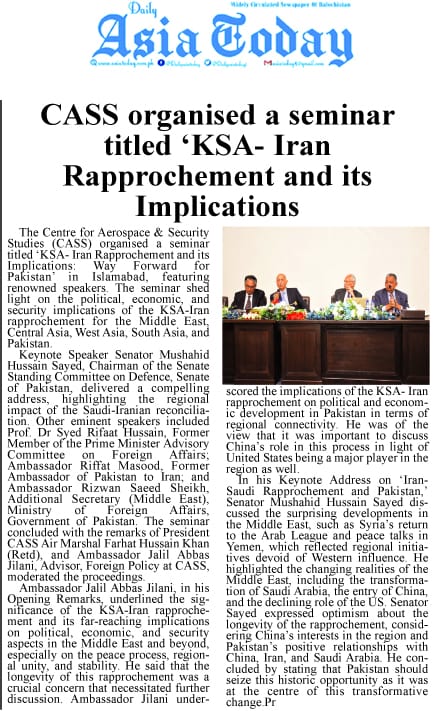
Media Coverage
News Coverage



NewsPaper Links