In the aftermath of the armed insurgency that erupted in Indian occupied Jammu and Kashmir in 1989, the valley fell into what Basharat Peer called ‘Curfewed Night’ – a prolonged nightmare. Three decades later, New Delhi revoked Article 370, apparently to spur investment and deepen integration in the valley. Yet, for Kashmiris, the nightmare has not ended. The recent attack in Pahalgam, which left 26 tourists dead, serves as an unmuted episode in Indian Illegally Occupied Jammu and Kashmir (IIOJ&K)’s continuing ordeal.
Decades ago, Kashmiris inscribed ‘Q.K.’ (Quit Kashmir) on courtyard walls, and slogans like ‘Go India Go’, ‘Al-Umar’, and ‘Taeju’ echoed through the valley. During a 2008 visit to IIOJ&K, Arundhati Roy recorded hearing chants such as: ‘Dhoodh maango ge, kheer dein ge; Kashmir maango ge, cheer dein ge’ (Ask for milk, we’ll give you dessert; ask for Kashmir, we’ll tear you apart). Today, those slogans have faded. Headlines now highlight G20 meetings and post-2019 booms in tourism and investment. This raises a critical question: has the revocation of Article 370 erased half a century of resentment in just six years?
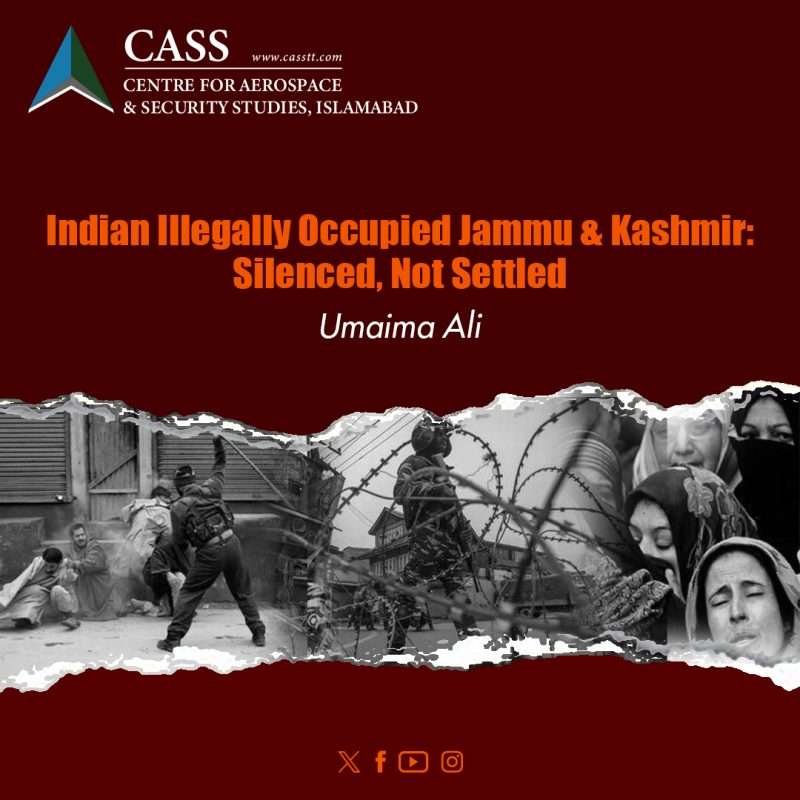
The Pahalgam attack challenges the narrative of Modi’s prosperous ‘Naya Kashmir’. According to the managing editor of Kashmir Times, ‘normalcy has proved to be a mirage in Kashmir’. After India’s 2019 clampdown silenced most headlines, IIOJ&K faded away from the memory of the international community. But silence does not translate into peace. Within a month of the revocation of Article 370, more than 200 politicians, 100 community leaders, and many outspoken activists were imprisoned. There has been a systemic institutionalisation of information control. Journalists and human rights defenders have been harassed, detained and accused of ‘terrorism’ for reporting gross human rights violations in occupied Jammu and Kashmir. Kashmiris witness collective punishment. The human cost is profound: in 2022, a Kashmiri man lost his overseas job, faced financial hardship, and struggled with legal burdens because his brother, a journalist, was arrested for sharing a protest video on Twitter (now X).
Farah Bashir recounts in her memoir that every Kashmiri lives with PTSD (Post-Traumatic Stress Disorder) or is described as being possessed by a djinn – a traditional way of expressing mental anguish. During crackdowns, soldiers storm homes, ransack belongings, and scatter staples like rice and flour across floor. These crackdowns often lead to food shortages and, at times, starvation. Reigniting collective trauma, Indian Security Forces launched a sweeping crackdown following the Pahalgam attack across the valley. Kashmiri students in Jammu and across northern Indian states have faced a wave of violence, threats, and communal slurs. Around 1,500 Kashmiris have been placed under preventive detention. India’s response to the attack shows how the country continues to conflate security with collective punishment. For those born after 1990, fear and resistance have become normalised elements of daily life. Repression in IIOJ&K has migrated from open violence to more invisible, psychological forms of control.
In 2021, the Russell Tribunal on Kashmir warned that the Valley had reached the brink of genocide, fuelled by Hindutva-driven policies carried out with impunity. Yet, this reality remains largely invisible in both Indian and global media. The absence of independent reporting suggests that media bias is deeply entrenched, systematically sidelining accounts of state violence. It was only after the mass casualties of Indian tourists in the Pahalgam attack that global attention briefly redirected towards the situation in IIOJ&K, highlighting how the region’s persistent human rights crisis otherwise remains marginalized in international discourse.
Only a handful of Indian analysts have criticised their mainstream media for perpetuating the illusion of normalcy in the disputed territory, arguing that this portrayal masks the enduring reality of Jammu and Kashmir as a war zone. Thousands of Indian troops are omnipresent, and every Friday, Mirwaiz Umar Farooq is placed under house arrest to prevent him from leading prayers.
Since 2019, normalcy in IIOJ&K has been carefully manufactured through repression, control of the media, and projection of purported economic development. The Pahalgam attack has brought to the fore the inhumane conditions Kashmiris are forced to live under. As long as dissent is crushed, histories erased, and trauma left unhealed, Indian Illegally Occupied Jammu and Kashmir will remain a conflict unresolved – silenced, perhaps, but far from settled.
Umaima Ali is a Research Assistant at the Centre for Aerospace & Security Studies (CASS), Islamabad. She can be reached at [email protected].