SEM-Indian GE-


Share this event

Facebook
Twitter
LinkedIn

Concept Note

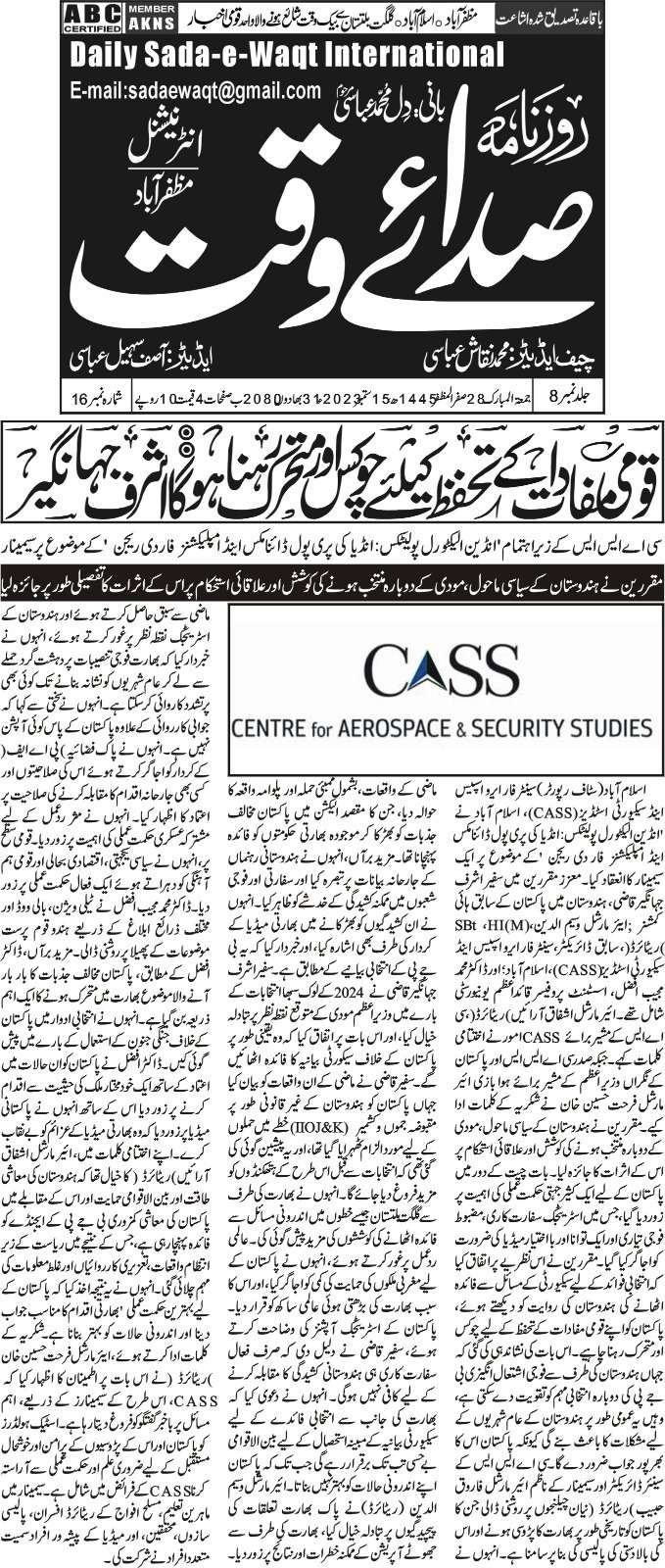
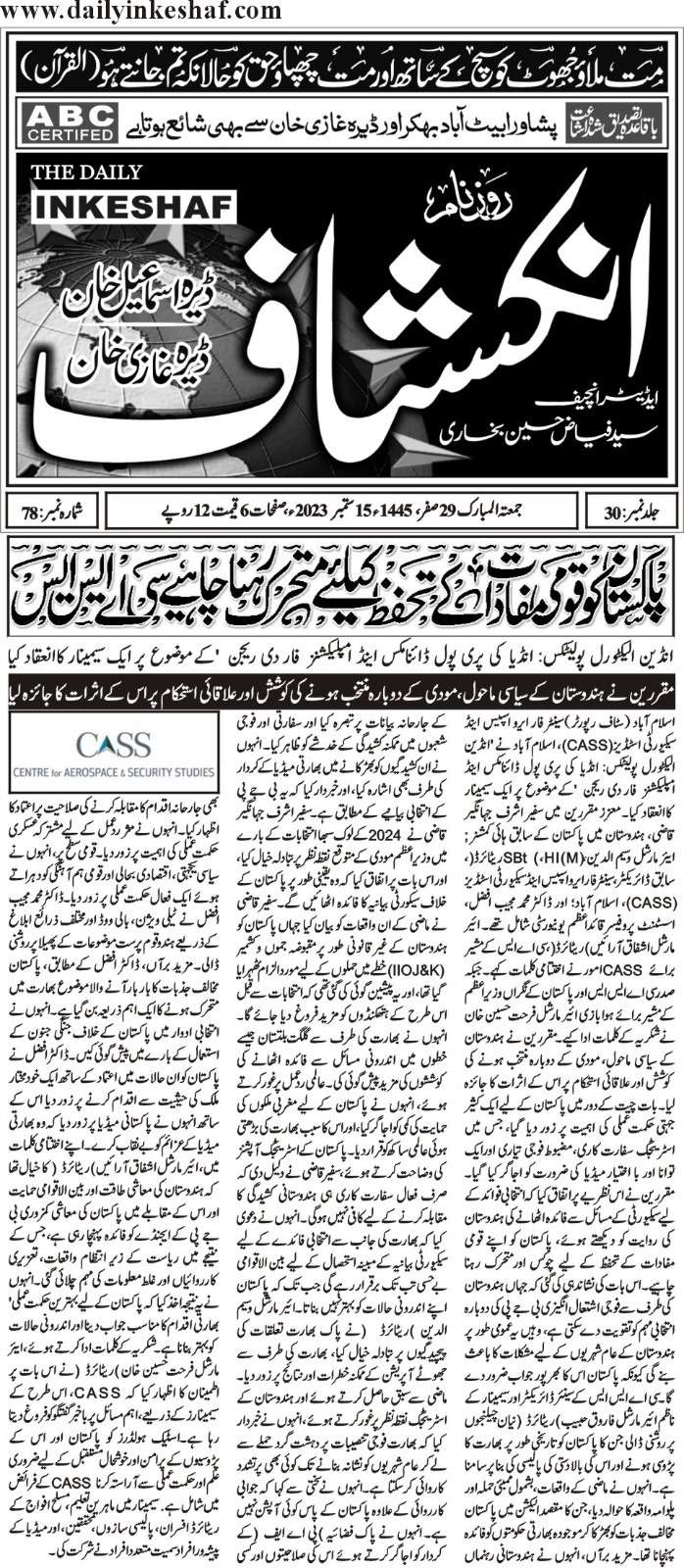
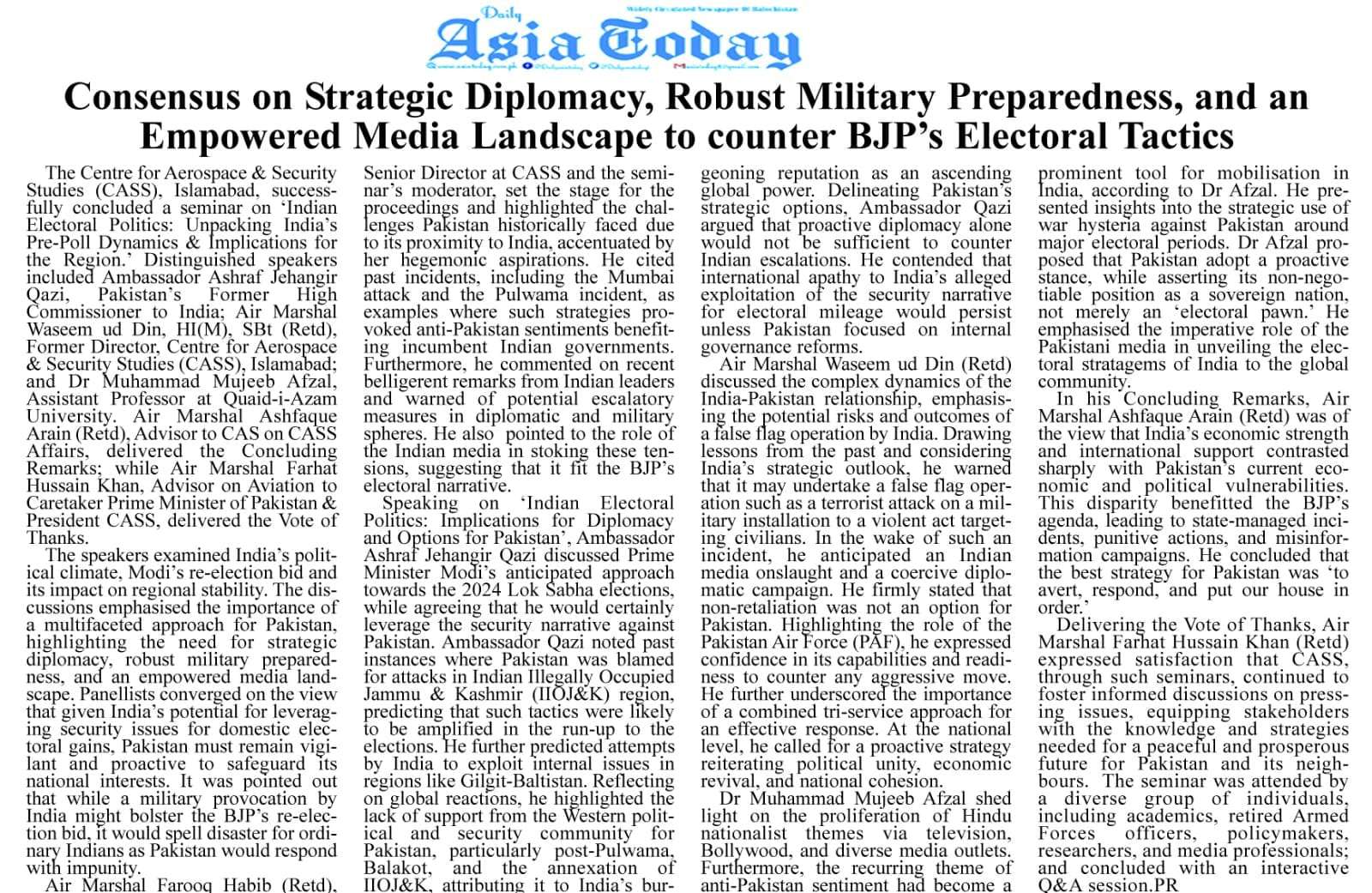
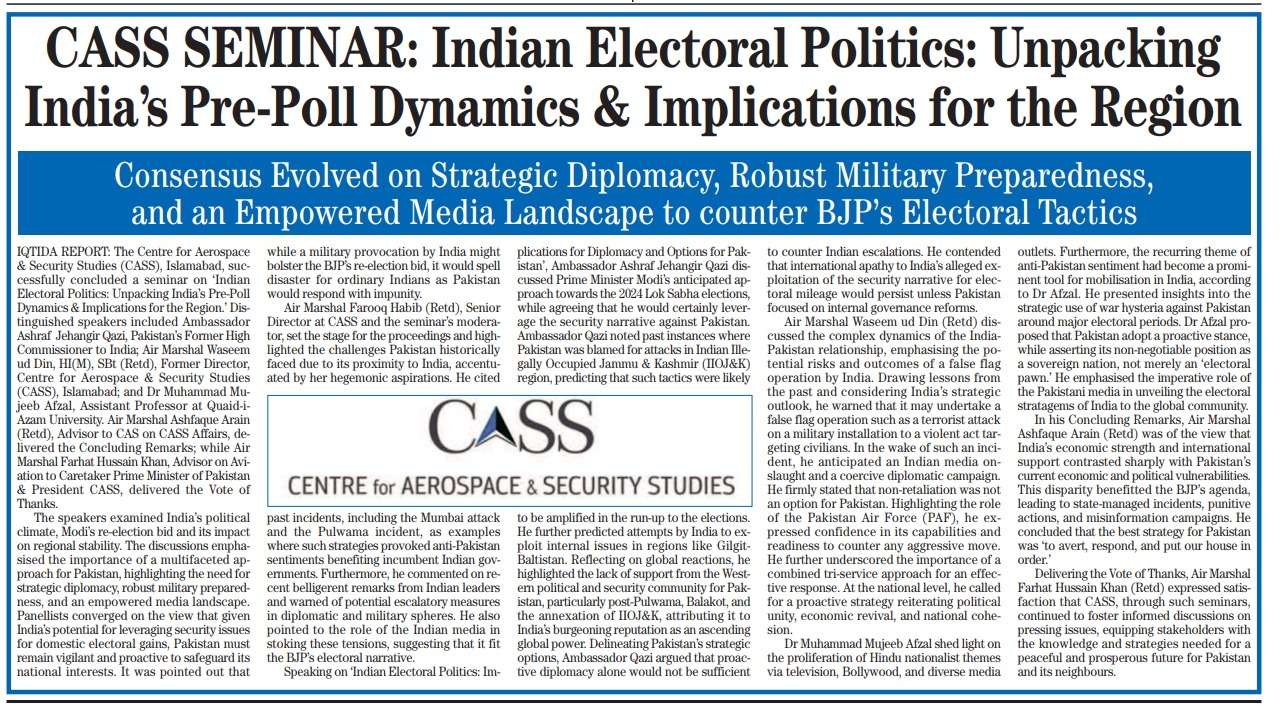
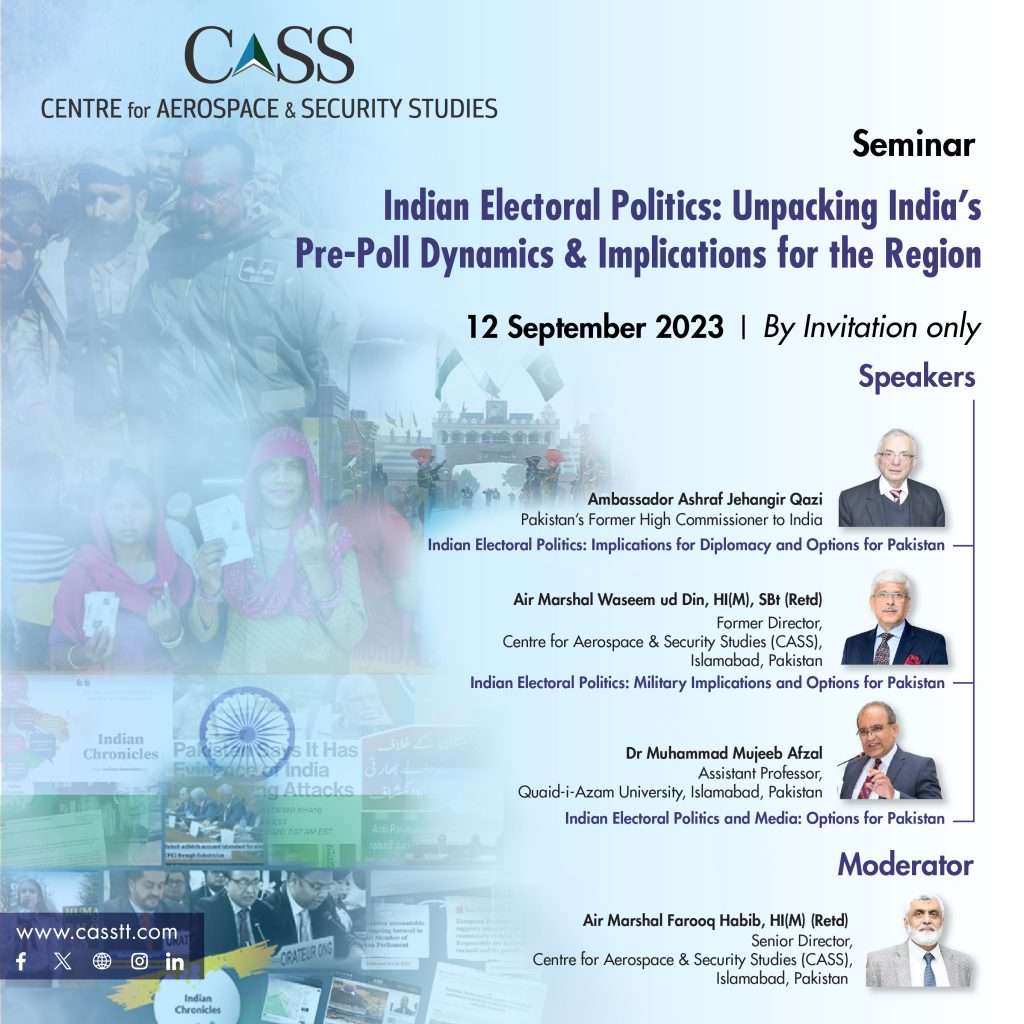
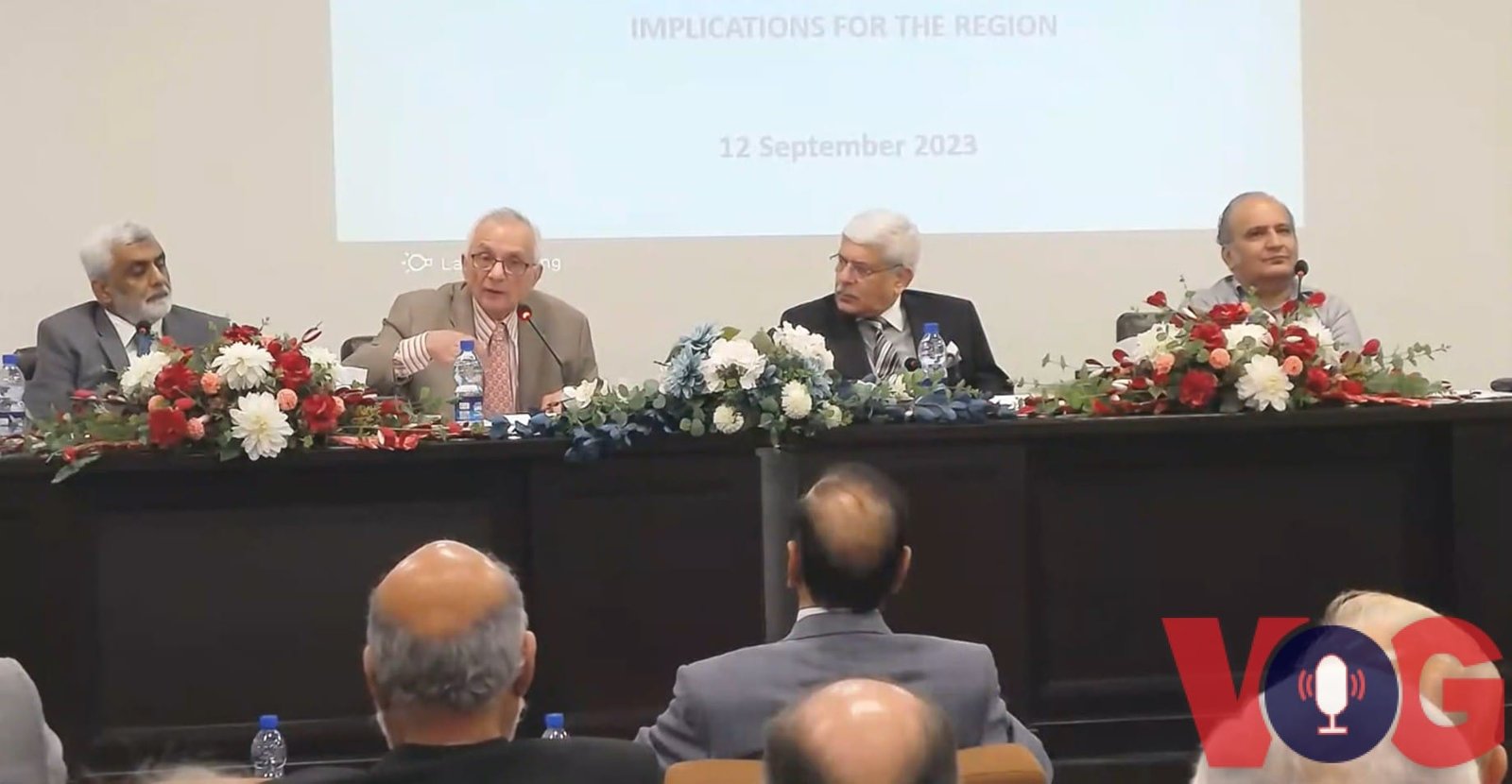
As India begins its preparation for the 18th General Elections planned in the first half of 2024, the South Asian region is enveloped in a palpable sense of apprehension. The uneasiness relates to a conspicuous history of inexplicable events which have preceded past Indian general and state elections enabling India to play the ‘national security card’ directed against Pakistan. The aim of such moves is invariably to draw political mileage at the domestic front. Unfortunately, due to India’s internal dynamics, the ploy has worked each time. Regional security, and sanity, of course, have been the casualties on every occasion. Whether it was the Mumbai attack in 2009, the drama of a ‘surgical strike” in 2016, or the Pulwama incident in 2019, the incumbent governments in India have always benefitted from such events which tend to provoke anti-Pakistan sentiments in the Indian public.  

As if to kick off the election campaign, the Indian Defence Minister recently indulged in highly provocative statements against Pakistan. As we draw closer to the election date,  one expects more coercive outbursts from the Indian civil and military leaders, peppered by a few managed/orchestrated ‘incidents’ which are likely to provide an excuse for escalatory measures in other domains. The Indian media, as usual, is likely to go into a  frenzy, with its warmongering rhetoric. The situation perfectly fits BJP’s electoral politics and its bid to power one more time. 

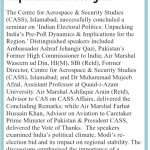
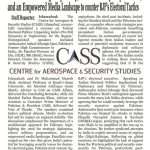
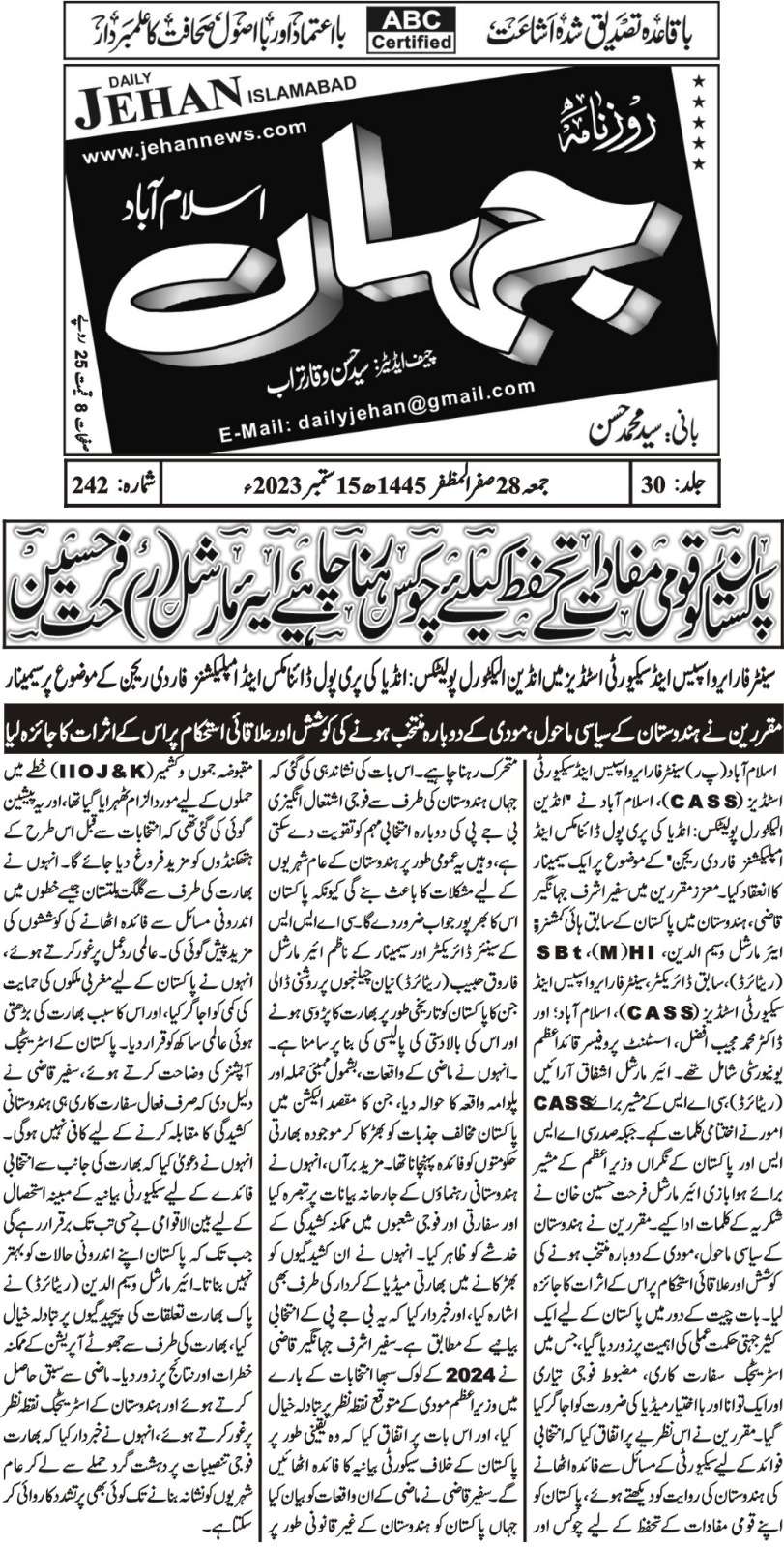
Against this backdrop, this seminar was organised by the Centre for Aerospace & Security Studies (CASS), Islamabad, to provide a platform for in-depth discussions and knowledge sharing on anticipated Indian pre-polls trajectory on the basis of its history and current policies. The seminar identified challenges to regional stability in the wake of Indian actions and charted out recommendations in this regard.

Press Release

News Coverage
Newspaper Links
Other Events

THE FUTURE OF THE INDUS WATER TREATY

For more than six decades, the Indus Water Treaty (IWT), signed in 1960 between Pakistan and India, remained as one of the most enduring transboundary water-sharing agreements in the world. Despite multiple wars, political crises, and prolonged periods of bilateral hostility, the treaty largely continued to govern the allocation and management of the waters of the Indus Basin

Read More »

Fiscal Survival or Economic Reform? Decoding Pakistan’s Budget Priorities

Pakistan’s annual budget is more than a fiscal document; it is a reflection of the country’s structural economic constraints, political choices, and shifting development priorities. The tension between fiscal survival and meaningful economic reform has become increasingly pronounced amid rising debt servicing obligations, limited fiscal space, and recurring dependence on external financing. In this context, budget-making often appears reactive—focused on stabilisation and compliance with short-term macroeconomic targets—rather than transformative, aimed at broad-based productivity, institutional reform, and sustainable growth.

Read More »

Nuclear Capability: Balancing Global Security and Energy Needs

Recent global developments—including geopolitical tensions, energy crises, and shifting power dynamics—have intensified discussions around nuclear capability. After the Russia-Ukraine conflict and the US-Israel-Iran war, nations are increasingly evaluating nuclear technology not only as a strategic defense mechanism but also as a reliable and large-scale energy source. These developments have brought nuclear capability back to the forefront of international debate.
The dual-use nature of nuclear capability—serving both military and civilian purposes—makes it a critical area of analysis. The ongoing war on Iran has introduced significant uncertainty into the future of Iran’s nuclear trajectory, particularly regarding

Read More »