The question of asset-declaration for powerful figures is a subject of immense controversy, and it is also a point raised by the International Monetary Fund (IMF) during recent negotiations with Pakistan. The government tentatively agreed to have an asset disclosure mechanism for civil bureaucrats in the highest grades (Grades 17-22), but it sought an exemption for army officers, which itself raised a social media firestorm. The question of whose assets should be shown and whose should not be is a matter of extreme sensitivity, and it is, in a sense, a tussle between two competing values: transparency and privacy.
As I cover in my forthcoming book, if the economy were more dynamic and inclusive, perhaps there would be greater value placed on privacy, as much research has shown that tolerance for inequality is greater when a rising tide raises all boats, even if some are raised much further. Since the economy’s wave is ebbing, however, there is a greater push to see with whom the assets lie and why, which reflects much research regarding a greater hostility and aversion towards unequal outcomes in times of acute economic stress.
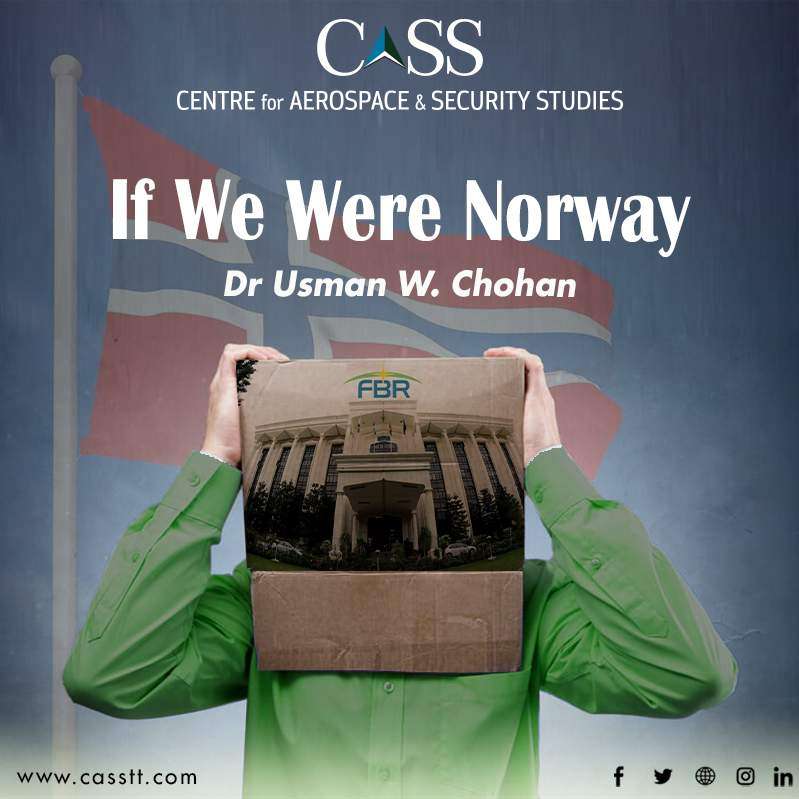
With the question of asset declarations of powerful figures sitting squarely on the debate table, I postulate something much more radical to our imagination: everyone’s assets should be public information. More specifically, every adult Pakistani resident for tax purposes should have their annual filing accessible online. Does it sound insane? This is the standard for tax transparency in Norway, a role model to the world in terms of a dynamic, egalitarian, and inclusive socioeconomic structure. I had in fact covered this subject long ago as a recommendation to Australian society, which itself is by no means an economic backwater and has a fairly robust fiscal architecture.
What is more interesting is that this Norwegian system is not some recent, data-driven fiscal innovation but rather a reflection of 19th Century practices in hard copy transcription well before the digital age. The Norwegian tax transparency model, where every citizen’s taxes are accessible online, acts as the cornerstone of a broader strategy to encourage social accountability. It is bolstered by open e-Government measures, disclosure of its sovereign wealth fund’s holding and trading, as well as an efficiency-driven tax administration structure. In other words, it was more than a century ago that Norwegians decided to make the universal asset declaration a policy priority, and the fact is that the country has had one of the highest GDP per capita ratios of the world throughout that period.
The odds that such an open system of asset disclosure could exist in Pakistan seems laughable or fanciful to many, but then that is the gap of credulity that prevents us from attaining the Norwegian level of societal development. Either way, the current system as it stands cannot persist for long, the IMF has warned. Fiscal reform done piecemeal, with finger-pointing on all sides, cannot proceed very far. It is far more powerful, and persuasive, a process to radically transform the system and bring everyone into a data-integrated system, where all adult residents are automatically and mandatorily made filers (with none of this ‘non-filer’ issues), and those returns are the subject of audits that are driven by AI-based software and substantial manpower, with ultimate disclosure for public record.
Is this something for a society whose ethical calculus is so Janus-faced to aspire towards? One hears plenty of drawing room conversations with the wistful rhetoric of Pakistan having the ‘potential’ to be like Norway or Switzerland – if only it had the ‘right leadership’. But, this is simply not true. Pakistan could only be like them if it undertook an adoption of the same systems as these countries, from the ground up. This, in turn, would require an absolute change of mindset, one that embraces transparency in the pursuit of a society that is less unfair. Many would, at least publicly, embrace such a policy, arguing that they have nothing to hide. If it were brought to an anonymized referendum, however, a much smaller proportion of people would vote for such a measure. Everyone is in on the game, and while every person in this country is trying to come first, their country has come dead last.
Dr Usman W. Chohan is Advisor (Economic Affairs and National Development) at the Centre for Aerospace and Security Studies. He can be reached at [email protected].