
Situated in the heart of South Asia and central to significant economic corridors, Pakistan’s ambition to enhance regional connectivity and integration is contingent upon a foreign policy that adeptly navigates ever-evolving geopolitical dynamics. These include the Sino-US rivalry, instability in Afghanistan, India’s aggressive posture, and the emerging Iran-Saudi Arabia pact. This Working Paper aims to provide an analytical overview of how Pakistan can strategically guide its foreign policy in response to these dynamics. Utilising both primary and secondary qualitative data collection methods, the study explores viable strategies for Pakistan to effectively manage its relations with both its immediate neighbours and predominant global powers, specifically the United States and China.
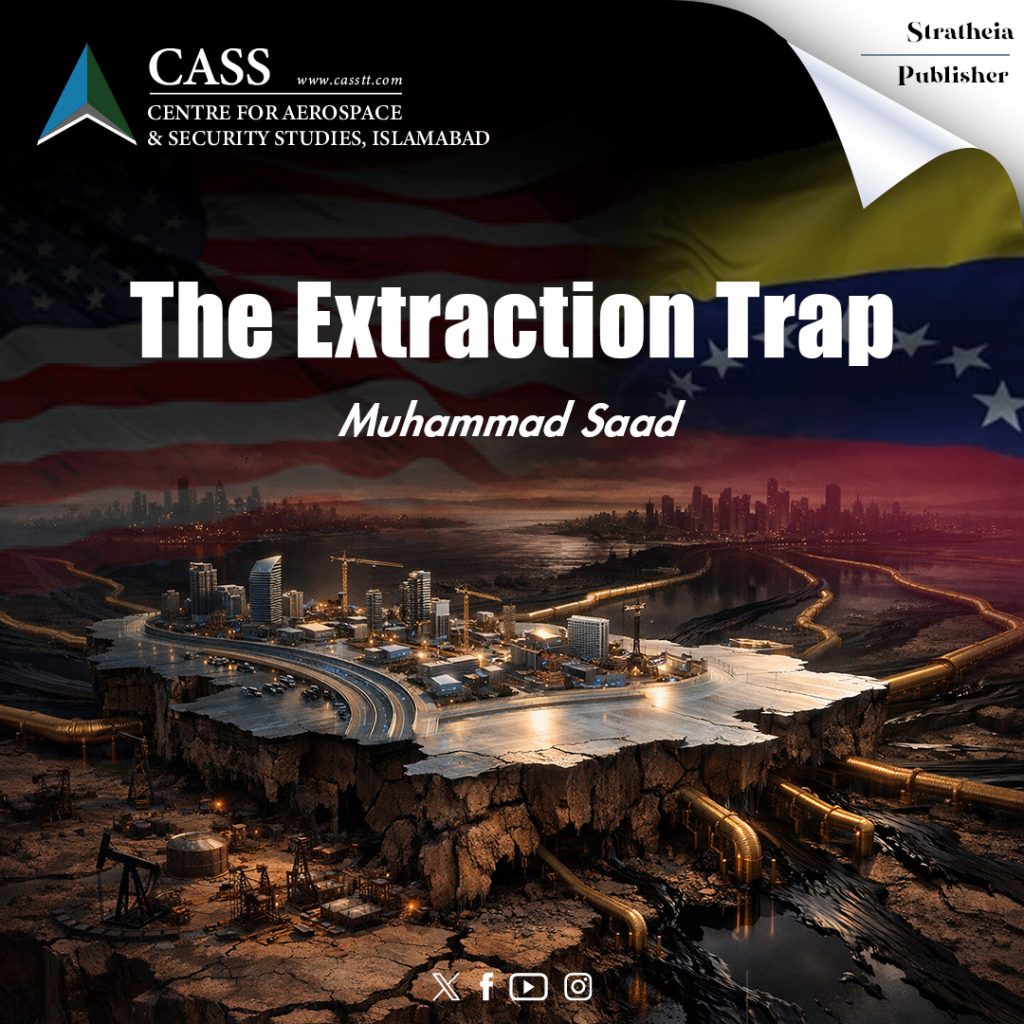
The Extraction Trap
Trump’s declaration to “run Venezuela” after Maduro’s capture is a seeming promise of a sudden cure to Venezuela’s ills. However, it ignores the nation’s terminal diagnosis of a century of plunder. The rhetoric of imminent revival on the basis of the speedy return of international oil capital and the promise of 100 billion US dollars in reconstruction funds made the intervention seem like a unique opportunity.
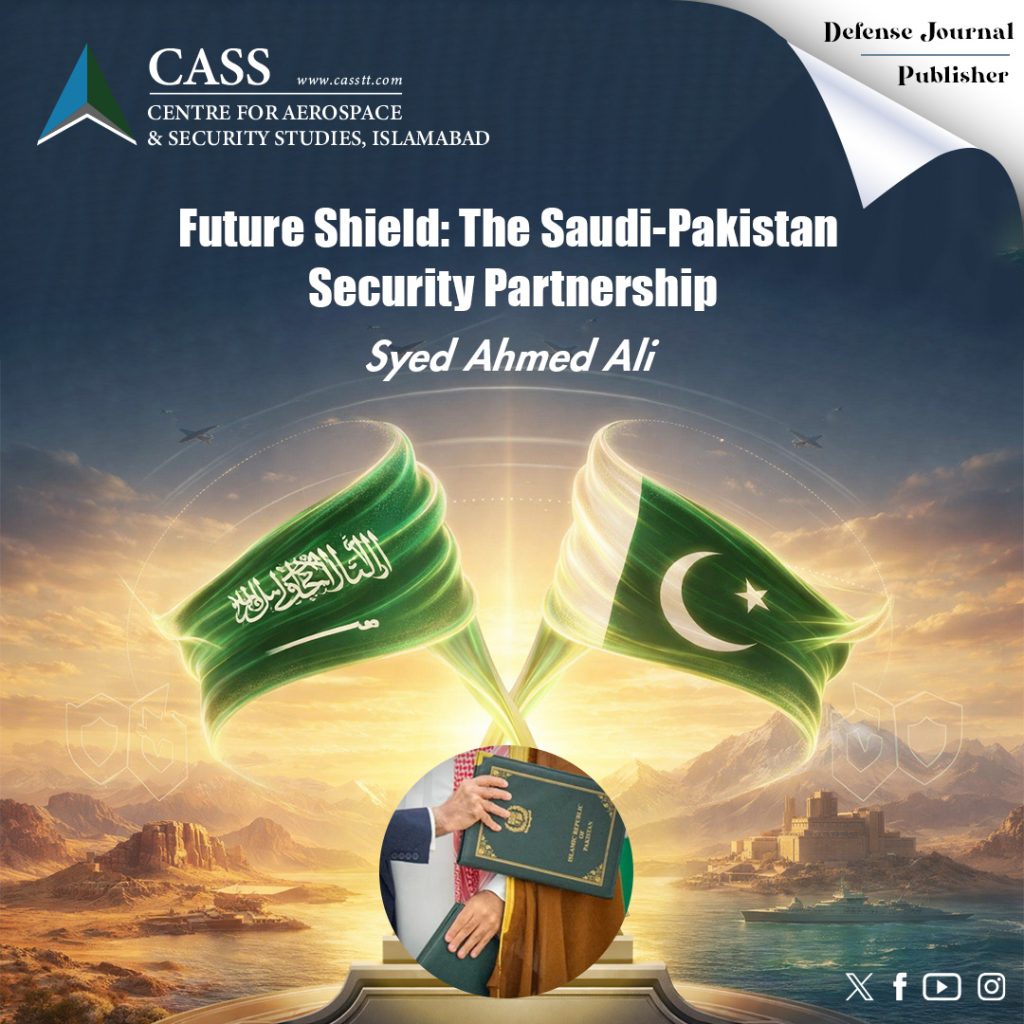
Future Shield: The Saudi-Pakistan Security Partnership
Although the SDMA does not identify an adversary, effectively functioning as a deterrent, it cannot be viewed in isolation from the Israeli belligerence in the Middle East. Israel’s war against Hamas has expanded beyond the genocide of Gaza; it has bombed the West Bank, Lebanon, Syria, Yemen, Iran, and recently Qatar. Tel Aviv’s campaign under the banners of ‘anti-Semitism’ and ‘terrorism’ has engulfed the whole Middle East in a war-like situation, which has generated new enemies and has deepened the instability of the region.
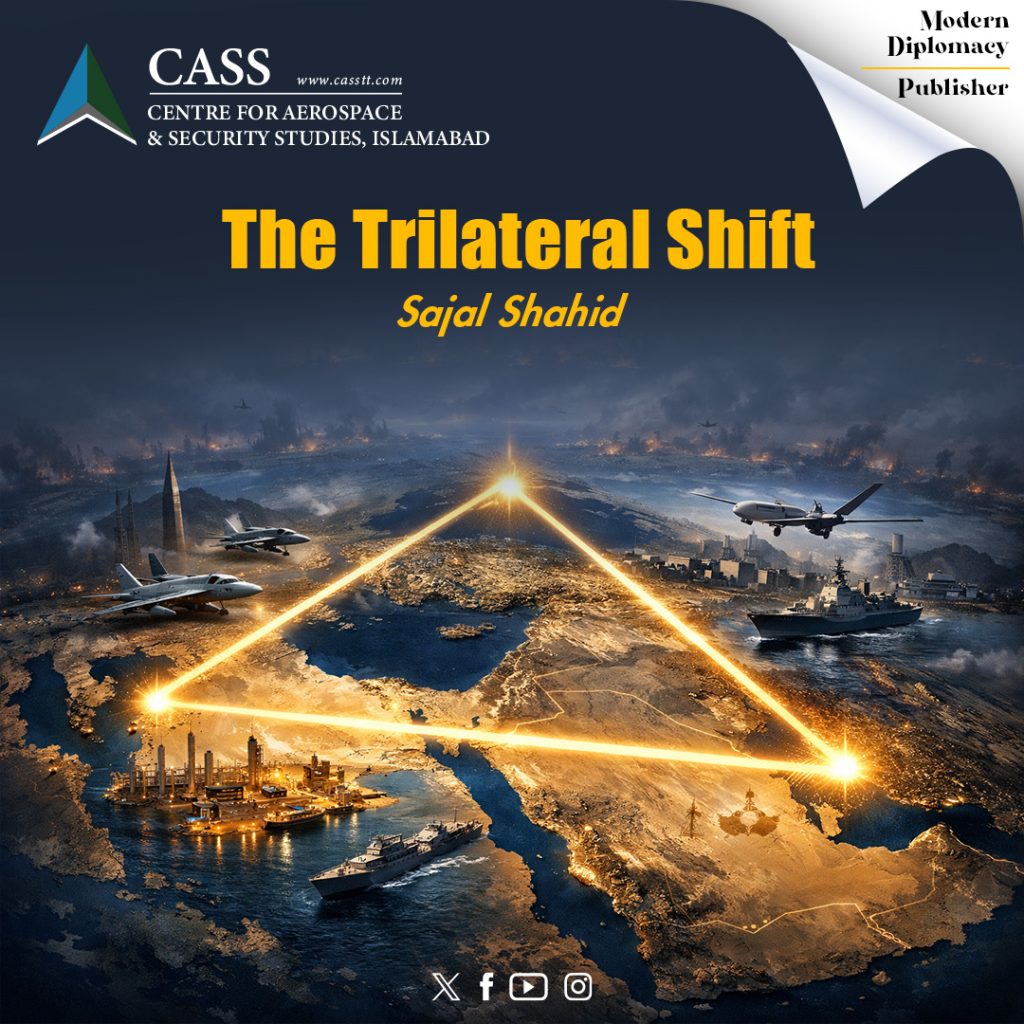
The Trilateral Shift
On 15 January 2026, the Pakistani defence production minister confirmed that an agreement for a new trilateral defence deal between Pakistan, Saudi Arabia, and Türkiye is in the pipeline, other than the Pakistan-Saudi bilateral deal announced last year.
