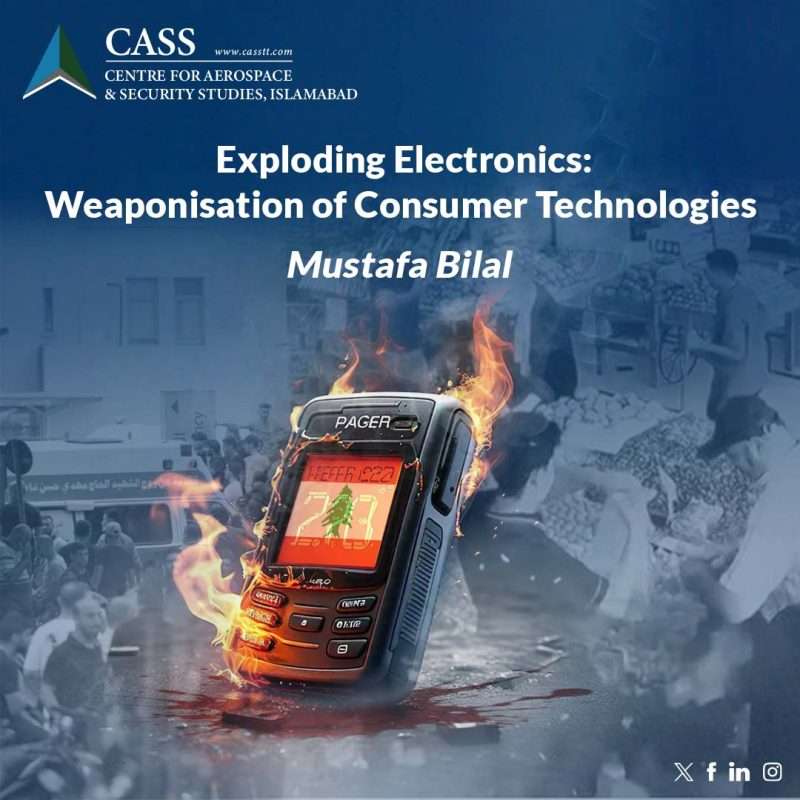
It is rather ironic that in a month which started with the launch of the latest iPhones and the first tri-foldable smartphone, technologically obsolete pagers and walkie talkies have garnered global attention. Headlines in the past few days have revolved around the exploding electronics in Lebanon. There is speculation that Hezbollah leadership decided to shun internet connectivity by resorting to use communication gadgets predating the digital era. Their justification for doing so can be reasonably assessed by the fact that pagers and walkie talkies evade detection by sophisticated digital surveillance.
However, the unexpected turn of events showed that this was a grave miscalculation. The once seemingly harmless gadgets suddenly became remotely detonated bombs, killing 32 and injuring more than 5000. As the panic settled in Lebanon, it became clear that these exploding electronics were more than just a symbol of rising tensions in the Middle East. The psychological fallout of the explosions goes beyond Lebanon and could lead to an erosion of trust in gadgets in general. This is underscored by the uproar on social media where people are expressing shock and helplessness in knowing that their personal electronic devices could be turned against them. Thus, the attack in Lebanon has far-reaching implications for public trust in technology, global ICT supply chains, and national security.
For over two decades, trust in consumer electronics has been the foundation of the global ICT industry. For instance, all major multinational technology companies have built the image of their brands on the promise that their products are not only secure but safe as well. However, they could now be confronted with ‘digital paranoia’ as consumers could become increasingly suspicious of buying imported technologies. Their suspicions fueled by reports of Israeli sabotage against thousands of communication devices in places like Lebanon.
While there have been numerous cases of technical malfunctions, the infamous 2016 recall of nearly 2.5 million ‘exploding’ Galaxy Note 7s particularly comes to mind. However, the controversy around the Israeli sabotage operation in the Lebanon incident raises a far more unsettling question: Should we remain carefree while buying consumer electronics? The unsuspecting people in Lebanon who were maimed while going on about their normal lives would say otherwise. Already, Lebanon’s civil aviation agency has directed all airlines flying out of its main airport in Beirut to prohibit passengers from transporting pagers and walkie-talkies.
This Israeli operation has set a dangerous precedent where cyber-physical sabotage of personal devices could become noramlised. As we ponder the resulting implications, we must also confront another serious concern: If electronics as outdated as pagers and radios can be weaponised, how vulnerable are newer technologies?
Such large-scale, coordinated sabotage has revealed how modern gadgets – which have become indispensable in our personal and professional lives – could be weaponised by malicious actors in ways unknown to us. The weaponisation of pagers yesterday could, therefore, be followed by the weaponisation of consumer electronics tomorrow.
The latter scenario is deeply concerning as consumer electronics have globally interconnected and complex supply chains. Resultantly, millions of people could be exposed to harm if states like Israel continue to engage in weaponisation of electronics via the manipulation of ICT supply chains. On an unrelated note, Western states have increasingly alleged that Chinese electronics are embedded with backdoors, yet it is Israeli-compromised tech which caused the first large-scale cyber-physical attack of its kind that has led to dozens of casualties and left thousands injured.
The anxiety caused by the exploding electronics in Lebanon highlights the inherent vulnerabilities in technologies we have long taken for granted. As states grapple with this shocking incident, it should serve as an impetus to promote ICT indigenisation and strive for technological sovereignty. The Lebanon incident also underscores an urgent need for strict domestic and international regulations to ensure oversight of imported technologies and enforce quality checks across ICT supply chains. The way forward demands coordinated action between governments and international bodies like the United Nations, International Telecommunication Union (ITU) and regional alliances to safeguard the public from the emerging threat of cyber-physical warfare. The approach should be multifaceted and include strengthening national legislation and oversight to ensure the security of imported technologies; fostering PPPs to enhance cybersecurity measures; promoting consumer awareness about potential risks; holding perpetrators, like Israel, accountable through international sanctions or legal avenues; and improving supply chain security through rigorous audits and trusted supplier programmes. Lastly, governments and ‘big tech’ should work together to restore confidence in the technologies that underpin modern life.
In the meantime, the psychological shockwaves of the Lebanon incident will continue to reverberate across the world. While ‘exploding mangoes’ is often a subject of satire in Pakistan, ‘exploding electronics’ are no laughing matter. Considering Pakistan’s overwhelming dependence on imported technologies and often smuggled electronics, lessons must be learnt from the Lebanon attack and taken seriously by both individuals and policymakers.
Mustafa Bilal is a Research Assistant at the Centre for Aerospace & Security Studies (CASS), Islamabad. He can be reached at [email protected]