
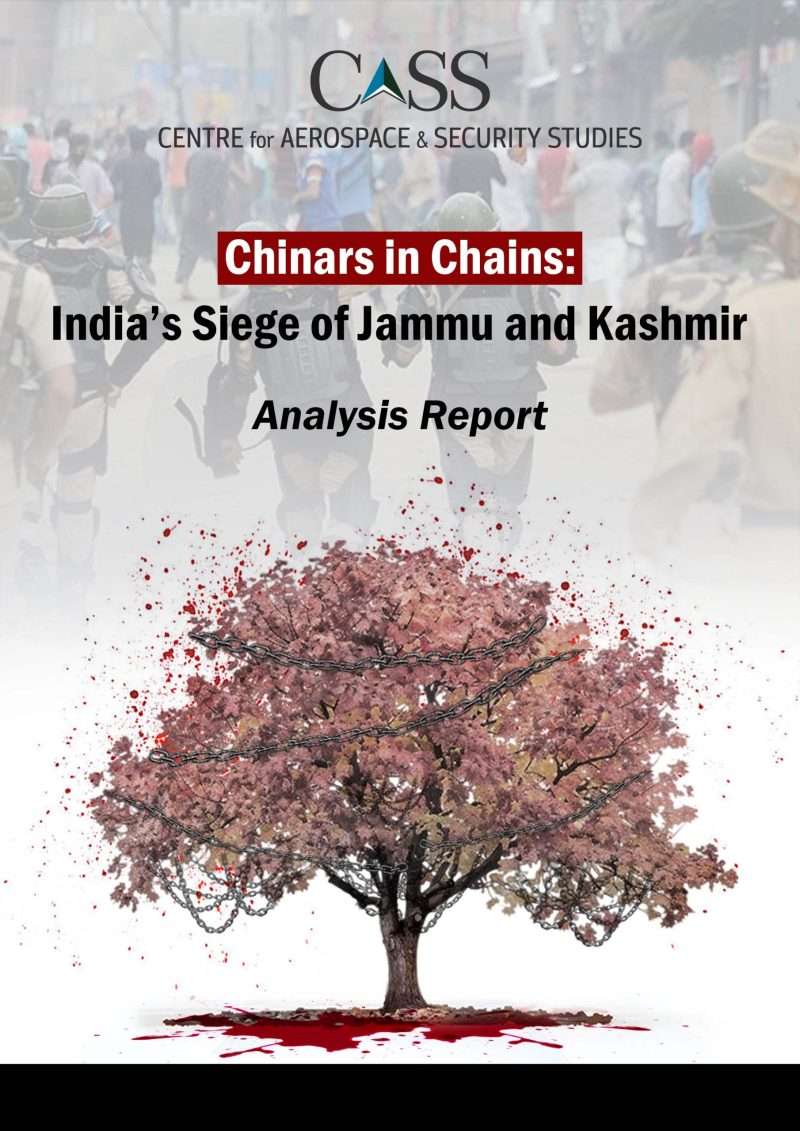
Following the landslide victory of the Bharatiya Janata Party (BJP) in the 2019 Indian General Elections, the government led by Narendra Modi swiftly announced revocation of the special status of Jammu & Kashmir by repealing Articles 370 and 35A of the Indian Constitution on 5 August 2019. More than five years on, the Muslim majority of Indian Illegally Occupied Jammu and Kashmir (IIOJK) continues to be marginalised in every domain of their lives. They remain subjected to the worst kind of exploitation and repression, while being disenfranchised in the land of their ancestors. Regrettably, the world, at large, remains a spectator of this tragedy. To take stock of the current situation in IIOJK, and deliberate possible remedial measures, CASS organised a special lecture as part of its Catalyst Conversations Series on 7 August 2024 titled ‘Chinars in Chains: India’s Siege of Jammu and Kashmir’. The lecture aimed to explore the socio-political impacts of abrogating Articles 370 and 35A in IIOJK, assess India’s strategic objectives and Kashmiri responses, and deliberate on internationalising the Jammu & Kashmir dispute. It also sought to analyse Pakistan’s options, role of digital narratives in shaping international perceptions, and influence of non-traditional diplomatic channels on the Jammu and Kashmir conflict. The distinguished subject matter expert was Mr Altaf Hussain Wani, Chairman, Kashmir Institute of International Relations (KIIR). The ‘Catalyst Conversation’ was moderated by Air Marshal Farooq Habib (Retd), Senior Director at CASS with concluding remarks by President of CASS, Islamabad Air Marshal Javaid Ahmed (Retd).
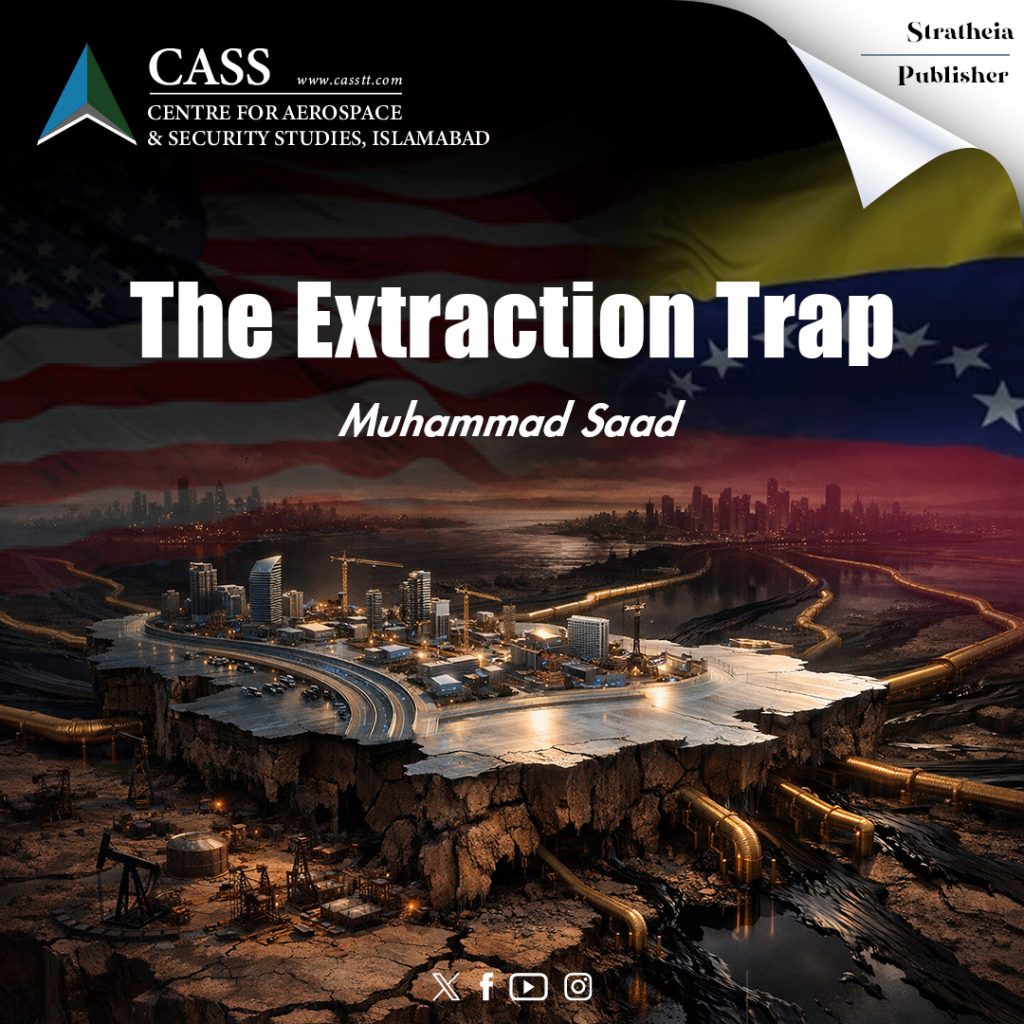
The Extraction Trap
Trump’s declaration to “run Venezuela” after Maduro’s capture is a seeming promise of a sudden cure to Venezuela’s ills. However, it ignores the nation’s terminal diagnosis of a century of plunder. The rhetoric of imminent revival on the basis of the speedy return of international oil capital and the promise of 100 billion US dollars in reconstruction funds made the intervention seem like a unique opportunity.
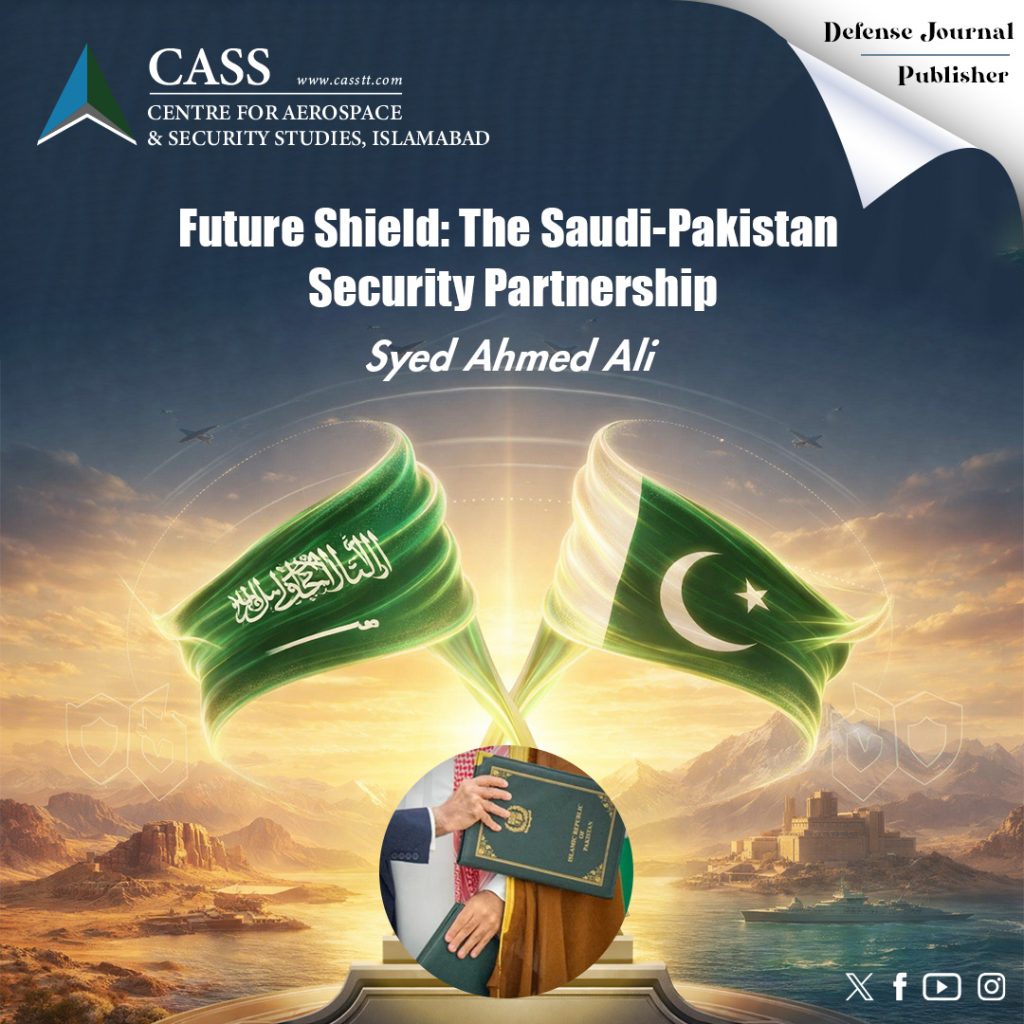
Future Shield: The Saudi-Pakistan Security Partnership
Although the SDMA does not identify an adversary, effectively functioning as a deterrent, it cannot be viewed in isolation from the Israeli belligerence in the Middle East. Israel’s war against Hamas has expanded beyond the genocide of Gaza; it has bombed the West Bank, Lebanon, Syria, Yemen, Iran, and recently Qatar. Tel Aviv’s campaign under the banners of ‘anti-Semitism’ and ‘terrorism’ has engulfed the whole Middle East in a war-like situation, which has generated new enemies and has deepened the instability of the region.
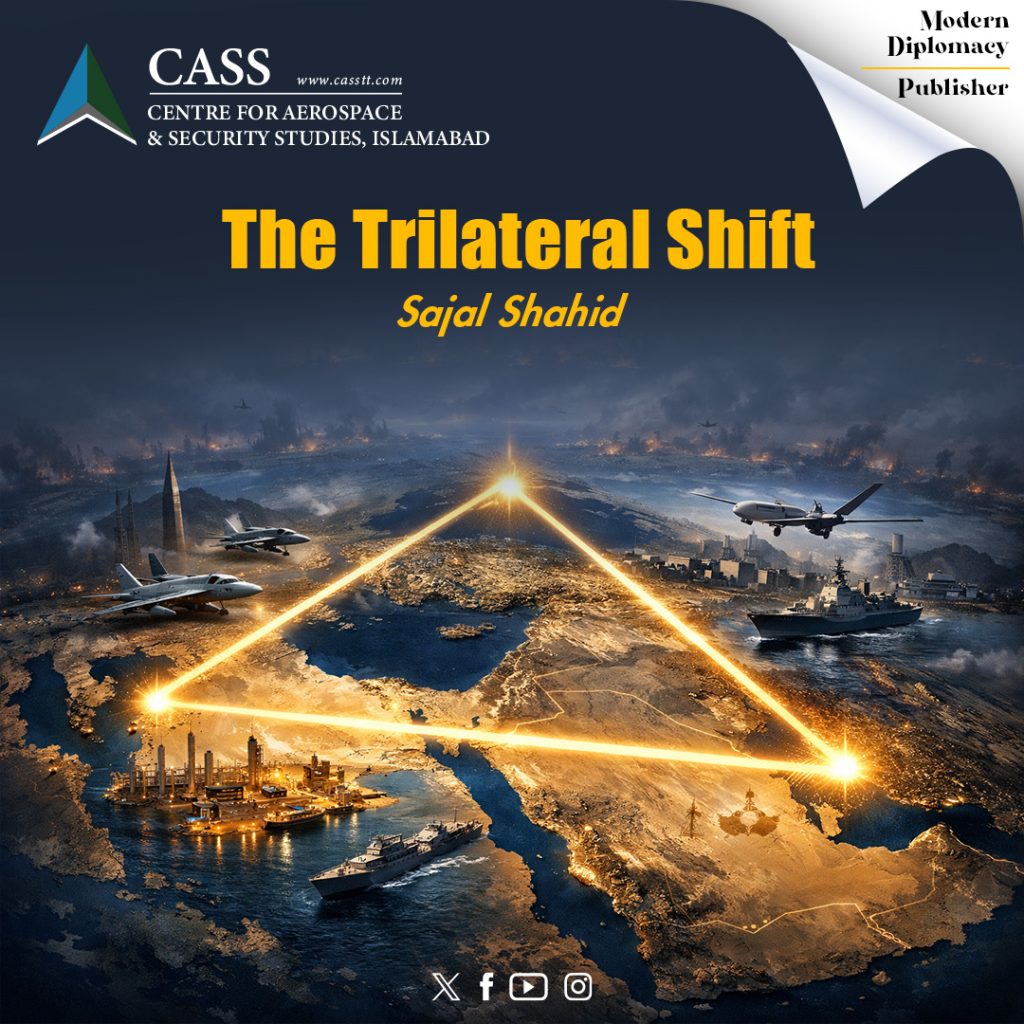
The Trilateral Shift
On 15 January 2026, the Pakistani defence production minister confirmed that an agreement for a new trilateral defence deal between Pakistan, Saudi Arabia, and Türkiye is in the pipeline, other than the Pakistan-Saudi bilateral deal announced last year.
