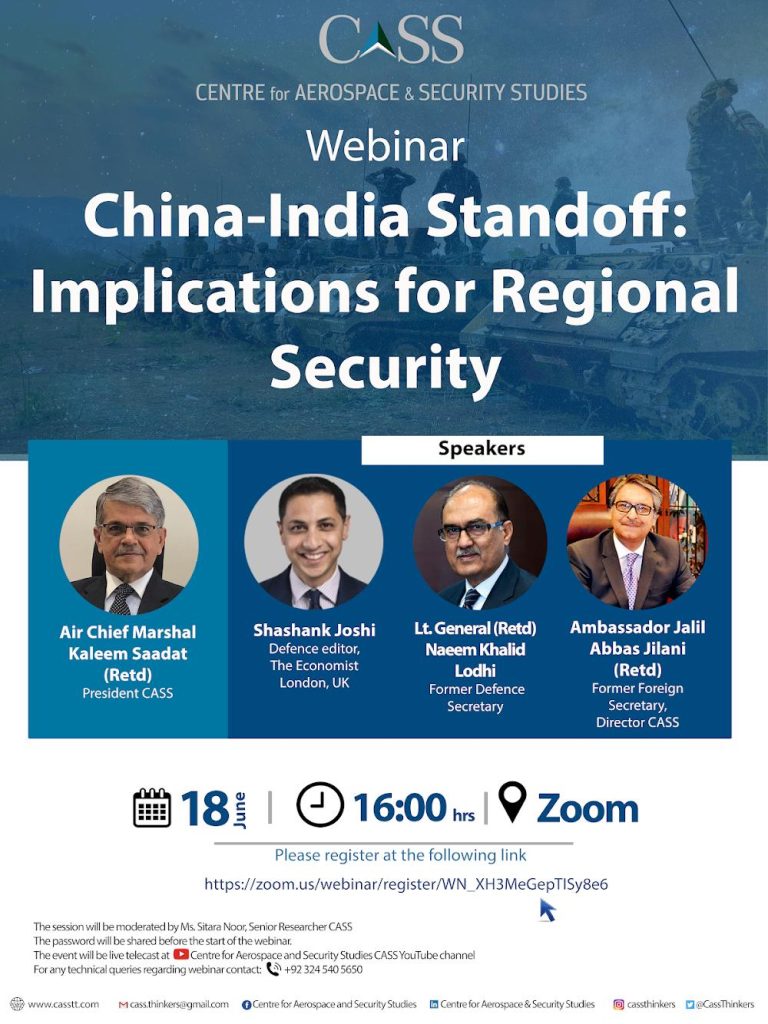
Concept Note
India and China are locked in another military crisis at the Line of Actual Control (LAC) that has so far led to physical brawls between the troops from both the sides without any shots being fired. According to the reports, China’s People’s Liberation Army (PLA) has reportedly captured 40-60 kms of the disputed territory along the LAC and is consolidating its position in response to India’s earlier attempt to build road infrastructure.
The recent crisis is different from the past ones in terms of intensity and magnitude. India is trying to portray Chinese action as an attempt to deflect attention from its ‘alleged’ mishandling of Covid-19 pandemic, but it seems to have been triggered by India’s decision to build permanent infrastructure in the disputed territory after revocation of Article 370 and subsequent change in the status of Ladakh by making it a union territory in 2019.
After initial denials, India’s Defense Minister Rajnath Singh has acknowledged the Chinese incursions across LAC. The first round of military level dialogue on June 6, 2020, remained inconclusive, nevertheless, India continues to downplay the situation with an expectation that issue would be resolved through a dialogue. While both China and India have demonstrated restraint by avoiding further escalation, there is a likelihood that this will continue to remain a contentious issue for both the sides, as China is unlikely to back down and India will continue to use it for its global politics ambitions.
Questions:
- Is the new crisis a one-off conflict or part of grand strategy from both the sides?
- What are the contributing factors behind the recent China-India military standoff at the LAC – both domestic and international?
- What are the risks of horizontal and/ or vertical escalation as a result of ongoing standoff between the two nuclear neighbors?
- What would be the likely outcome of the recent crisis?
- What are the potential implications for Pakistan?
Youtube Link: https://www.youtube.com/watch?v=wNlkVURhsnE
News Room
The Nation: https://nation.com.pk/20-Jun-2020/experts-discuss-china-india-standoff
DAWN: https://epaper.dawn.com/DetailNews.php?StoryText=20_06_2020_113_002
Daily Times: https://dailytimes.com.pk/629097/cass-holds-webinar-on-china-india-standoff-2/