
Technological developments are pivotal to fostering development and economic growth. However, unequal access to modern technologies and innovations amplifies existing disparities, widening the socioeconomic and digital divide between nations. In this context, developing countries, in particular, grapple with systemic barriers, including inadequate infrastructure, high cost of digital services, and limited digital literacy. These challenges, compounded by structural dependencies and institutional shortcomings, significantly hinder their progress toward digital transformation. These ongoing trends call for an in-depth analysis of the global digital divide, including the structural, institutional and socioeconomic factors at play. Furthermore, it is essential to explore actionable strategies to bridge these disparities and foster an inclusive digital future that empowers low-income countries without deepening dependency. In this regard, there is a need to focus on aspects of utmost importance – Access, Equity and Empowerment. In order to broaden the discourse, CASS hosted a webinar titled ‘Bridging the Global Digital Divide: Access, Equity and Empowerment.’ The webinar aimed to get valuable insights from representatives belonging to academia and industry. The eminent speakers included Dr Sumaira Kausar, Director, Centre of Excellence in Artificial Intelligence (CoE-AI), Bahria University, Islamabad; Ms Mahnoor Salman, Senior AI Engineer and Co-founder, Atomcamp; and Mr Adnan Zaidi, CEO, Proxima AI. The session was moderated by CASS Research Assistant Shah Muhammad and concluding remarks were delivered by President CASS Air Marshal Javaid Ahmed (Retd).

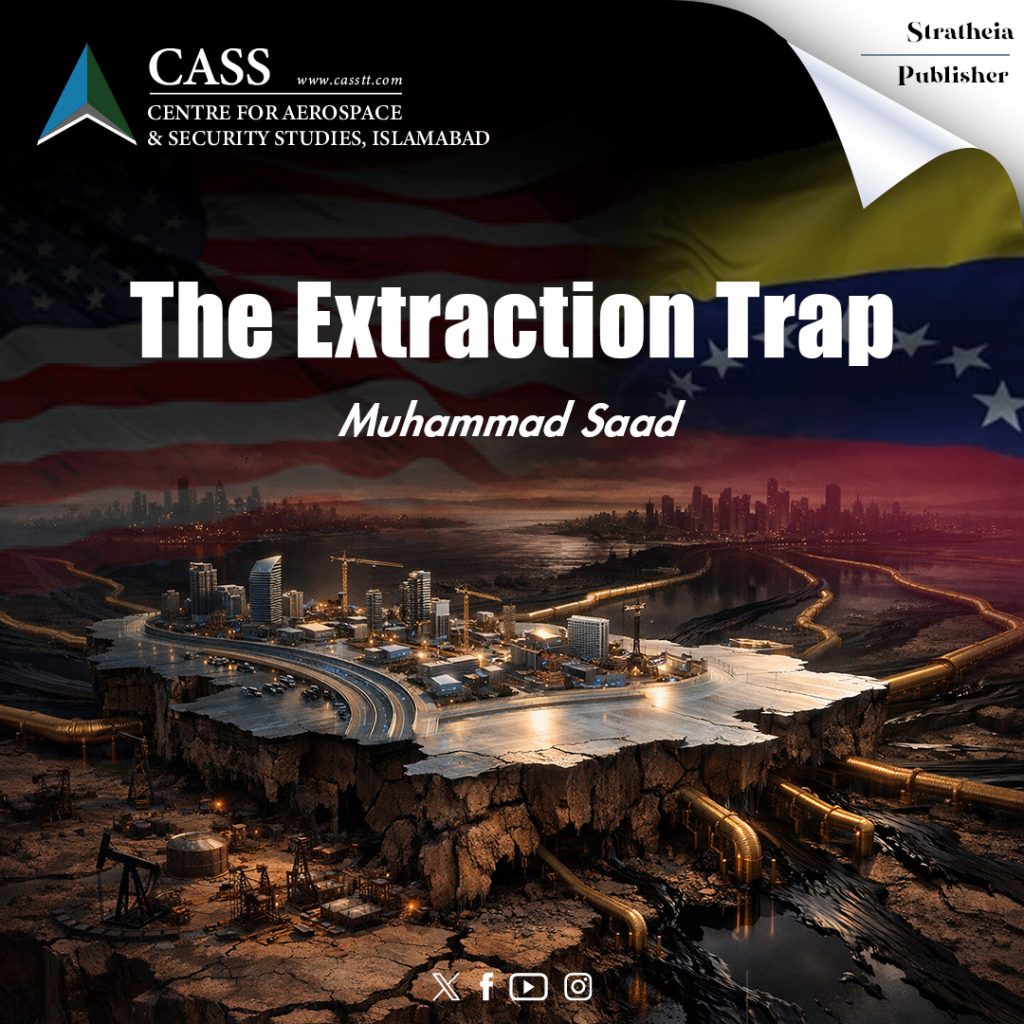
The Extraction Trap
Trump’s declaration to “run Venezuela” after Maduro’s capture is a seeming promise of a sudden cure to Venezuela’s ills. However, it ignores the nation’s terminal diagnosis of a century of plunder. The rhetoric of imminent revival on the basis of the speedy return of international oil capital and the promise of 100 billion US dollars in reconstruction funds made the intervention seem like a unique opportunity.

Future Shield: The Saudi-Pakistan Security Partnership
Although the SDMA does not identify an adversary, effectively functioning as a deterrent, it cannot be viewed in isolation from the Israeli belligerence in the Middle East. Israel’s war against Hamas has expanded beyond the genocide of Gaza; it has bombed the West Bank, Lebanon, Syria, Yemen, Iran, and recently Qatar. Tel Aviv’s campaign under the banners of ‘anti-Semitism’ and ‘terrorism’ has engulfed the whole Middle East in a war-like situation, which has generated new enemies and has deepened the instability of the region.
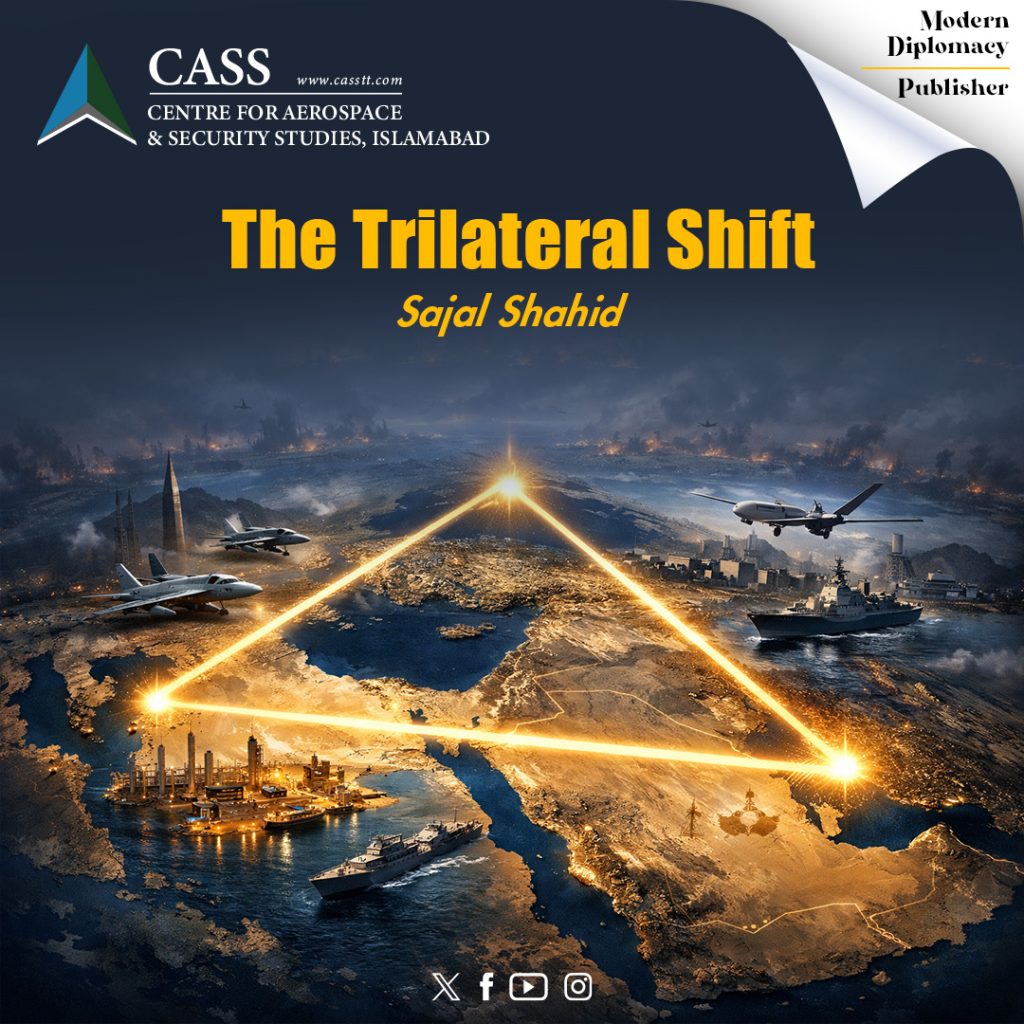
The Trilateral Shift
On 15 January 2026, the Pakistani defence production minister confirmed that an agreement for a new trilateral defence deal between Pakistan, Saudi Arabia, and Türkiye is in the pipeline, other than the Pakistan-Saudi bilateral deal announced last year.
