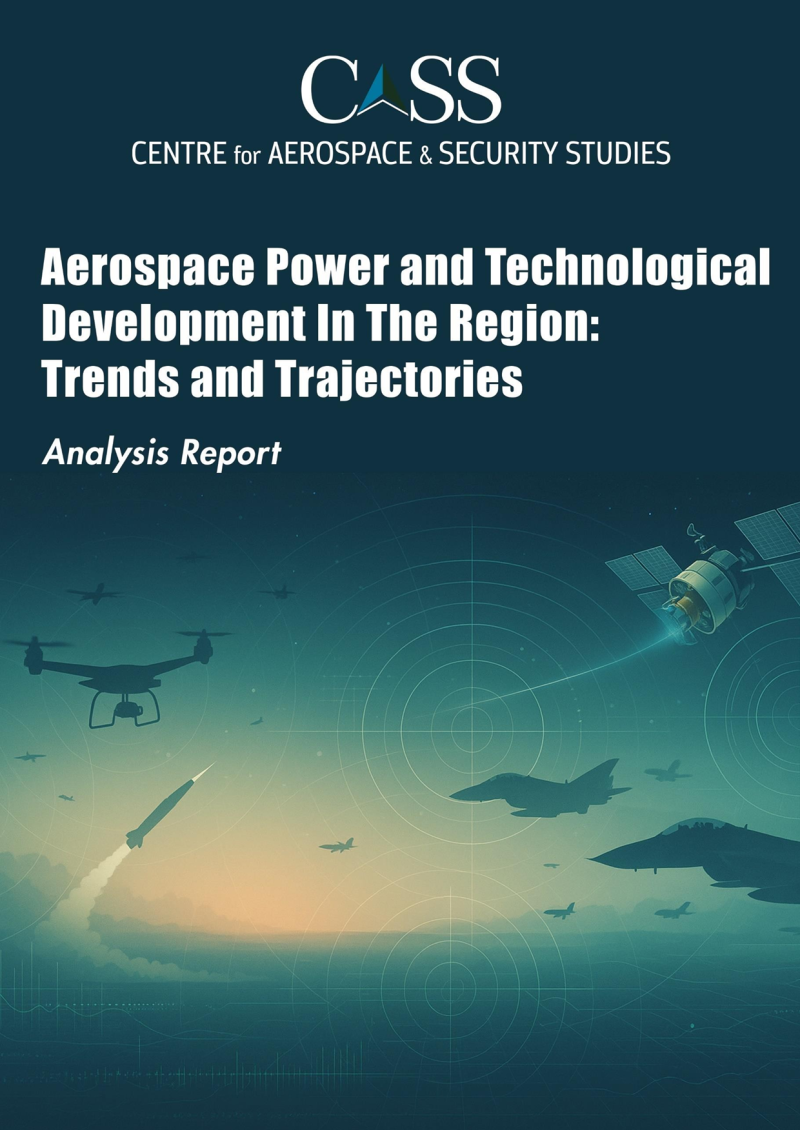
The modern era has redefined the nature of power, where aerospace capabilities have become pivotal not only in national defence but also in economic and technological advancement. In an age where technological innovation is reshaping global competition, aerospace power serves as both a measure of national strength and a driver of strategic influence. The seminar “Aerospace Power and Technological Development in the Region: Trends and Trajectories” was convened to explore the evolving dynamics of aerospace technologies, their implications for regional security, and the pathways available for Pakistan to secure its strategic future.
The early 21st century has witnessed aerospace transition from a traditional support arm of warfare to a decisive domain that integrates space-based assets, drones, artificial intelligence (AI), hypersonic, and advanced surveillance systems.
India and Pakistan, in their pursuit of technological edge and deterrence credibility, are deeply engaged in this competitive trajectory. Meanwhile, Iran’s steady progress in indigenous UAVs, missile systems, and space-launch capabilities—despite sanctions and isolation—adds a significant dimension to the broader regional aerospace landscape. This unfolding race underscores the dual reality of opportunities and risks: the promise of economic and technological dividends on one hand, and the threat of instability and conflict escalation on the other.
As South Asia navigates an environment shaped by rivalries, shifting alliances, and aspirations for global relevance, the growth of aerospace power presents both challenges and opportunities. For Pakistan, the task lies not only in avoiding strategic vulnerabilities but also in leveraging aerospace innovation to enhance deterrence, secure economic benefits, and strengthen its overall security posture. Bringing together defence experts, policymakers, technologists, and academics, the seminar served as a platform for a critical dialogue on regional trajectories, technological trends, and policy directions. The aim was to generate a comprehensive understanding of aerospace power as a cornerstone of security, stability, and sustainable development in the years ahead.