
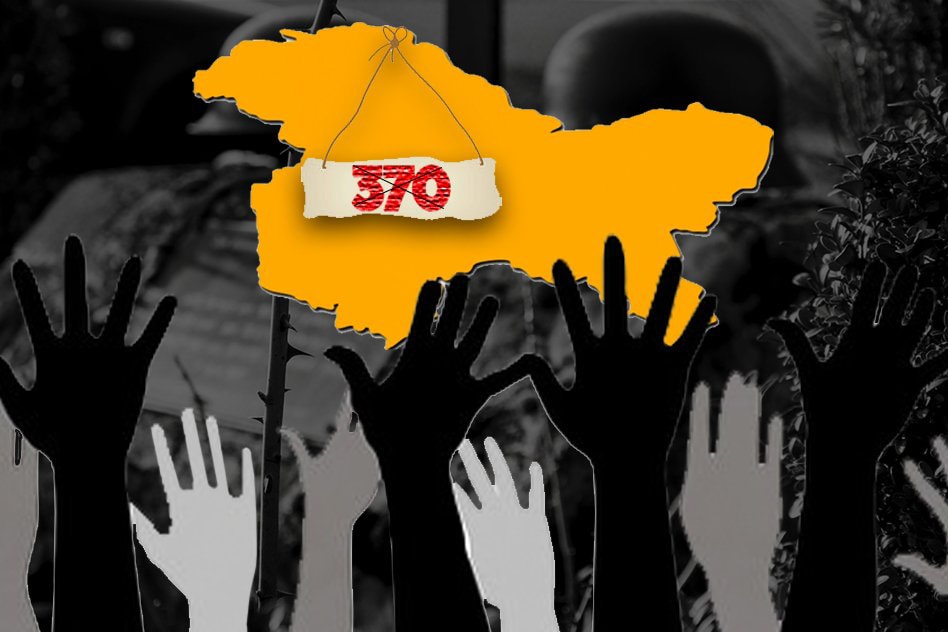
Riding the Hindutva wave, BJP government in India has abrogated Article 370 of the Indian constitution, which gave special status to Indian Occupied Kashmir (IOK). This is not only a violation of UN resolutions and bilateral agreements between Pakistan and India, it is also against the commitments made in the Instrument of Accession India had signed with Maharaja of Kashmir. Any changes to the article could only be made with the consent of the Constituent Assembly of Jammu and Kashmir, which had dissolved itself in 1957 after drafting State’s constitution. While the Presidential order has replaced “Constituent Assembly” with “Legislative Assembly, in reality IOK has been ruled by the Governor appointed by New Delhi since June 2018, after dissolution of Legislative Assembly. With Article 370 revoked, Article 35A, which prohibited outsiders from buying property in the state, has also been dissolved. Now, any Indian can purchase property and apply for government jobs. It will ultimately lead to a demographic and cultural change in the Muslim-majority region. There are reports that the additional forces recently moved to IOK have a large number of hard core criminals in disguise. Therefore, Kashmiri people rising against the decision or not, will be subjected to killing, rape, torture and violence. This in the long run will lead to many Kashmiris crossing the LOC into AJ&K or to main land India. This will further change the demography of the region.
According to legal experts, in the absence of the Constituent Assembly, the presidential order cannot change the wording of the article or abrogate it. If the action is challenged in the Indian court by people of Kashmir and decided on merit, it would be cancelled. J&K High Court had already given a verdict on non-violability of Article 370.
To give credibility to their action, BJP ministers are claiming that it gives full rights to Kashmiris in accordance with their long standing aspirations. If what they claim is true, then why Indian government arrested the local leadership, moved out tourists and students from the area in an emergency, and moved in large number of additional forces to maintain law and order.
In January, 1948 India herself had approached United Nations and had accepted its resolution on plebiscite. During past seven decades, India has remained part of all UN discussions / decisions on Kashmir. Doing away with Article 370 does not only flout UN resolutions on the subject, but also ends Shimla agreement and Lahore declaration. Since this action renders Instrument of Accession null and void, India is now in forceful occupation of IOK. For the past seven decades, there have been three parties to the conflict, Pakistan, people of Kashmir and India. Indian unilateral decision on changing status of Kashmir, provides Pakistan with an opportunity to walk away from any bilateral agreements, most importantly the Shimla agreement which India has always used to refuse third party mediation as the Kashmir dispute does not remain a bilateral issue anymore.
Indian unilateral decision to violate UN resolutions, multilateral and bilateral agreements and commitments made to the people of Kashmir, suggest India can move away from any multilateral or bilateral agreements at will, at any time. Disregard for UN resolutions should completely shut the door for Indian aspirations for permanent membership of the UNSC. Similarly, India cannot be trusted to meet her commitments with the NSG, as her failure to honour commitments on nuclear material related deals, will seriously jeopardise international efforts on nuclear proliferation.
If the people of the IOK do not act now, their future generations will continue to suffer. Their resistance would not only internationalise the issue, but will also give impetus to all other separatist movements in India. An unprecedented uprising in IOK will initially lead to extreme use of force by Indian government to supress the protests, but ultimately, it will have to give in. Over 200 million Muslims, 30 million Christians and over 21 million Sikhs living in India have suffered for more than 70 years. Indian government’s latest decision on article 370 should help them read the Indian mind-set and they must struggle to get their rights at this time. If the Kashmir movement as well other separatist movements pick up momentum, this can turn out to be Waterloo for the Indian state. BJP’s extremist policies aimed at making Akhand Bharat, may ultimately lead to Balkanisation of India.
Kashmiri diaspora in different countries need to support their brethren by staging protests to highlight the consequences of Indian decision for people of Kashmir. They should also make extensive use of social as well as electronic media to reach their intended audience to get favourable public opinion.
BJP is known for unwittingly providing opportunities to Pakistan. BJP government’s decision to carryout nuclear tests in 1998 helped Pakistan to become an overt nuclear power. The abrogation of Article 370 should also be taken as an opportunity to internationalise the issue and come out of the bindings of Shimla agreement and Lahore declaration.
Pakistan must continue to provide all possible moral and diplomatic support to the people of Kashmir. The issue should be taken up with UN Security Council, OIC and other international fora. At the same time, all the Ambassadors in Islamabad should be briefed about the repercussions of the Indian step for Kashmiri people as well as the region.
Since India has violated multilateral and bilateral agreements, Pakistan should consider to close its air space for Indian commercial flights, reminding India of the Ganga hijacking incident. Government of Pakistan’s decision to discontinue trade recalling of our High Commissioner from New Delhi and sending the Indian High Commissioner back to Delhi are steps in the right direction.
Continuing with her past record, Indian government may stage manage a Pulwama like incident to blame Pakistan and take harsher measures against the people of Kashmir. Pakistan’s armed forces must remain vigilant and prepared to counter any Indian misadventure.
This is a God sent opportunity, Pakistan must make the best use of it. Pakistan should coordinate with other countries to project India as a country which cannot be trusted in the multilateral or bilateral agreements; hence ineligible for becoming permanent member of the UNSC or part of the NSG. India has always been selective in discussing bilateral issues, however, now Pakistan must put reinstatement of Article 370 as a precondition for comprehensive dialogue on all issues including Kashmir.
Air Marshal M Ashfaque Arain (Retd) is Advisor to Chief of the Air Staff on CASS Affairs and is also Director of the Emerging Technologies programme at the Centre for Aerospace & Security Studies (CASS), Islamabad, Pakistan. This article was first publised in The Nation.
Image source: Internet



