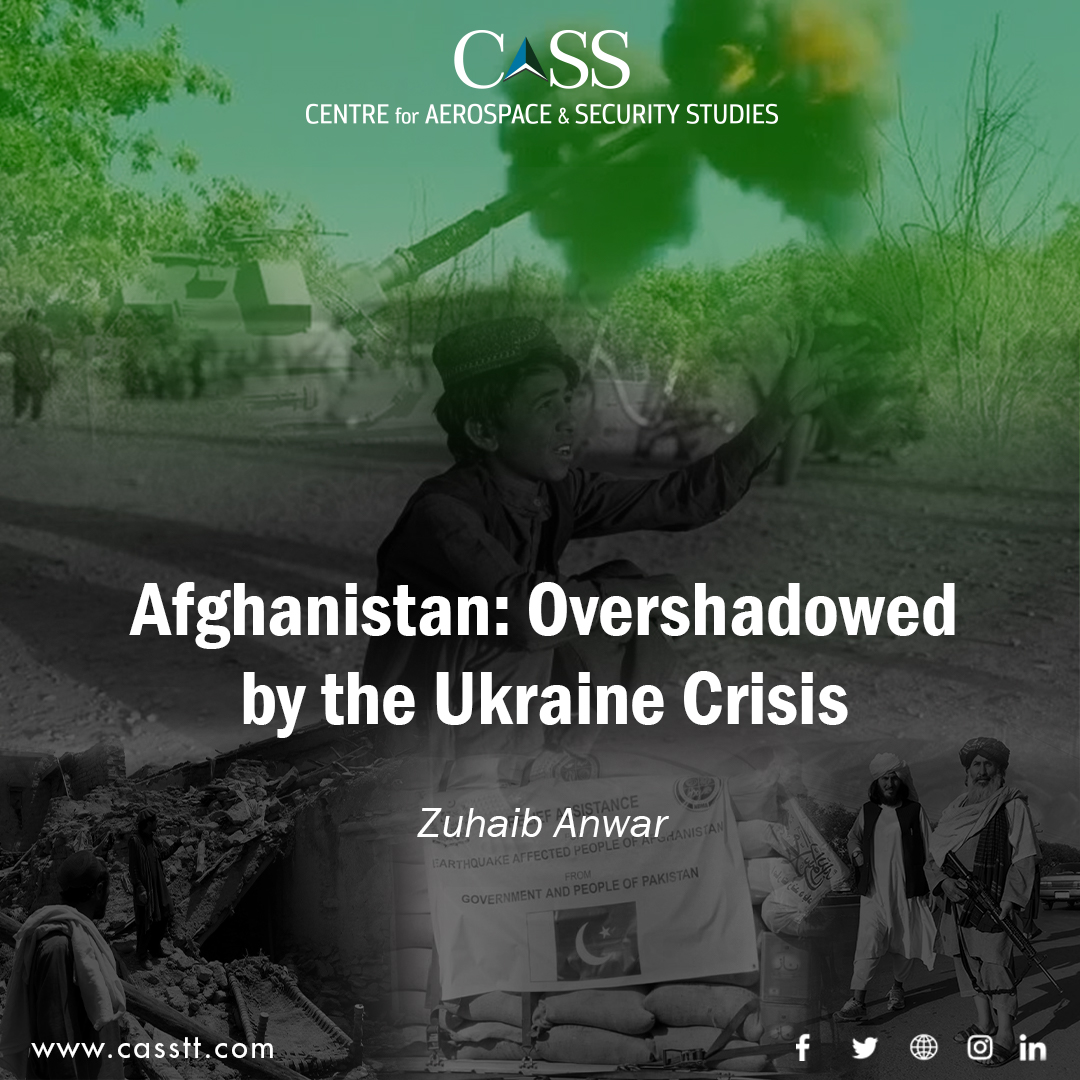
Till the end of 2021, Afghanistan loomed large in the international arena. The world was concerned about the deteriorating situation in the country post- United States withdrawal. Global media reported regularly about the on-ground changing situation, directives issued by the Taliban regime, the day-to-day struggle of Afghan refugees, increasing food scarcity and effects of economic sanctions imposed by the Western world, led by the United States. Global attention has since diverted to the Russia-Ukraine war. While the Ukraine crisis has overshadowed Afghanistan in the news, the Afghan population is still facing acute food shortage, a crumbling economy, bleak law and order situation and rising unemployment.
Amidst the entire quagmire of adversities, the major problem faced by Afghans is food shortage. The food supply situation in Afghanistan is worsening with each passing day, which is partially because of the drought and partially due to the political and economic turmoil. When Taliban took over Kabul in August 2021, the food storage situation in the country was already bad. Now, two-third of the provinces are having drought due to lack of rainfall which has severely impacted the country’s wheat production. The Taliban regime is unable to engage international donors because of imposed sanctions, frozen assets by the US and European Union, and lack of recognition of the incumbent government by the world at large. The US has been at the forefront of the measures taken against the Taliban regime and views them as illegitimate and has, thus, imposed sanctions, denying them access to the country’s assets and cash reserves abroad. This has led to the inability of the Afghan government to regulate the currency or pay its employees resulting in a crumbling economy, collapse of social order and an increase in corrupt practices.
According to estimates, during the last winter season, around 22.8 million people faced a ‘high level of acute food insecurity’ – which is around 55 percent of the total population of Afghanistan. Considering the deteriorating humanitarian situation, Taliban officials and diplomats from Western countries held two rounds of talks in Norway and Qatar in January and February this year, respectively. Just as some progress was in sight and it was felt that the Afghan population may get much-needed relief, Russia invaded Ukraine. The US government and other Western powers shifted their attention towards the Ukraine crisis, and the people of Afghanistan mired in a severe food crisis, were completely forgotten.
The Ukraine crisis has further complicated the food situation in Afghanistan. The country is currently almost completely reliant on wheat imports due to the droughts and economic turmoil. On the other hand, the two major food producers of the world – Russia and Ukraine are involved in a war resulting in food price inflation by 22 percent. This situation has made it more difficult for the Afghan government to procure food commodities. As a cumulative result of famine, drought, economic crises spurred by the US and the war between Russia and Ukraine, the Afghan people are going to suffer even more through this year and the next.
While the international community is not bothered by the growing humanitarian crises in Afghanistan, Pakistan has stood by its Afghan brethren. Whether it’s the recent earthquake that killed more than 1000+ Afghans or the pandemic, Pakistan has provided substantial aid to Afghanistan despite its own financial difficulties. Beside this, Pakistan has consistently been lobbying internationally for the people of Afghanistan and calling on the international community to come forward and help the Afghan people.
While the media has a short-term memory, the global community should not forget that the Afghans are suffering and if not heeded to, the situation would deteriorate to catastrophic proportions in the coming days. It is, therefore, of extreme importance that arrangements are made for the flow of desperately needed aid to help lessen the miseries of the people of Afghanistan.
The writer is a Researcher at the Centre for Aerospace & Security Studies (CASS), Islamabad, Pakistan. He can be reached at [email protected].
Image Credit: Online Sources