‘We shall require a substantially new manner of thinking if mankind is to survive.’
Albert Einstein
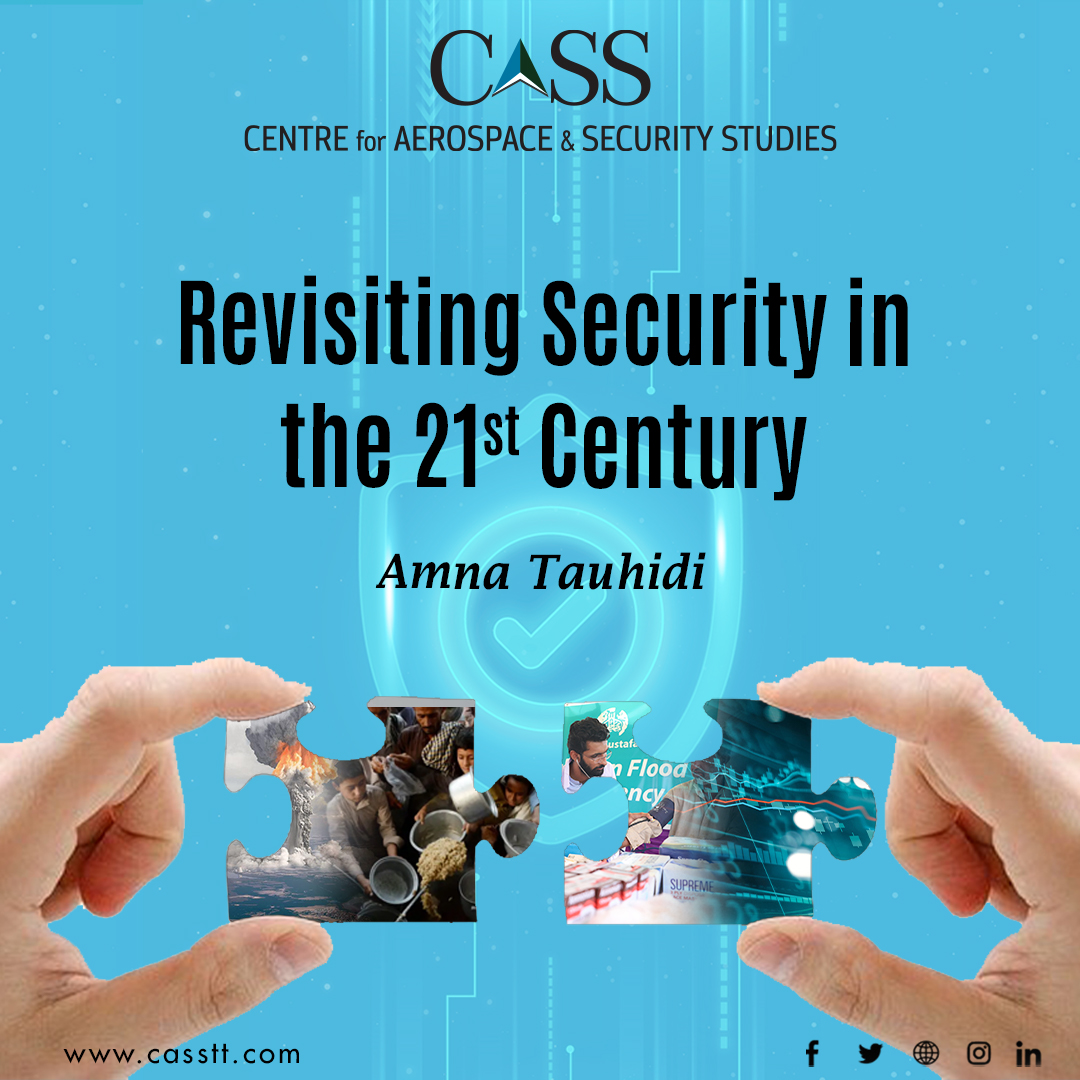
The 21st Century has been marked by the emergence of new threats ranging from climate change, health and energy crises, political turmoil, economic instability, internal fissures, dual-use technologies, emergence of non-state actors, to hardcore military threats. In the context of these emerging threats, the traditional definition of ‘security’ is no longer sufficient. In lieu of these threats, past experience can no longer serve as a reliable guide in future conflicts. Therefore, in this constantly evolving threat landscape, there is a need to move beyond compartmentalisation of security into ‘traditional’ and ‘non-traditional’ security to a more humane security model.
The primary reasons behind the declining relevance of traditional security can be summed up as follows. First, the notion of traditional security concentrates only on military threats, thus ignoring even more potentially harmful dangers. Second, this unicentric approach encourages militarisation and ignites insecurity for all. Third, traditional security ignores the principle of interdependence, implying that some threats are global in scope and cannot be addressed by individual nation-states. Fourth, new technologies have brought new era of threats that encourage the proliferation of countermeasures. Fifth, the current era is dominated by extremist, non-state actors, and private industries that now play a major role in disrupting the security of states through both kinetic and non-kinetic means.
Threats are not always of territorial nature but also threaten the natural social nexus in which individuals are embedded. In light of the above factors and their implications, there is a need for innovation in the traditional security paradigm to adapt to the threats of the current century and to move from a unicentric state-centric security model to, e.g., a model of cooperation under a global government. Another proposed guideline for the future can be framed based on Maslow’s Hierarchy of Needs. The model sums up basic needs in five categories i.e., physiological needs, safety needs, love and belonging, esteem and self-actualisation. Likewise, the traditional security model, ‘Security – A Collective Responsibility’ can be framed on three levels, i.e., domestic, regional, and international. All states should first ensure their domestic security that rests on fulfilling the five needs summed up in Maslow’s Hierarchy of Needs. On a regional level, the states should follow the same practice. Powerful states like the US, Russia, China, etc. should play the role of mediator instead of being interventionist. Likewise, international non-government organisations (INGOs) should work in true spirit towards the greater good of humankind.
Such models may seem idealistic in a world driven by anarchy but in future, the traditional notion of security will face serious challenges in terms of adapting to new threats. Given their diverse nature, there should be an equal push for creating more chances for cooperation and interdependence rather than competition and conflict.
Amna Tauhidi is a Research Assistant at the Centre for Aerospace & Security Studies (CASS) in Islamabad, Pakistan. Complete responsibility for the factual accuracy of the data presented and hyperlinked citations lie entirely with the author and not CASS. She can be reached at [email protected]