India has been redefining nationalism along Hindu majoritarian lines since 2014, when the Bharatiya Janata Party (BJP) assumed power. The Indian military, reimagined as muscular “patriots” instead of professionals tasked to defend the state, has been at the heart of this saffronized redefinition. The pattern is unmistakable in the military encounters with Pakistan, particularly in recent history, i.e. the alleged 2016 surgical strikes, the 2019 Balakot airstrikes, and May 2025 hostilities. All of them occurred at politically convenient points of time and were weaponised in the subsequent election campaigns. The invocation of fallen soldiers at political rallies, the utilization of military uniforms in campaign imagery, and the deployment of armed forces’ symbolism collectively signal an allegiance that appears oriented toward the ruling party rather than the constitutional state. Meanwhile, politically aligned officers are bestowed with political appointments in their post-retirement days that establishes the bridge between the military and the ruling party’s machinery.
The politicisation of the Indian military was taken too far in Operation Sindoor. The name itself is revealing: the vermillion powder used by married Hindu women called Sindoor was not primarily selected for strategic but religious and cultural connotations. This shows a drastic shift in India’s tradition of neutral nomenclature in its military. The operation was contextualised in the media discourse as a defence of ‘civilizational pride’ and ‘women’s honour’ – words directly borrowed from BJP campaign speeches. Female officers were projected as the mouthpieces of the operation to reinforce the narrative of women empowerment within a nationalist context. The line between military strategy and political theatre was, in this instance, decisively blurred.
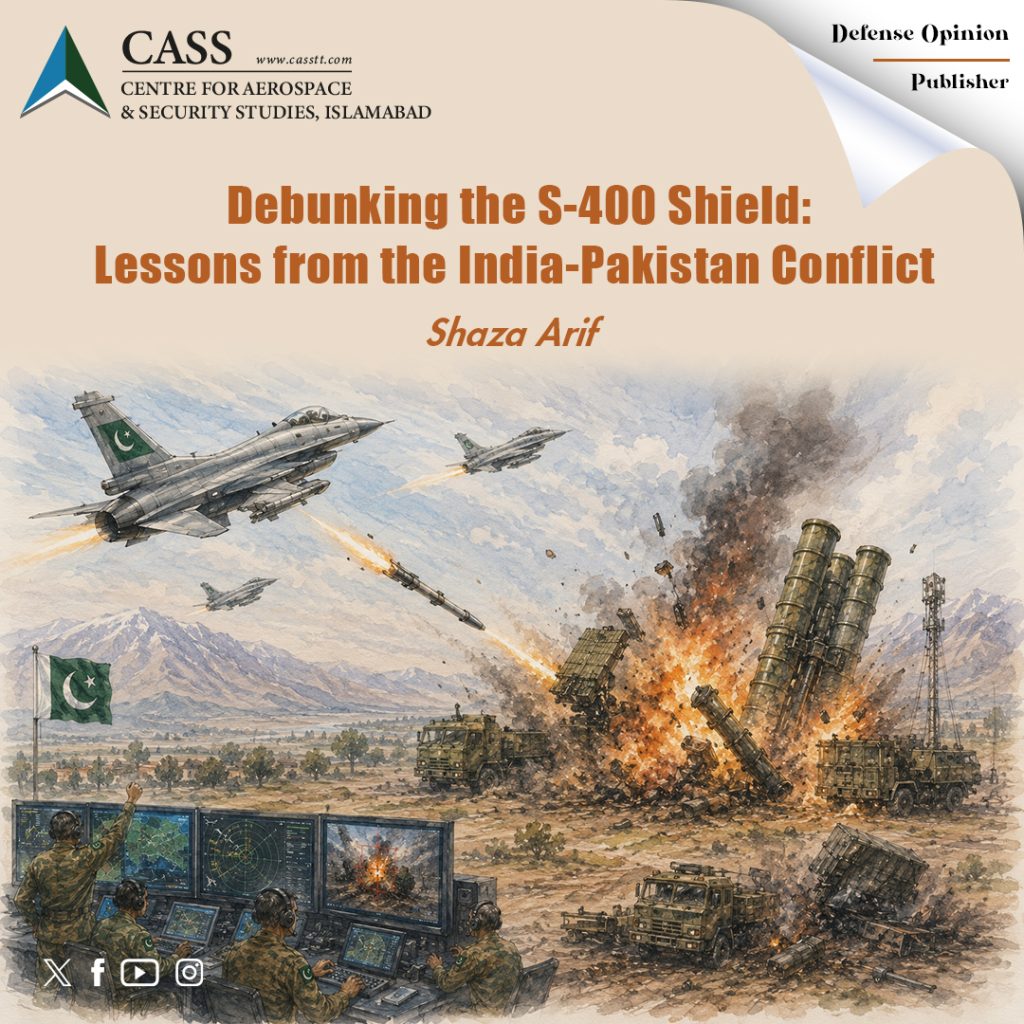
Too many contradictions rendered the narrative far less convincing. On one hand, the Indian Army Chief claimed to have exercised restraint in the operation. On the other hand, three months after the conflict, Air Chief Marshal A.P. Singh sounded triumphalist, boasting of ‘swift and decisive’ air power. On the Indian Air Force Day, Singh denied Pakistan’s shooting down Indian jets as fairy tales, seeking to offer some solace for India’s poor performance in the operation. Defence experts of Russian air defence arrangements, particularly S-400, doubt whether definite claims can be made. The statements of the Air Chief appeared to have been aimed at the domestic audience without international plausibility. Such conflicting accounts indicate a leadership in the military that is more focused on serving the political masters rather than having clarity in operations.
Recently, the Indian military nomenclature entrenched in religious and cultural symbolism such as “Sindoor,” “Mahadev” and “Sudarshan” has been employed to perpetuate to the majority Hindu community that the military is a reflection of its “civilised” values. Narrative manufacturing also provides a tight control of the image of the military through state media, and makes it almost impossible to check independently. The autonomy of institutions is compromised because ideological loyalty is now preferred over merit for leadership appointment. Political parties employ a militarised electoral strategy, using public fanfare around military operations and patriotism to fuse national security with partisan political success. And, lastly, censorship labels any criticism or challenge to military actions or government assertions as treason.
The implications of the politicisation of the Indian military are critical for Pakistan in particular and South Asia in general. The electoral considerations combined with strategic necessity lower the escalation threshold to precarious levels. Sindoor-like engagements make it hard to distinguish between deterrence and provocation since the timing, and objectives are determined by domestic political needs, rather than strategic military advantage. It makes the South Asian neighbourhood more volatile and unpredictable wherein diplomacy is captured by populist optique and the backchannel management of crises is reduced. Pakistan now operates in a world where India’s foreign policy may be dictated not by security, but by its need to win state elections or divert attention from economic setbacks.
The response of Pakistan must be strategic rather than reactive. Attempting to contain the trend of majoritarian militarism seen in India will be not productive. Pakistan instead ought to employ credible deterrence and underline transparency. India is also characterised by narrative-based international legitimacy, so verifiable communication is Pakistan’s best option. Pakistan should invest in real-time fact-checking infrastructure to defeat disinformation in real-time. On the global stage, the international media, foreign think tanks and even the diaspora scholars can assist in exposing the dangers to the stability of the region through Indian militarisation. Moreover, communicating directly with the Indian civil society, academia, and diaspora communities will help isolate the militarist project of BJP.
The politicisation of the Indian military is not just an institutional shift; it is the militarisation of Hindu majoritarian ideology itself. When armed forces are rebranded as “defenders” of “civilizational pride,” when operations are named after religious symbols, and when military chiefs perform for electoral audiences, professional integrity is sacrificed at the altar of political expediency. India has created a theatre of militarised politics wherein Pakistan’s greatest asset is refusing to play the assigned role. What the region needs is fewer performances and more professionalism.
Muhammad Saad is a Research Assistant at the Centre for Aerospace & Security Studies (CASS), Islamabad. He can be reached at [email protected]