
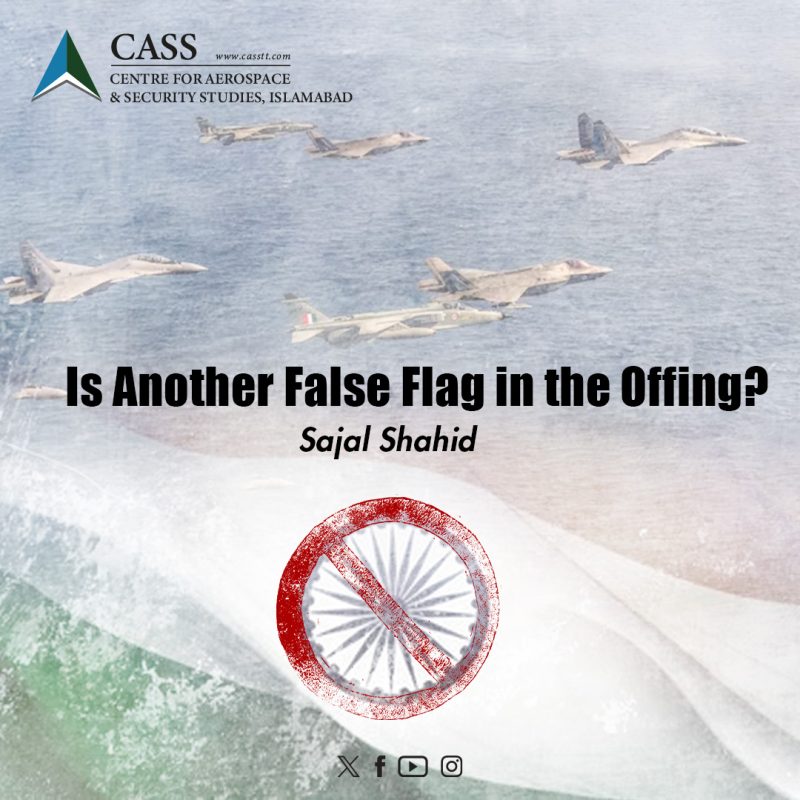
On the cusp of the Bihar state elections, India has once again ramped up its belligerent rhetoric with Defence Minister, Rajnath Singh threatening to target Sindh through Sir Creek, and the Chief of Army Staff Dwivedi claiming that preparations for Operation Sindoor 2.0 have already begun. Though this type of political theatre is nothing new from the saffron state, the timing of these statements – on the precipice of a major state election in Bihar and amidst a series of high visibility military exercises – suggests more dubious intentions.
In 2019, amongst significant domestic backlash in response to the amended citizenship act, and the BJP’s declining political popularity ahead of the general elections, India conducted its Vayu Shakti Exercise in Rajasthan. A little more than a week later, it launched aerial strikes at Balakot claiming to target ‘terrorist camps.’
Although it suffered a resounding defeat at the hands of the Pakistan Airforce (PAF), a similar pattern once again played out in May 2025. A series of prominent exercises, including amphibious drills in ‘Tiger Triumph,”’ and a high profile visit by the Vice President of the US were swiftly followed by a terrorist attack and subsequent strikes against Pakistan. This repetitive chain of events is not a coincidence; it is a pattern. Domestic unrest, impending elections, and high profile foreign visits or military exercises in India have long heralded the approach of ‘sudden militant attacks’ followed by offensive strikes.
Although India once again suffered a crushing loss of 7-Nil in May, the recent series of events suggests that it has yet to internalise this lesson. In addition to its hostile rhetoric, the Hindu state has also ramped up its military posturing. On the 7th of October, the Indian military launched its tri-services ‘Cold Start Exercise’ evoking the infamous Cold Start Doctrine designed to seize swathes of Pakistani territory through rapid strikes under the threshold of a full scale war.
The exercise was quickly followed by another major tri-services drill named, ‘Exercise Trishul’ along the border of Pakistan. Though these developments could perhaps be overlooked under different circumstances, the current state of events necessitates a second glance.
The BJP currently stands under immense pressure to boost both public and military morale as seen in the many rallies the party has held since its defeat in May. Internationally, the state faces increased isolation. Despite the most recent bilateral deal, trade tensions with its historical ally, the US, continue to persist and President Trump’s numerous retellings of India’s defeat continue to tarnish its image on the global stage.
In addition to international indignity, Prime Minister Modi has suffered a dip in popularity, with approval rating in Bihar dropping from 62 per cent in February to 52 per cent in August this year, while national opinion declined from 70 per cent in 2021 to 58 per cent in 2025. This diminishing political power combined with violent statehood protests in Ladakh, unrest in Arunachal over hydroelectric projects and rising unemployment forewarns a difficult electoral road ahead for the BJP. This is particularly concerning for the party due to its already weakened position in the political climate of Bihar which has the potential to set off a domino effect.
Amidst this domestic and international pressure, the BJP stands much to gain from revisiting its oft-used strategy of inciting a confrontation with Pakistan. As seen throughout the BJP’s rule, a visible clash with India’s historical rival not only boosts popularity but also effectively unites the Indian public under the BJP’s Hindu nationalist banner. This was most visible in 2019 following the Balakot conflict, which in spite of being an irrefutable loss was nevertheless spun into electoral win for Prime Minister Modi through intensive narrative building and media manipulation.
This underlying political motivation combined with India’s marred reputation after its repeated defeats at the hands of its perceived ‘weaker’ neighbour makes the prospect of a renewed escalation not a question of if but rather of when. Considering the aforementioned pattern, India may very likely consider this time ideal. Upcoming elections, military deployment under the guise of an exercise, and an enemy engaged in a peace process with Afghanistan, all present the perfect environment for a false flag to take place and provide much needed justification for the resumption of hostilities.
Regardless of the likelihood of a renewed military engagement, the outcome of another misadventure by India is abundantly clear: a firm and decisive response by Pakistan which continues to hold air dominance despite the economic and conventional advantage held by its adversary.
Sajal Shahid is a researcher at the Centre for Aerospace & Security Studies (CASS), Islamabad, Pakistan. She can be reached at [email protected]



