Share this event

Facebook
Twitter
LinkedIn

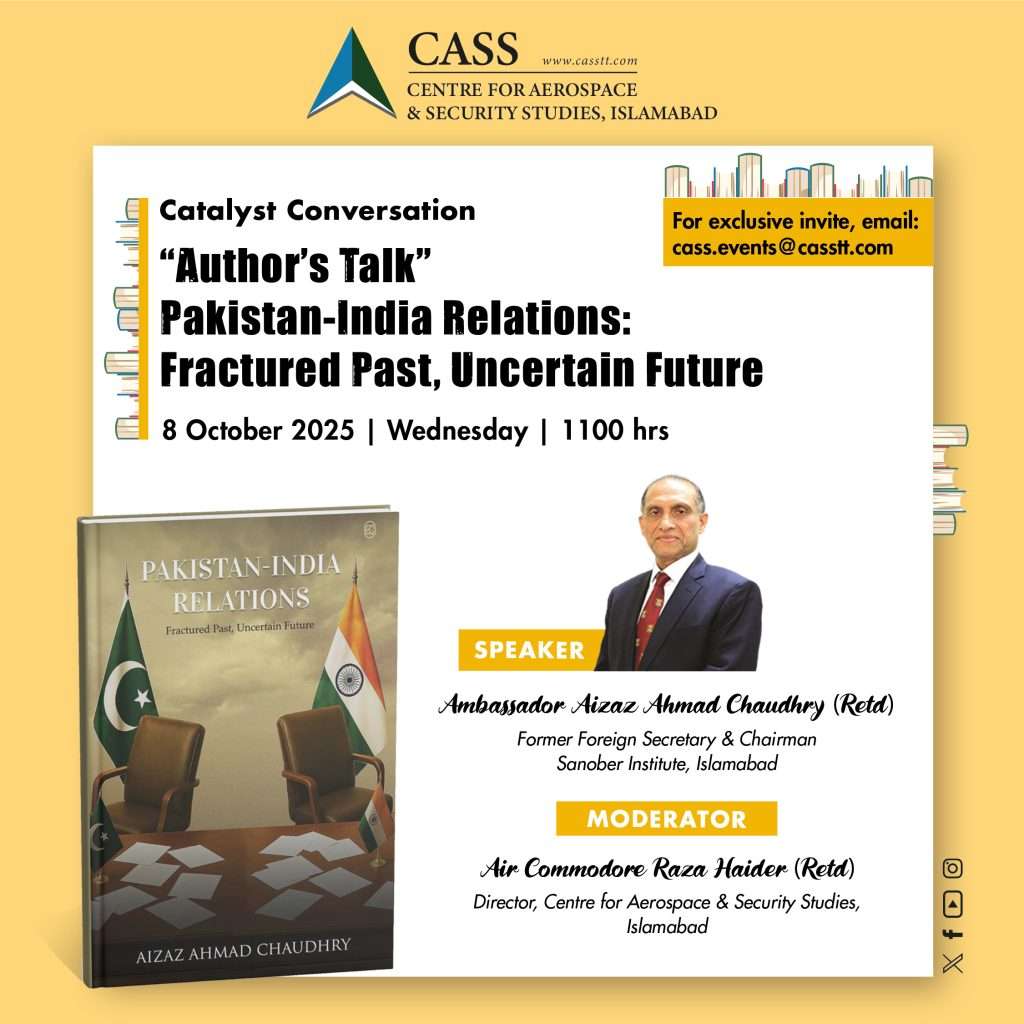
1.         Pakistan and India, since their independence in 1947, have remained entangled in a complex relationship defined by historical grievances, unresolved disputes, and missed opportunities for peace. The bilateral trajectory has oscillated between dialogue and hostility, often influenced by domestic politics, regional dynamics, and global strategic shifts. Despite cultural, historical, and geographic linkages, mistrust continues to define the relationship, with repercussions not only for South Asia but also for global peace and security. India’s ambitions of regional hegemony and multi-alignment have complicated the Pak-India calculus, leaving little room for diplomatic engagement.

2.         Ambassador Aizaz Ahmad Chaudhry (Retd), a seasoned diplomat and scholar, captures this complexity in his recently published book Pakistan-India Relations: Fractured Past, Uncertain Future. Drawing from his deep diplomatic experience and research, the book provides a nuanced exploration of the evolution of bilateral ties, the structural impediments to peace, and the possible pathways for recalibrating relations between the two nuclear-armed neighbours. This book has acquired greater relevance in view of the May 2025 military clash between Pakistan and India, which renewed the rivalry to a larger extent. Although both countries are undergoing a period of fragile peace, Ambassador Aizaz’s take will contribute extensively to the calls for meaningful diplomacy and sustained peace. 

3.         The roundtable seeks to provide an interactive forum to deliberate on the central arguments of Ambassador Aizaz’s book, bringing together scholars, practitioners, and policy experts to reflect on:

(a)       Historical roots of conflict and mistrust between Pakistan and India

(b)       The Key turning points that shaped the bilateral trajectory

(c)        Regional and global dynamics influencing their future relations

(d)       Possible avenues for conflict resolution and constructive engagement
Other Events

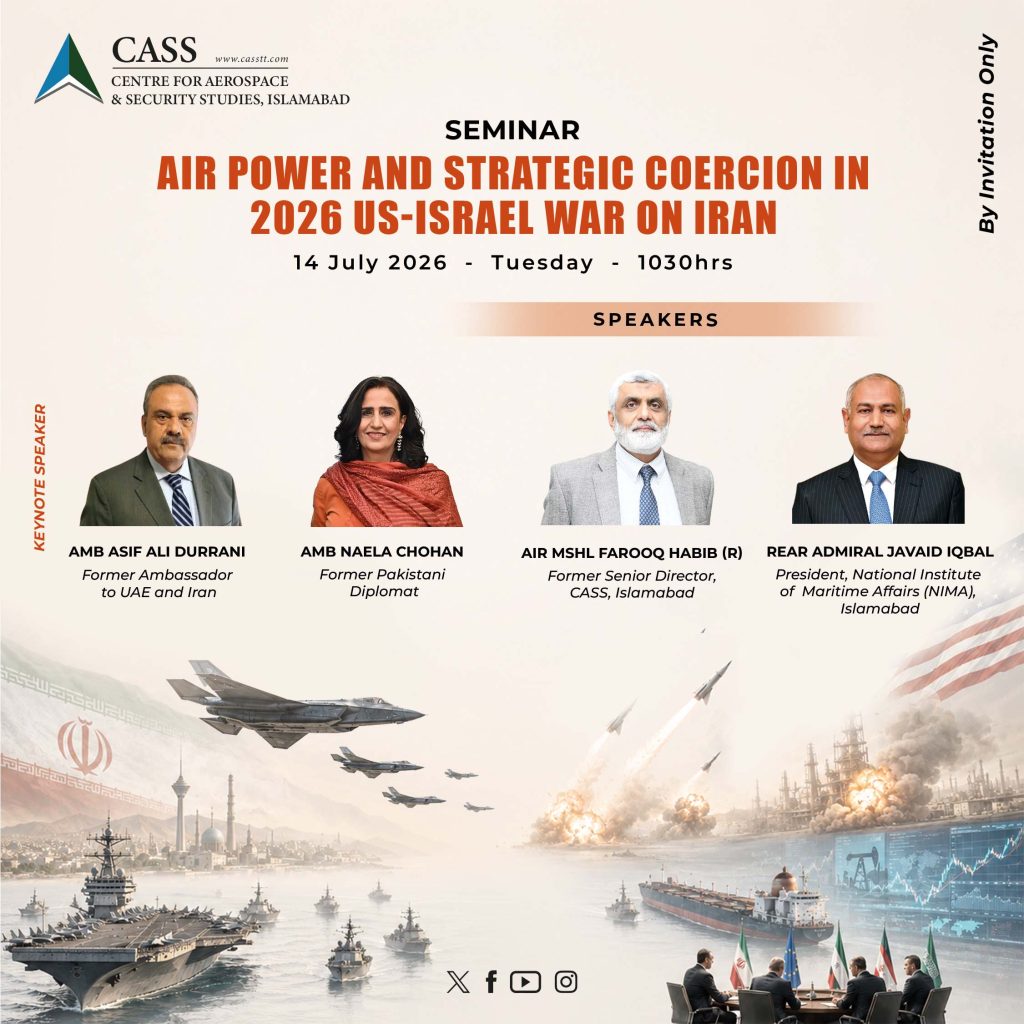
Air Power and Strategic Coercion in the 2026 US-Israel War on Iran

The 2026 U.S.-Israel war on Iran emerged as a defining security event in the Middle East, carrying significant military, political, economic, and geopolitical implications. The conflict did not occur in isolation but evolved from the unresolved tensions, competing strategic objectives, and fragile deterrence environment that persisted after the June 2025 Twelve-Day War. As regional rivalries intensified and diplomatic efforts failed to address core security concerns, the region witnessed a renewed cycle of escalation that culminated in large-scale hostilities. The conflict highlighted the growing role of air and missile power as instruments of strategic coercion.

Read More »

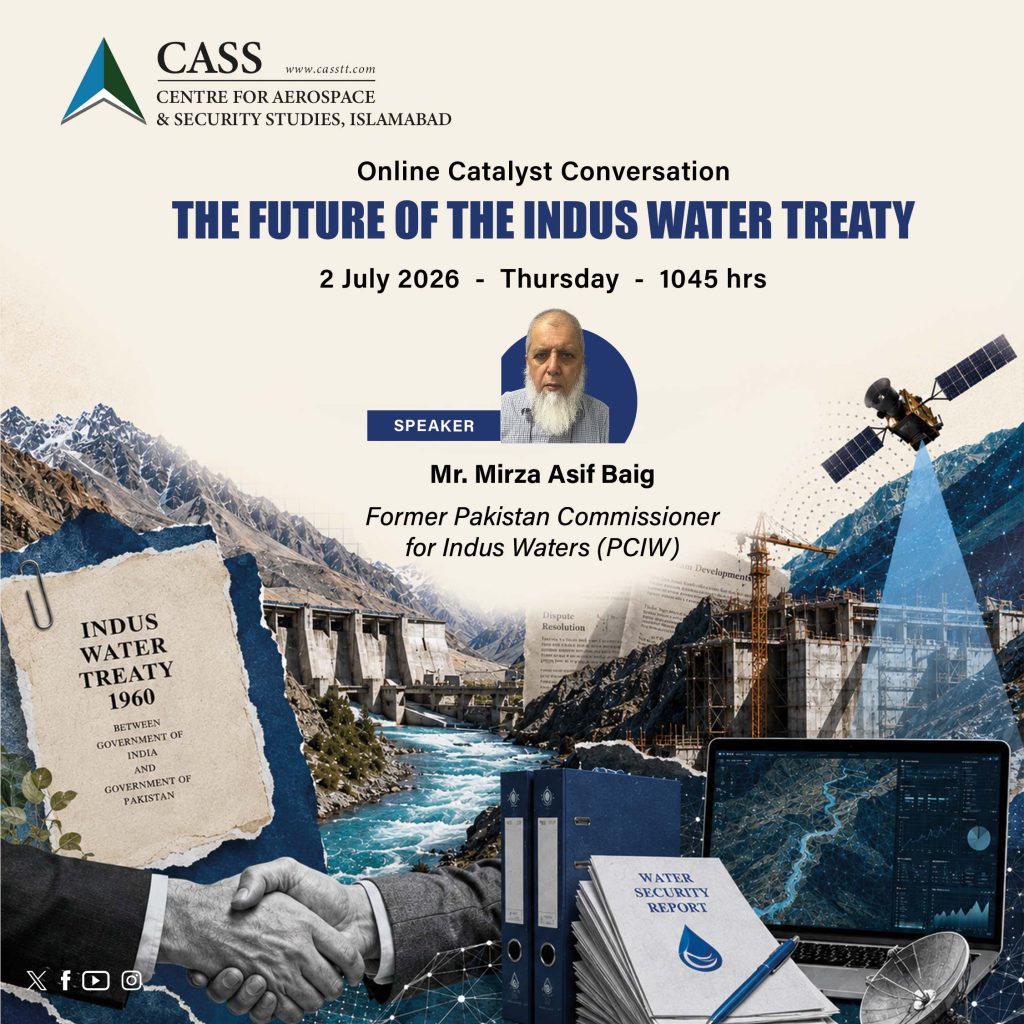
ONLINE CATALYST CONVERSATION THE FUTURE OF THE INDUS WATER TREATY

For more than six decades, the Indus Water Treaty (IWT), signed in 1960 between Pakistan and India, remained as one of the most enduring transboundary water-sharing agreements in the world. Despite multiple wars, political crises, and prolonged periods of bilateral hostility, the treaty largely continued to govern the allocation and management of the waters of the Indus BasinFor more than six decades, the Indus Water Treaty (IWT), signed in 1960 between Pakistan and India, remained as one of the most enduring transboundary water-sharing agreements in the world. Despite multiple wars, political crises, and prolonged periods of bilateral hostility, the treaty largely continued to govern the allocation and management of the waters of the Indus Basin

Read More »

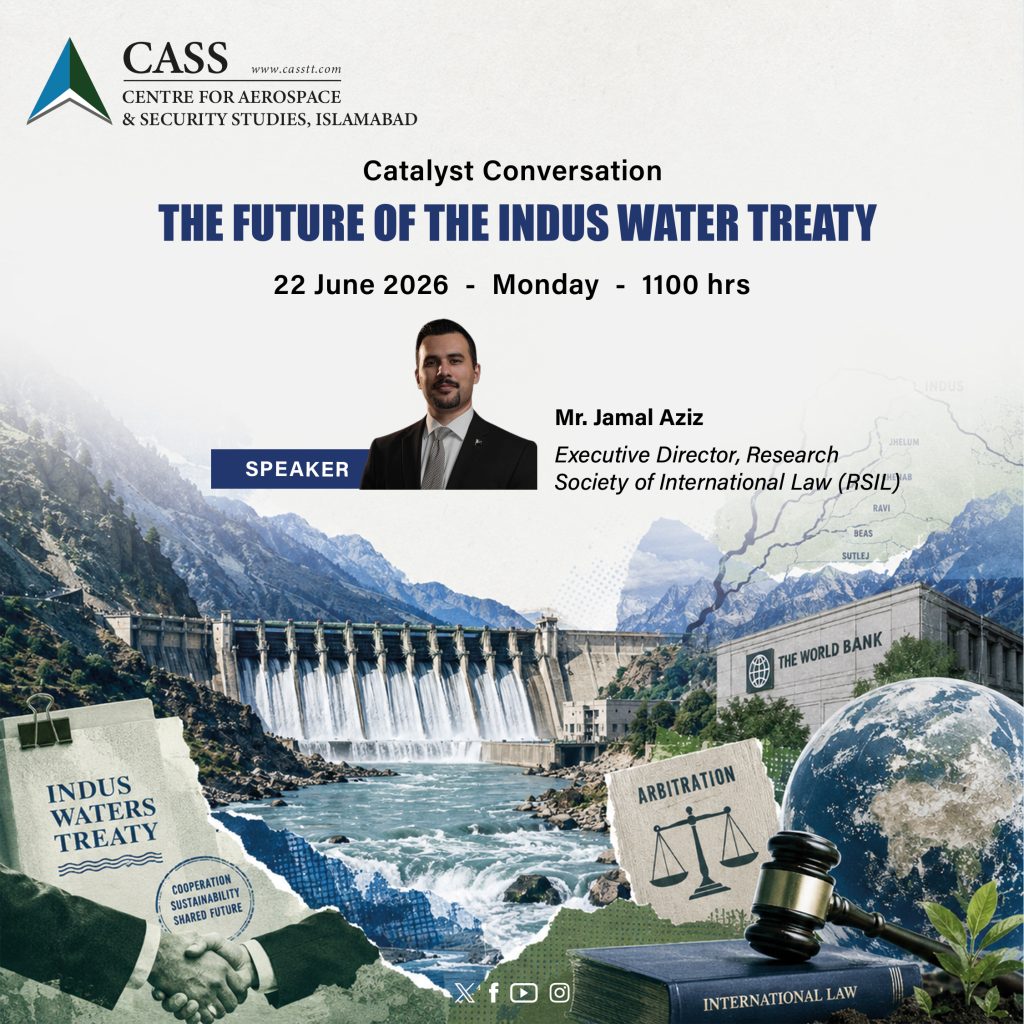
THE FUTURE OF THE INDUS WATER TREATY

For more than six decades, the Indus Water Treaty (IWT), signed in 1960 between Pakistan and India, remained as one of the most enduring transboundary water-sharing agreements in the world. Despite multiple wars, political crises, and prolonged periods of bilateral hostility, the treaty largely continued to govern the allocation and management of the waters of the Indus Basin

Read More »