
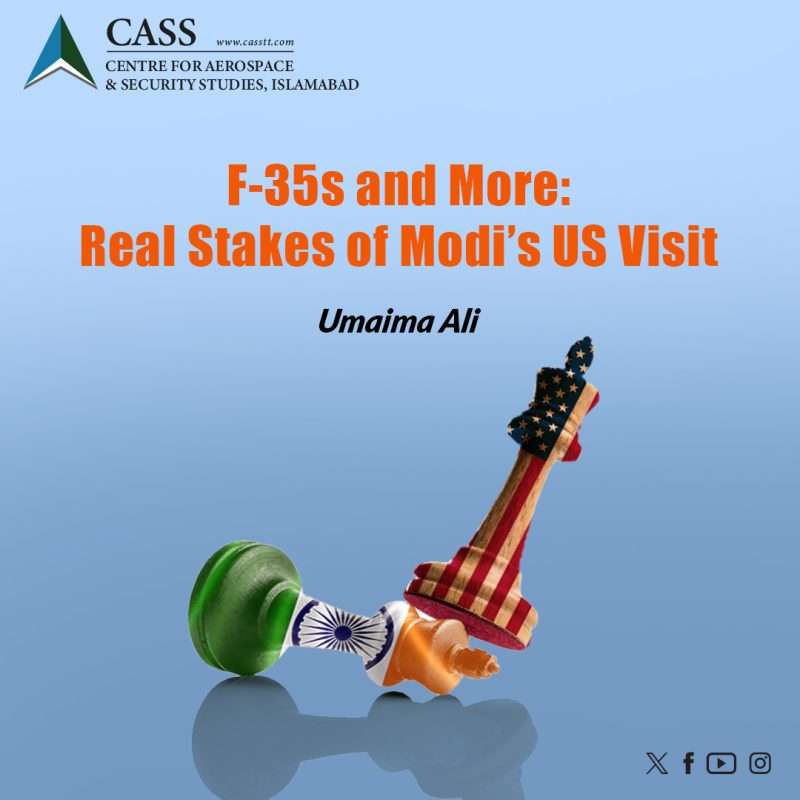
When leaders of the world’s largest democracies share a stage, the inevitable question arises: ‘What’s next?’ This sentiment resonated among policymakers following Modi’s recent visit to the United States (US). With trade at the forefront, Indian Prime Minister Modi and US President Trump committed to increasing collaboration in defence, technology, and other key sectors. President Trump has repeatedly criticised India’s trade policies, calling it the ‘Tariff King.’ In 2024, while the US was India’s largest trade partner, India ranked tenth among US trading partners. Despite this, the US trade deficit with India reached nearly USD 50 billion last year. Notably, the US maintained a trade-weighted average tariff rate of approximately 2.2%, compared to India’s 12%.
In what appeared to be a strategic prelude to Modi’s visit to Washington, India’s Union Budget 2025-26 signalled an open stance by announcing 55% reductions in Basic Customs Duty (BCD) on high-end American automobiles and 10% on fish hydrolysate, a move that benefits US exports. These reductions, however, were not enough to satisfy a profit-driven US strategy. True to his transactional mindset, President Trump announced reciprocal tariffs to ensure a fair market exchange. Reciprocal tariffs, if implemented, would benefit US manufacturers but the less competitive Indian companies would face headwinds. The intensified competition could trigger a ‘survival of the fittest’ scenario in which many average local companies risk being edged out.
Both leaders agreed to more than double bilateral trade under ‘Mission 500’, a move rich with opportunities but one that subtly undercuts Modi’s MEGA partnership. MEGA is a term introduced by Modi that combines MIGA (Make India Great Again) and MAGA (Make America Great Again) initiatives. While MEGA partnership envisioned mutual gains, the surge in US investments risks tilting value creation and high-tech manufacturing towards America. Instead of positioning India as a production hub, these investments would treat it primarily as a consumer market. This certainly downplays MIGA and works well for MAGA.
In addition, techplomacy was used by Modi. TRUST (Transforming Relationships Utilising Strategic Technology) was secured to promote the application of emerging technologies in areas like defence, semiconductors, quantum, biotechnology, energy and space. To expand tech cooperation in space, plans for an early launch of NISAR, a joint Earth-observing mission between the NASA and the Indian Space Research Organisation (ISRO), were discussed.
Modi’s meeting with Elon Musk signals cooperation in emerging technologies and opens the doors for Starlink in India. However, Starlink’s entry into India comes at a heavy cost to the domestic market. Recently, Indian company Reliance pushed for an auction, but the Indian government backed Musk’s preference for administrative allocation. According to analysts, an auction could deter foreign competitors, while Reliance fears losing broadband and future telecom customers to Starlink.
During his visit, Modi also invoked the adage ‘Vasudhaiva Kutumbakam’ – the idea of a unified world and signalling India’s commitment to upholding democratic principles on the global stage. Modi’s promise was materialised by his government’s decision to sign the ‘Artificial Intelligence Action Summit Declaration’ at the recent Paris AI Action Summit. However, a notable contrast emerged as the US opted not to sign the pact, raising questions about the depth of the Modi-Trump ‘bromance’ showcased during the Washington visit.
Trump aims to expand US military sales, including a potential offer for F-35 stealth fighters, to India. Although Modi indicated openness to the proposal, India’s past defence procurement decisions suggest a cautious approach. In the past, India reversed its decision to buy American F-16s in favour of French Rafale. It remains uncertain whether India will proceed with the F-35 deal, given its preference for diverse suppliers and self-reliance in defence. With Musk calling it a ‘broken jack of all trades’ back in November last year, the F-35 stealth fighter is criticised for its high cost and software problems. India is likely to conduct a cost-benefit analysis before committing to the F-35 programme. In addition, these deals take time to materialise. India’s prolonged defence negotiations are evident in its recent purchase of 31 MQ-9B drones, a deal that took over six years to finalise.
Modi and Trump’s commitments were reinforced by a mutual resolve to counter ‘Islamic extremism.’ To enhance security and prevent future attacks, both leaders pledged to strengthen collaboration in addressing threats posed by terrorist organisations. However, India conveniently avoided the issue of targeting Sikh separatists. When pressed on this matter, Trump also refrained from a direct response but highlighted Indo-US collaboration on crime. This selective approach to addressing crime was evident when Modi sidestepped a question about Gautam Adani, the Indian billionaire indicted by a US grand jury last year. Similarly, both leaders overlooked concerns about crimes in Bangladesh. Trump dismissed any US involvement, effectively leaving the issue to Modi without further discussion.
Modi’s use of international platforms to target Pakistan reflects a calculated strategy inspired by Chanakya Kautilya’s principles of statecraft. However, India’s own history of state-sponsored terrorism, false flag operations, and human rights violations in Indian Illegally Occupied Jammu and Kashmir serves as evidence of its duplicity. Pakistan’s Foreign Office called the joint statement on Pakistan one-sided, misleading, and contrary to diplomatic norms. Pakistan also voiced concerns over the potential transfer of advanced military technologies to India given how such measures would jeopardise regional strategic stability.
Modi’s US visit secured a few tech and defence gains but failed to counter Trump on tariffs. While both leaders talked about common interests in security and defence, they strategically sidestepped contentious issues. Modi could leverage this momentum to build greater strategic pressure on Pakistan. To mitigate these risks, Pakistan must proactively engage in bilateral dialogues with the US to address core challenges and safeguard its interests. A robust public diplomacy campaign is essential to highlight Pakistan’s counterterrorism efforts and amplify its achievements.
Umaima Ali is a Research Assistant at the Centre for Aerospace & Security Studies (CASS), Islamabad. She can be reached at [email protected].



