
Title Cover-Zahra-EcoSlowdown-Oct 2023


Abstract


Globally, an economic downturn has been observed in 2023, and the global growth forecasts for the year have been downgraded from their 2022 levels. The present working paper aims to explore causes and consequences of the global economic slowdown in 2023, highlight the potential sources of upside and downside risks to the global economy, and analyse the future growth outlook for 2024 and beyond. It identifies the economic fallout of the war in Ukraine, the global interest rate hikes, the prolonged effects of the COVID-19 pandemic, and the impacts of climate change as the major contributing factors to the global economic slowdown alongside the decline in global investment, a slowdown in global trade, debt distress, political instability, a weakening in productivity growth, an interruption of the global environmental action, the decrease in global commodity prices, as well as the rise in poverty, inequality, and unemployment as its major adverse consequences. It also shows that global growth is expected to remain sluggish in 2024 and below potential during the remainder of the decade. Further downside risks to the global economy in the foreseeable months, majorly attributable to a potentially widespread financial turmoil metastasising from banking stress in advanced economies, also loom large. However, factors such as a faster-than-expected consumption recovery or strengthening of the labour market can lead to stronger-than-expected global economic growth. Pursuing a data-driven monetary policy, addressing supply side constraints, investing in climate resilience, and implementing precautionary measures to prevent a banking crisis will be imperative to address the causes of the economic slowdown and downside risks. While strengthening official support to developing countries and emerging economies, implementing structural reforms at the national level to boost economic recovery, boosting global trade, focusing on employment protection and recovery, alongside strengthening social protection will be vital to avoid the worst outcomes.
Share this article

Facebook
Twitter
LinkedIn

Recent Publications

Browse through the list of recent publications.

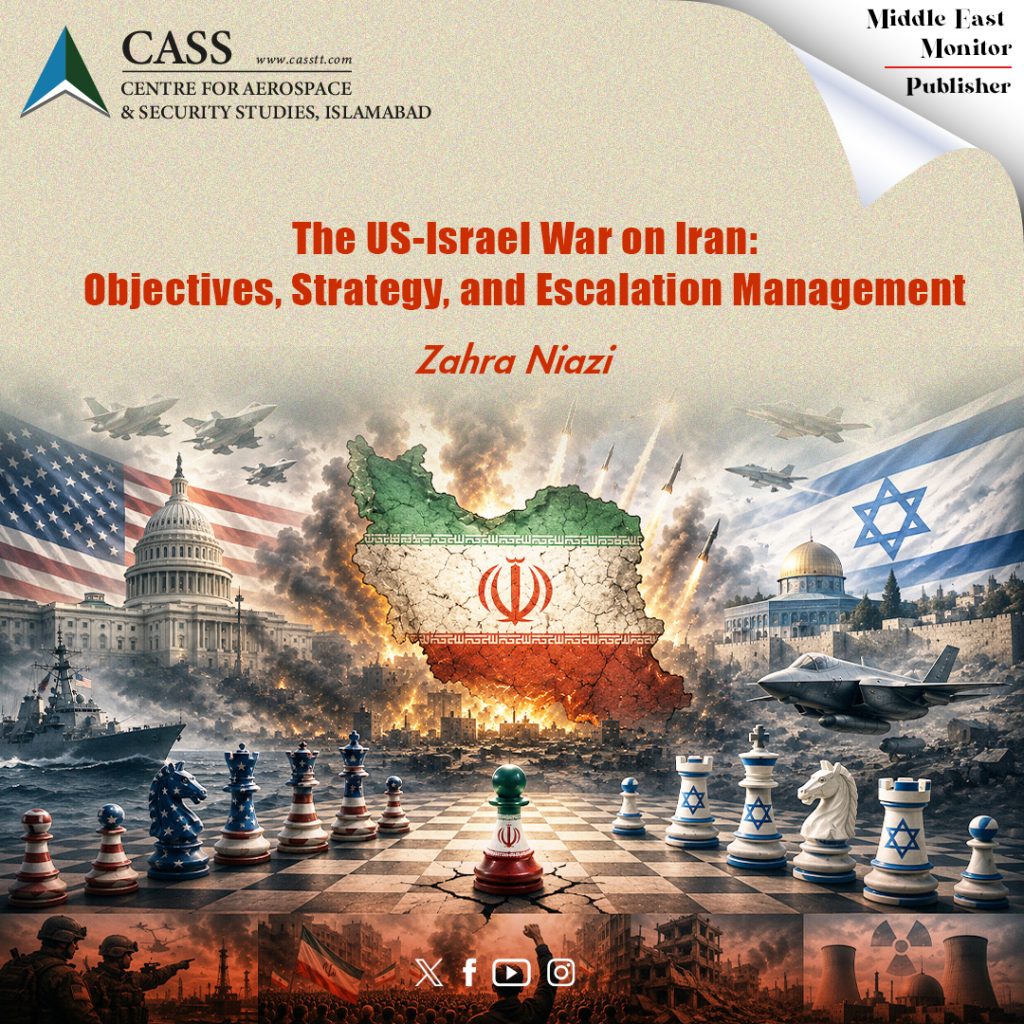
The US-Israel War on Iran: Objectives, Strategy, and Escalation Management

Zahra Niazi
‘States tend to overestimate themselves or the benefits and swiftness of war, and to underestimate their opponents’ capabilities, intentions, or the costs and duration of war.’ If anything, the 2026 war initiated by the United States and Israel against Iran shall be remembered in the annals of warfare among the most visible manifestations of this dynamic.
The war, immediately preceded by the January mass protests in Iran, did not represent a sudden rupture but rather the continuation of a 47-year-long confrontation and a more intense phase of the June 2025 war.
The US Secretary of War, Pete Hegseth, defined the war’s objectives as being laser-focused: to destroy Iran’s missile capabilities and its security infrastructure, while ensuring that it could never develop nuclear weapons. Beyond these stated objectives, among the priorities on the continuum also lay the objective of regime change, with both President Trump and Prime Minister Netanyahu explicitly calling on the Iranian population to take over the government at the outset of the war.

Read More »

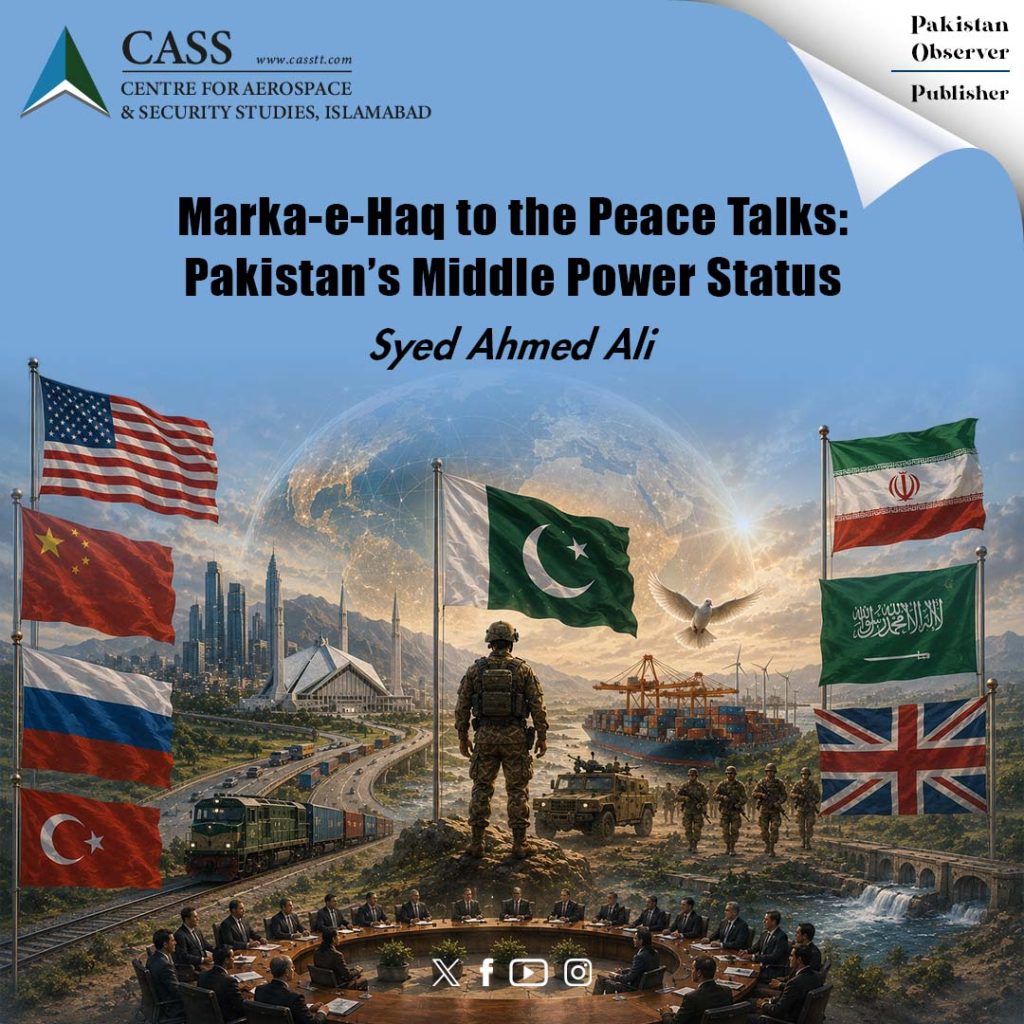
Marka-e-Haq to the Peace Talks: Pakistan’s Middle Power Status

On 7th May 2025, Pakistan’s military forces took the international security community by surprise when it demonstrated operational superiority against its larger belligerent adversary India with its rapid and coordinated response. The Four-Day conflict proved to be a watershed moment for Pakistan, marking its rapid emergence as an important player in the region. In recent years, amidst the ongoing global competition between the United States and China, Islamabad has adopted a position of ’Strategic Balancing,’ where it maintains ties of cooperation with both Beijing and Washington. Deft diplomacy, emphasis on geo-economics, and credible conventional and strategic deterrence have remained the foundational pillars for Pakistan’s ambition as a rising middle power

Read More »

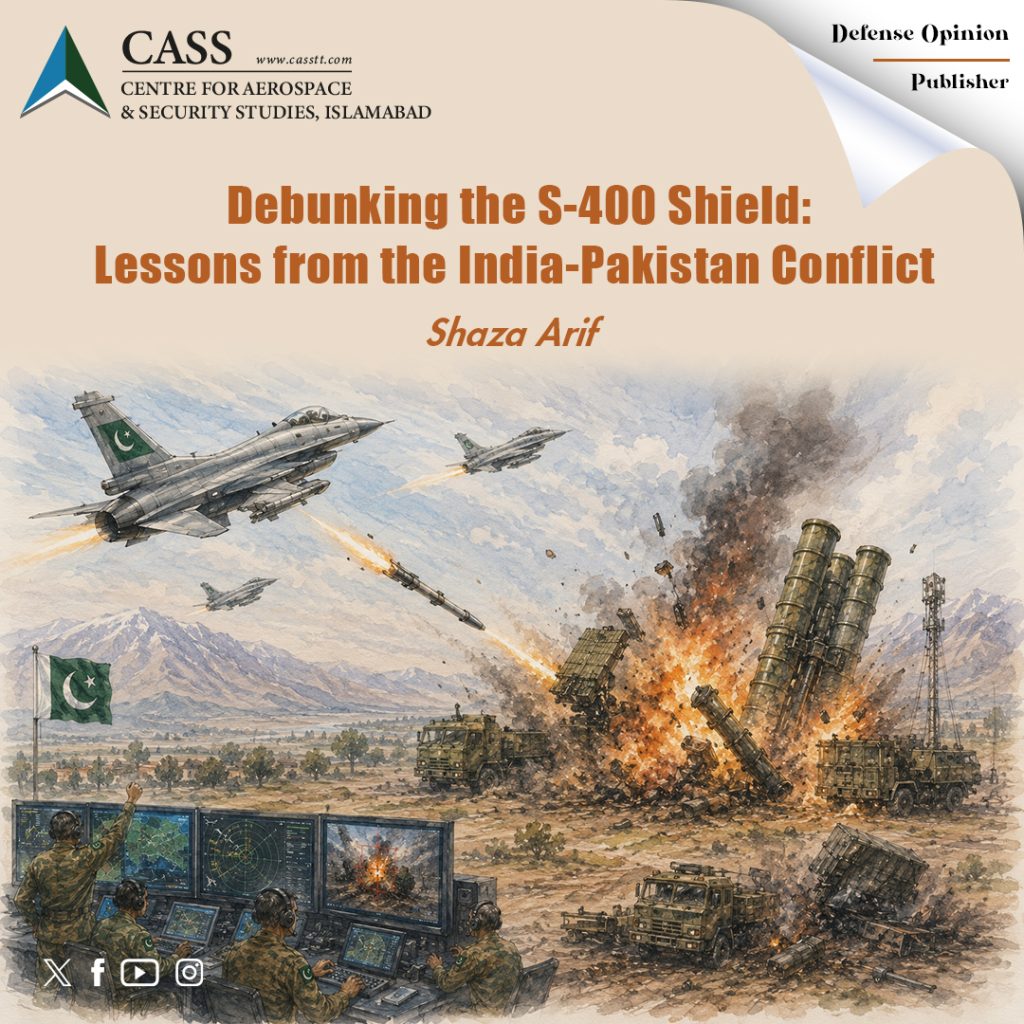
Debunking the S-400 Shield: Lessons from the India-Pakistan Conflict

Air defense has always been a central aspect of warfare. In South Asia, the phenomenon carries immense significance due to compressed reaction times. In this context, one of the most-hyped systems is the Russian-made S-400, touted by New Delhi as a one-stop solution to counter aerial threats from both Pakistan and China.
The 2025 conflict between India and Pakistan marked an important chapter in testing the S-400 technology. The conflict began on May 7, when India attacked what it alleged were terrorist targets in both Pakistani-held Kashmir and Pakistan proper, using drone and missile strikes. The conflict lasted for four days, culminating in a U.S-facilitated ceasefire. However, the brief conflict debunked a lot of the myths regarding the S-400 technology.
First, India claimed that the mobile S-400 would be able to control Pakistan’s airspace. In contrast, Pakistani aircraft continued to operate freely, according to official briefings by the Pakistani military. Although the Pakistan Air Force (PAF) aircraft were in their own airspace, they were still within the air defense range.

Read More »
