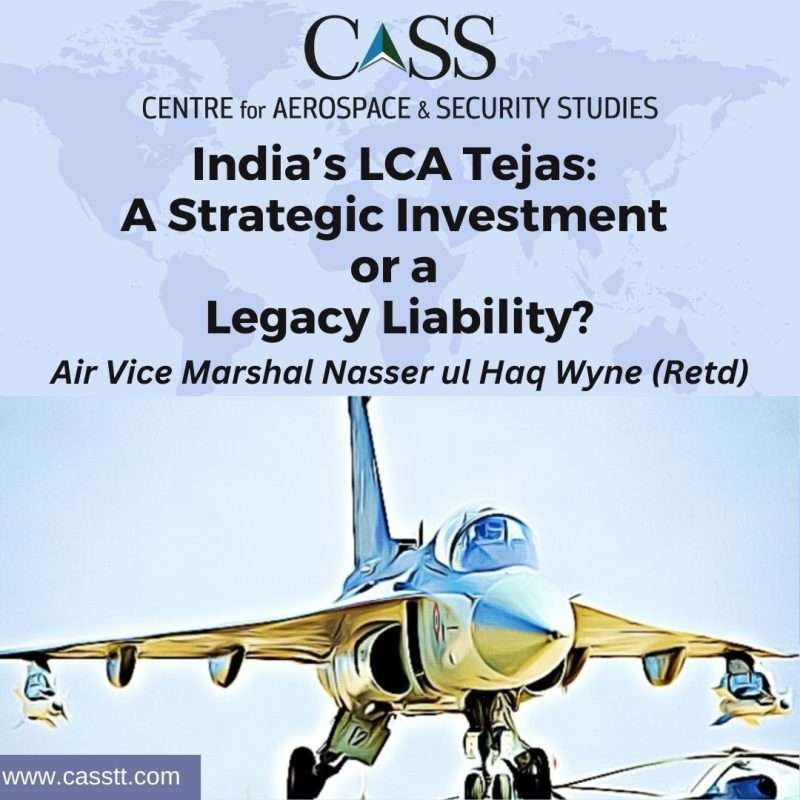
When the Indian Airforce (IAF) Light Combat Aircraft (LCA) Tejas showcased its capabilities at the prestigious Bahrain International Air Show, all eyes were on it, especially since the Chief of Air Staff of the Pakistan Airforce (CAS PAF) was also in Bahrain for an official visit. The international media was abuzz, waiting with bated breath for the CAS PAF’s assessment of the LCA Tejas. In his frank and candid response, the CAS stated, ‘After witnessing the LCA’s performance, the PAF sees no reason for concern.’ Despite subsequent appearances both domestically and internationally, the LCA Tejas has struggled to gain significant traction. Though India has consistently promoted Tejas for export, potential buyers remain hesitant, perhaps influenced by the fact that only a limited number have been inducted into the IAF’s own fleet.
Initiated in the early 1980s, the LCA project aimed to replace India’s aging Mig-21 fleet. However, its maiden flight did not occur until 2001, nearly two decades later. Given the swift pace of technological advancements worldwide during this period, by the time the LCA took to the skies, it was arguably already behind in terms of modern aviation innovations. It was not until 2021, another two decades later, that the Indian Ministry of Defense repositioned the LCA project. Instead of it solely serving as a replacement for the MiG-21, it was now being seen as part of the broader IAF modernisation plan. This shift in perspective suggests that the LCA project, now over 40 years in the making, requires significant reassessment and technological upgrades to remain relevant and effective.
The Tejas, since its inception, has faced numerous operational and technical challenges. Despite its induction into the IAF around seven years ago, several critical issues continue to overshadow its potential:
Operational Challenges
Serviceability and Availability: The LCA has a notably low serviceability rate. This deficiency means that a significant number of Tejas aircraft are unavailable for both training and operational flying for extended periods. Consequently, this impacts the readiness of the IAF as neither training nor operational benchmarks are consistently met.
Range and Payload Limitations: Structurally, the LCA is a smaller platform with a relatively delicate build. As a result, it possesses restricted range and load carriage capabilities. Its limited fuel capacity necessitates frequent stopovers during extended flights, presenting a tangible operational constraint and potentially exposing the aircraft to more risks in real-world scenarios.
Weapons and Systems: An analysis comparing the LCA Tejas with its contemporaries reveals a gap in the advanced weapons and systems it offers. The absence of state-of-the-art armament and technology compromises its target engagement abilities, which is a critical factor in aerial combat scenarios.
Cost Considerations: When juxtaposed against its capabilities, the LCA Tejas emerges as an expensive investment. Furthermore, the Tejas programme has been plagued by cost overruns. The initially estimated budget for the programme have exceeded by a considerable margin, exacerbating the financial challenges associated with the aircraft. This cost-benefit disparity not only impacts its potential for export due to competitive pricing pressures but also challenges its large-scale domestic induction. Given the financial ramifications domestic and international stakeholders are now deeply wary of committing to or procuring the aircraft at its staggering cost. The viability of the entire programme stands on a knife’s edge!
In light of these operational problems, while the LCA Tejas represents an ambitious project for India, deeper analysis indicates the need for substantial enhancements to make it a viable, cost-effective competitor in the modern aviation market.
Technical Issues
LCA is also confronted with a host of technical problems; only a few are described below:
Engine Concerns: At the heart of any aircraft is its engine and airframe, setting the foundation for its performance and reliability. Powering the LCA is the GE F404-IN20 engine, which has unfortunately encountered issues such as overheating and flameouts. Not only have these engine troubles caused significant delays in the Tejas programme’s progression, but they have also stoked apprehensions about the aircraft’s overall safety in flight scenarios.
Software and Integration Challenges: The avionics and software of the Tejas have presented their own set of challenges. Specifically, the aircraft has faced difficulties in seamlessly integrating new weapon systems, an aspect crucial for its combat-readiness and adaptability in the evolving landscape of aerial warfare.
Structural Issues: The airframe of the Tejas, a fundamental element determining its durability and longevity, has shown structural shortcomings. Such issues don’t just extend the Tejas programme’s timeline but also cast doubts about the aircraft’s resilience, especially in high-intensity operations.
In short, these technical challenges not only jeopardise the Tejas’ performance but also its credibility as a modern fighter jet in a highly competitive global market.
Conclusion
India needs to indulge in serious retrospection!
LCA Tejas is a complex aircraft, and it is not surprising that it has faced many technical and operational problems since its development. The IAF and HAL are contending with a design concept that is now 45 years old. To put that into perspective, within such a timeframe, most fighter aircraft would typically complete their service life and retire. No wonder then that the longevity and viability of the Tejas has become a point of intense scrutiny. Given this context, is it worthwhile for India to invest in an aging, costly and outmoded project and also expect others in the global defence marketplace to do so?
Air Vice Marshal Nasser Ul Haq Wyne (Retd) is a Director at the Centre for Aerospace & Security Studies, Islamabad, Pakistan. The article was first published in The Nation. He can be contacted at: [email protected].
Design Credit: Mysha Dua Salman