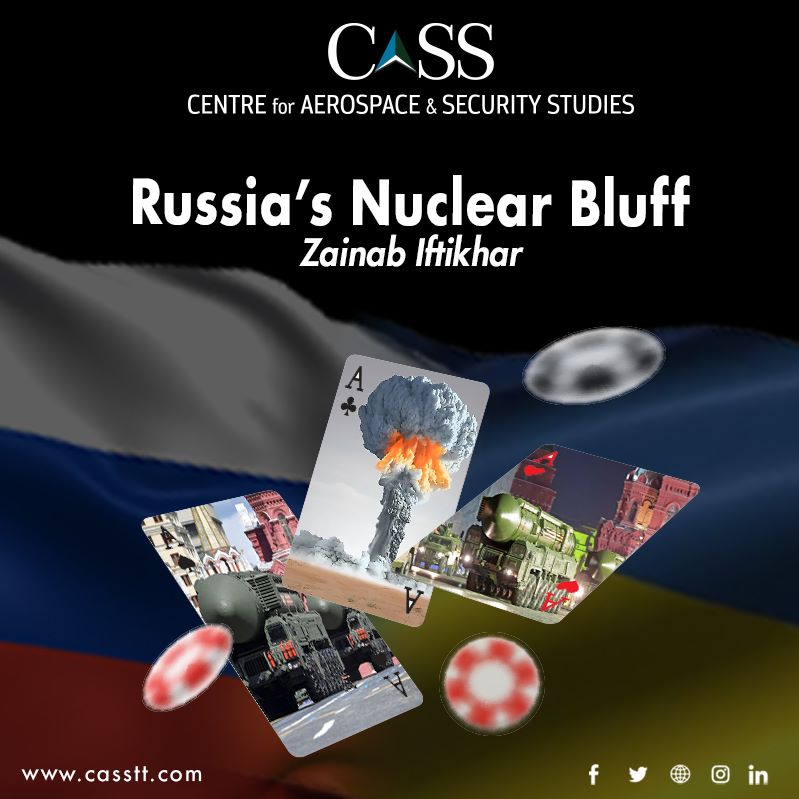
On 25 March 2023, President Vladimir Putin announced that Russia intends to station nuclear missiles in Belarus in addition to a missile system that can transport the weapons. He also stated that ‘From April 3, we start crew training, and on July 1 we are finishing the construction of a special repository for tactical nuclear weapons on the territory of Belarus.’ What has been the reaction and how seriously is it being taken?
The announcement sparked a fierce international response. Ukraine responded by calling for an emergency meeting with the UN Security Council, while NATO condemned the proposed plan by declaring that Russia’s nuclear propaganda was ‘dangerous and irresponsible’. Germany and other Western allies pointed out that the comparisons to US nuclear positions in Europe were ‘misleading’. Despite the outrage, the legal foundation for this action has been in the works since 2022, when Alexander Lukashenko held a symbolic referendum on a revised constitution, which removed the clause of Belarus’ neutrality and nuclear-free status. Since then, he has been calling on the Russian government to deploy tactical nuclear weapons. Putin, on the other hand, has argued that the UK government’s decision to provide Ukraine armour-piercing shells (containing depleted uranium) served as the immediate catalyst for his decision to ‘respond accordingly’ to such a move.
Russia’s announcement is symbolic of the country’s relations with Belarus. Lukashenko’s administration has faced mounting public opposition and Putin has been instrumental in helping him to maintain his grip on power. In exchange for this support, Belarus has permitted Russia to deploy its forces in the country, particularly in light of the ongoing conflict in Ukraine. The announcement indicates Belarus’ weakening sovereignty. The decision was not announced by Lukashenko, nor was it made public during a joint press conference despite the fact that both presidents met several times. Rather, Putin announced the decision unilaterally. This demonstrates that Belarus is progressively turning into an object rather than a subject of Russian security and defence policy.
Stemming from the concept of Mutual Assured Destruction, the installation of tactical nuclear weapons in Belarus has little bearing on the probability of nuclear conflict, which remains minimal because attacking Ukraine with nuclear weapons would be perilous for Russia. Moreover, it would deteriorate Kremlin’s relations with the international community and especially weaken China’s support.
It appears that Moscow has run out of avenues to extort the West. The threat of energy resource weaponisation was made against the latter. But winter passed, and Europe did not freeze. In fact, during the past year, European nations have made significant efforts towards reducing their reliance on Russian energy supplies. On the other hand, use of ‘nuclear fear tactics’ has proven successful in preventing Ukraine from obtaining the necessary support to win the war, and it may have even dissuaded some Western leaders from offering any support at all. This has also been the result of a prolonged social media campaign that mobilised all the propagandists, influencers, and embedded agents of influence throughout the West pounding home the precise message that opposing Russia could lead to a nuclear war. The effectiveness of the campaign can be assessed by the way Western discourse on nuclear policy has shifted. According to a Chatham House study, the concept of ‘escalation management’ and how to dissuade Russia has been replaced with a focus on ‘escalation avoidance.’
Deploying nuclear weapons in Belarus may not significantly alter the course of the war or even be plausible, but it reveals Putin’s intent to keep the nuclear threat front and centre in the minds of Western leaders. For instance, he signed an agreement to establish a military facility in Belarus in 2015. But after a few days, the proposals were rejected by the Belarusian government, and the facility never materialised. In the current situation, even with Lukashenko’s acute dependency, the deadline for the completion of a nuclear storage facility by the summer is rather impossible. Russia has been building a nuclear storage facility in Kaliningrad for seven years and it remains unclear whether the weapons have been deployed or not.
What remains to be seen is whether Russia’s assertions and posturing lead to anything more than verbal condemnations and diplomatic outrage at the international level. The likelihood of other nuclear weapon states in conflict zones adopting Russia’s approach of nuclear intimidation and the consequent increase in proliferation is quite high, given the current ground realities.
Zainab Iftikhar is a Research Assistant at the Centre for Aerospace and Security Studies (CASS), Islamabad, Pakistan. She can be reached at [email protected].