While it is true that drones are currently not substitutes for manned aircraft, but their potential to emerge as a critical force multiplier will affect the means and methods of warfare over land, air and sea. The recent Nagorno-Karabakh conflict has indicated that drones will significantly affect the survivability of ground forces, the vulnerability of air defense systems and Intelligence, Surveillance and Reconnaissance (ISR) in future conflicts. Conflict-prone regions such as South Asia can draw important lessons from this conflict.
The intense fighting between Azerbaijan and Armenia over Nagorno-Karabakh led to a ceasefire agreement signed between the conflicting parties on 9 November 2020. According to this agreement, Azerbaijan now controls the territories won during the conflict, which were internationally recognized as part of its territory, but were occupied by Armenian separatists since 1994.
The six-week long conflict was peculiar due to the extensive and effective use of armed and unarmed drones by Azerbaijan. Since Armenia had deployed air defense systems on its territory, the use of manned aircraft could have proved costly and risky. Therefore, Azerbaijan resorted to extensive use of drones which it had procured from Israel and Turkey.
Azerbaijan also used surveillance drones to identify troop positions and weapon locations, whereas its armed drones destroyed numerous Armenian tanks, artillery, and air defense systems which helped it make swift advancements into the occupied territories.
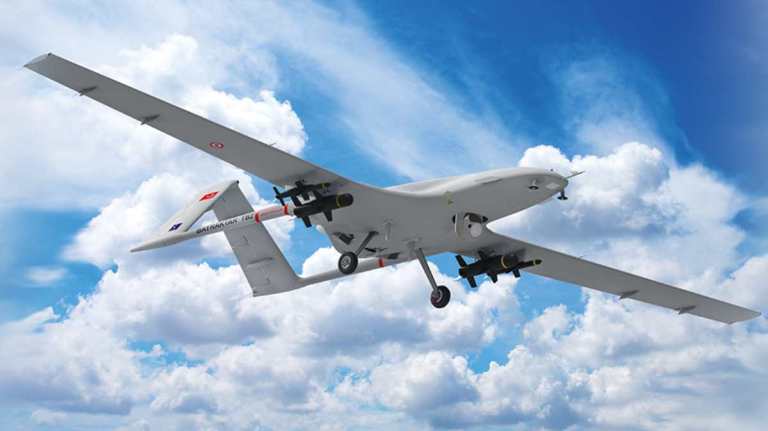
In the initial stages of the conflict, Azerbaijan’s Soviet-era aircraft were converted into drones, and sent over Nagorno-Karabakh which forced the Armenian forces to fire and reveal their artillery positions and air defense systems. Once their positions were revealed, they were exposed to subsequent attacks by armed drones. Furthermore, deeper penetration into Nagorno-Karabakh helped Azerbaijan disrupt the Armenian supply lines and logistics. The Soviet-era air defense systems (2K11 Krug, 9K33 Osa, 2K12 Kub, and 9K35 Strela-10) possessed by Armenia were not able to repel the incoming attacks due to their technological limitations. The Turkish Bayraktar TB2s drones flew too high to be ntercepted by these air defense systems.
In addition, modest Armenian air defense capabilities made its armored formations vulnerable to Azerbaijan’s drones, which inflicted significant damage. Although Armenia also had indigenous drones, they were technologically inferior as compared to the advanced versions possessed by Azerbaijan such as Hermes-900, Heron, loitering munitions such as Orbiter 1K, SkyStriker, and Harop; and Turkish Bayraktar TB2 UCAVs.
Azerbaijan’s effective and innovative tactical use of advanced drone technology enabled it to prevail upon Armenian forces which largely relied on conventional Russian weaponry and traditional tactics. Ultimately, the Armenian forces had no choice but to sign the truce in order to avoid more loss of human lives, territory and military equipment. This recent conflict has demonstrated that the effective use of drone technology can have a decisive impact on territorial conflict – a role which was mainly played by ground forces and manned aircraft.
This decisive role of drones has exposed the vulnerability of ground forces, expensive tanks, large artillery guns and even air defense systems. Drones have also emerged as effective and low cost SEAD (Suppression of Enemy Air Defenses) platforms against low-to-mid-range air defenses. They have also proven their worth in intelligence gathering, psychological operations and propaganda in military conflicts. Such platforms not only enabled timely battlefield damage assessment, but timely sharing of videos and pictures of Armenian military equipment being destroyed, and shown on electronic and social media also helped raise the national and military morale of Azerbaijan.
According to Michael Kofman of Center for Naval Analyses (CNA) “Drones offer small countries very cheap access to tactical aviation and precision-guided weapons, enabling them to destroy an opponent’s much-costlier equipment, such as tanks and air defense systems.” Azerbaijan, certainly not a major military power, was able to field a large arsenal of drones and inflict considerable damage to its adversary. Hence, it is evident that by the employment of remotely-operated systems, small and middle powers can get access to better airpower, sensors and precision-guided weapons at a far lower price as compared to the cost of expensive manned aircraft.
On the other hand, this “affordable airpower” can also make conflicts more likely as different states may be tempted to utilize this technology to seek quick victories in future conflicts. Both India and Pakistan are also investing in drone capabilities. This indicates that drones can have a significant and diverse role in any future South Asian conflict scenario as well. The threat from drones is a persistent one and is likely to grow once more states acquire this technology. Therefore, given the evolving role of unmanned drones, countries like Pakistan need to also explore and develop countermeasures with the help of electronic jammers, kinetic interceptors and counter-drone weaponry.
The lessons drawn from the conflict provide an important case study of how limited wars can be won through superior tactical employment of modern technology. The recent Azerbaijan-Armenian conflict is being dubbed as the first war that was won through drones. However, it is quite likely that it might not be the last one.
Shaza Arif is a Researcher at the Centre for Aerospace & Security Studies (CASS). The article was first
published in Khaleej Mag. She can be reached at [email protected]