The value of peace is invaluable and cannot be measured, sought through sacrifices of the generations, and yet is not guaranteed. Ask the people of Palestine, Kashmir, Afghanistan, Yemen, Syria, Iraq, Libya, and Rohingya Muslims in Myanmar.
Peace cannot be achieved by becoming a nuclear state, by reaching space, or by getting a resolution passed in the United Nations. However, peace can be achieved through dispute resolution by means of diplomacy and deterrence. Let me remind you of the impact of effective diplomacy in the words of Winston Churchill, “Diplomacy is an art of telling people to go to hell in such a way that they ask for the direction.” Though this quote has been debated for its veracity, but it makes a lot of sense. If policy defines ends, diplomacy finds ways, and strategy achieves those ends utilizing the available means.
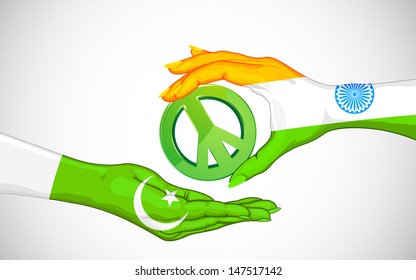
In South Asian context, if cross-domain deterrence is avoiding an all-out conventional war between the archrivals: India and Pakistan, then it is the job of diplomacy to make sure that this opportunity is converted into a peaceful resolution of long-standing disputes including Jammu and Kashmir (J&K).
India is an arrogant neighbour, but we cannot change it. It is committing atrocities on the unarmed people of Kashmir, but we cannot stop it by not talking to them. It has unleashed all components of hybrid war on Pakistan as revealed by European Union DisInfoLab, but we cannot convince the western world about India’s wrongdoings because it has better diplomatic relations in the power corridors. Therefore, it is suggested to debate on the following 5-point Peace Plan to engage India, and expose its hypocrisy, should it not respond to Pakistan’s peace overtures.
The importance of peace between India and Pakistan is extremely critical for the people of Kashmir
1. Resume bilateral relations to get relief for the oppressed people of Kashmir. Whenever there is a breakup of diplomatic relationship between India and Pakistan, it is the people of Kashmir who suffer the most. In the last two decades, attacks on India’s Parliament in 2001, or the Mumbai Attacks of 2008, or the recent events of 2019, the people of Kashmir face the brunt at the hands of nearly one million men crushing the just struggle of Kashmiris. Whereas, during the same period, under Pervez Musharraf and Manmohan Singh, the people of Kashmir had relatively better times, because the two governments were making efforts to work out a formula for peaceful resolution of the dispute. Even if the efforts failed, the people of Kashmir were not suffering as much.
2. Initiate a Comprehensive Dialogue for Productive Engagement. The process has been in place under Composite Dialogue since the mid-1980s, when SAARC came into existence but without productive outcome. This time the proposal is to conclude the Agreements on one issue and then move forward on the other.
3. Invite India to initiate measures for greater regional integration. As mentioned earlier, India is a difficult neighbour and boasts its arrogance due to its phenomenal size and physical control of the disputed areas. Therefore, it is suggested that India may be offered lucrative opportunities so that it feels compelled to engage with Pakistan for its own benefits. For instance, building of an East-West SAARC Highway to market its products in the region.
4. Persuade India to revoke Article 370 and 35A. India’s BJP government’s actions of August 5, 2019, are deplorable, but it cannot be undone by breaking off our bilateral relations. It is necessary to engage and expose India on every forum to persuade it to revoke the Constitutional Amendments.
5. Strive for ‘Formal Peace Agreements’ on all disputes including J&K, may be starting with relatively doable ‘Sir Creek’ and ‘Siachen.’ Historically, there have been agreements on the basic principles for the resolution of doables but unfortunately these were not formalized. Perhaps it is time that the agenda items of disputes between India and Pakistan are reduced by dissolving the disputes one by one so that time is ripe for the peaceful resolution of the J&K, for the satisfaction of the people of Kashmir, and not the governments of India and Pakistan.
There may not be anything new or fancy in these proposals, but a beginning must be made. We must realize that Afghanistan is heating up again and there is a greater probability of uncertainty on our western borders once again. Therefore, it is necessary to not repeat the same mistakes of getting engaged on both the fronts simultaneously, yet again.
The importance of peace between India and Pakistan is extremely critical for the people of Kashmir. If only the firing along the Line of Control (LoC) is stopped, like it was done between 2003 to 2006, hundreds of Kashmiri lives would be saved, and they may be able to resume a normal life without the fear.
Dr Shamsi is Director of Peace & Conflict Studies (CASS\ and the author of the book ‘Nuclear Deterrence and Conflict Management Between India and Pakistan.’ The article was first published in Daily Times. He can be reached at [email protected]
Image source: Asia, C.A.C.E. (n.d.). Did India & Pakistan start Kashmir Negotiations? | Belt & Road News. [online] Available at: https://www.beltandroad.news/did-india-pakistan-start-kashmir-negotiations/ [Accessed 7 Jun. 2021].