
Afghanistan remains the focus of terrorism concerns of regional and international powers. With such concerns, the expected spillover of cross border terrorism from the militant groups like Tehrik-e-Taliban Pakistan (TTP), hiding in Afghanistan, is a source of concern for Pakistan. Despite Pakistan’s gargantuan success in countering terrorism, the hasty US withdrawal from Afghanistan could increase challenges for Pakistan. The expected resurgence and reorganization of TTP during US withdrawal and the absence of countering terrorism mechanisms in Afghanistan could increase the challenges of terrorism in Pakistan.
To understand this phenomenon in the context of the theory of “The Life Cycle of Terrorist Organization” it may be recognized that it is not necessary that a terrorist organization can be wiped out by all means. However, ability of terrorist organizations do decline and that may be the time of advantage for a state to dismantle or eliminate the terrorist organization depending upon the state’s capacity and capability to do so. In TTP’s case, its ideological regrouping in the form of merger of splinter groups such as Jammat ul Ahrar and Hizb ul Ahrar can infuse fresh blood as this terrorist group reorganizes in Afghanistan. This merger may increase the manpower and internal cohesion of the group and simultaneously, will decrease TTP’s internal ideological conflicts. Considering the UN Report which claims that there are around 6500 terrorist of Pakistani origin hiding in Afghanistan, one may argue that after US withdrawal the reins of such terrorists would be free and they could expedite their cross border terrorist operations against Pakistan from Afghanistan.
According to the UNODC report the overall income generated by cultivating opium in Afghanistan was $ 2.1 billion in 2019. With such an exponential figure and informal economy of Afghanistan the possibility of use of this undocumented and illegal money in terrorism financing cannot be ruled out. In the case of Afghanistan, the cash flows from drug trafficking could be used by TTP in order to regain its capability of operations against Pakistan. Meanwhile, Pakistan is currently struggling to meet FATF recommendations to get out of the grey list. After the completion of US disengagement from Afghanistan the emerging challenges in the domain of terrorism financing in the region may affect Pakistan’s progress in compliance to FATF standards.
The threats in the domain of terrorism are complicated and irreversible, hence require a comprehensive and strategic response. Fencing the 88% of the harsh terrain of Pak- Afghan border in such a short span of time was a herculean task completed by Pakistan. Pakistan can mitigate the risk of potential flow of terrorism from Afghanistan on Pakistani soil, by taking precautionary steps instead of a reactionary response that may be too late. In precautionary response, Pakistan could draw an updated National Action Plan which may accommodate the emerging threats in the domain of terrorism, considering the potential impact of emerging violence spike scenarios in Afghanistan after the completion of US withdrawal.
The steady decline in terrorist attacks in Pakistan after 2014 shows that the strategy of using smart power (Kinetic operation+ National Action Plan) was a wise decision towards achieving the desirable goal. However, considering the ongoing geo-strategic developments in the region Pakistan will once again need to devise a strategy of Smart De-radicalization program in order to root out the sympathizers of terrorism and extremism from society. For this purpose specific localities and communities can be targeted in order to build resilience in the society so that they may not fall back into the menace of terrorism and extremism again.
To conclude, because of the emerging scenarios in Afghanistan the question of controlling the emergence of terrorism from Afghanistan may not be answered with certitude. However, the risk mitigation needs to be done by adopting early risk detection policies and preventive measures regarding incoming terrorism threats in the present and post US withdrawal scenarios from Afghanistan.
Asad Ullah Khan is a senior researcher at Centre for Aerospace & Security Studies (CASS) Islamabad. The article was first published in Pakistan Observer. He can be reached at [email protected].
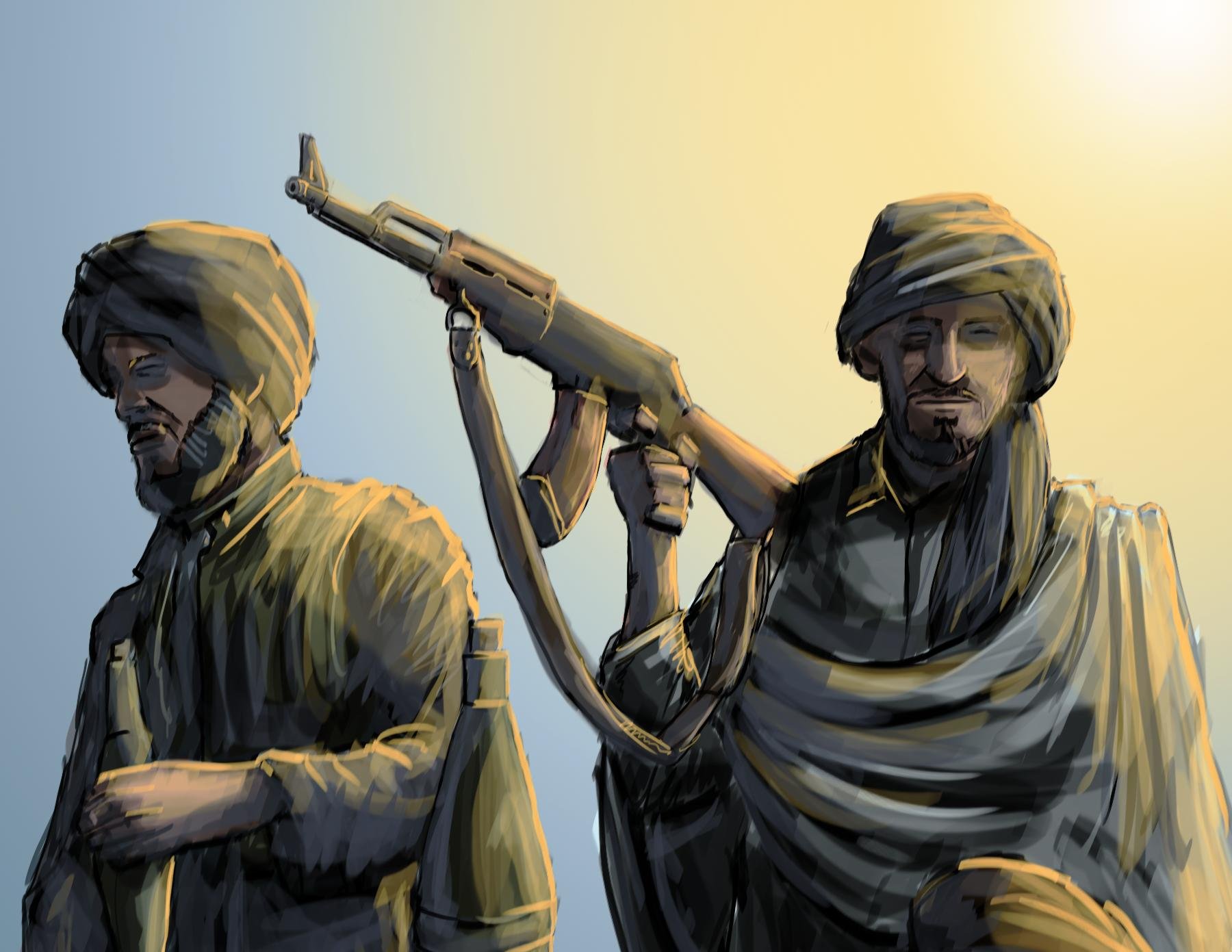
Image Source: Khan, T. “Afghan Taliban scoff at US sanction on Sirajuddin Haqqani’s brother.” The Express Tribune. August 28, 2015.



