
“Air superiority is the ultimate expression of military power.” Winston Churchill
Airpower has always been one of the decisive factors in warfare given that airborne means of attack have the potential to inflict considerable damage to enemy’s forces in the battlefield as well as its centres of gravity (COG) deep inside its territory. The recent decades have witnessed a tremendous growth in the capabilities of aerial vehicles and the associated weaponry which will have a profound impact on warfare. New and advanced technologies are making it imperative to refine the measures to detect, identify, intercept, and defeat the enemy’s airborne vehicles. Factors such as speed, maneuverability, deception, swarming attacks coupled with emerging technologies such as AI have challenged the previously-held superiority of the air defense systems.
To counter this threat, the manufacturers of air defense systems and air strategists are vigorously engaged in developing better systems and tactics. Although USA has been spearheading the technological race in military aviation but as far as ground defense is concerned, Russia has been the leader in this field for a long time.
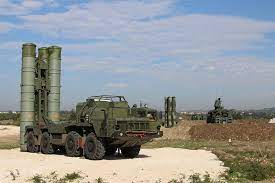
The Russian S-400 air defense system has been in the talks lately due to its advanced features. Likewise, the news of its variant S-500 has already began to raise alarms recently. In the first week of June this year, Russia has successfully tested its S-500 air defense system with new interceptors at the Sary-Shagan training ground in Kazakhstan. Reportedly, in addition to ballistic missiles, cruise missile and UAVs, the system is also capable of engaging hypersonic targets, intercontinental ballistic missile (ICBM) and stealth aircraft. However, what makes this air defense system unique is its capability to target spacecraft in the near-earth orbits. According to Sergei Surovikin, the head of Russia’s Aerospace Forces, the S-500 constitutes the first generation of space defense. In addition, it can also neutralize combat support aircraft forcing them to operate from extended ranges.
S-500 system is expected to use the 91N6A (M) battle management radar and 96L6-TsP target acquisition radar besides the 76T6 multimode engagement radars. The target detection range of the system is 600km. It will be able to engage 10 targets simultaneously. The system will be armed with new types of missiles, the 77N6-N and 77N6-N1, in addition to the 40N6E missile, which is already employed in S-400. The system is scheduled to enter service by the end of 2021 whereas subsequent deliveries and wider introduction is expected to start by 2025.
The S-500 is not a replacement to the previous existing Russian air defense systems, rather it will supplement them to strengthen the defense capabilities. Russia sees this new air defense system as an impenetrable shield which will contribute as an effective defense asset against strikes that are carried through air and space. The introduction of this new air defense is likely to have a number of implications.
The development of more advanced air defense systems is bound to raise concerns in Washington and other western countries who are already worried about the S-400. It has been repeatedly discussed at various platforms that the S-400 surpasses the technological advancement of the American air defenses such as PAC-3 systems and Terminal High Altitude Area Defense (THAAD). The introduction of the S-500, is likely to increase the existing gap. In addition, its ability to target spacecraft will appear as a major risk and enhance the threat perception of the other major actors in space.
Although no air defense system can boast of survivability against all incoming threats but the increasing sophistication does create challenges for the attackers to find and exploit the existing weakness. The S-500 uses upgraded and sophisticated guidance systems. It has been claimed that the Yenisei radars used by the S-500 have inbuilt state-of-the-art electronic counter-countermeasures (ECCM) equipment which provides a formidable defense against electronic countermeasures (ECM)/ techniques currently in use around the world. Since the system is fully autonomous, it also eliminates the probability of human-error and increases its lethality.
A number of countries have shown their interest in the S-400 air defense system. China and Turkey have already acquired it. India is expected to receive the first shipment by the end of this year. Likewise, Qatar and Saudi Arabia have shown their interest to purchase this system. With the arrival of the S-500, there is a possibility of countries opting for this system as well due to its enhanced features. Turkey is already considering the purchase of the system. The purchase of this system will also have implications for the sanctions regime under the Countering American Adversaries Through Sanctions Act (CAATSA) as was observed for the S-400.
The advent of this new air defense system will have several implications at regional and global level which will result into an arms race. The S-500 is going to push the military thinkers to come up with more ways in order to mitigate the potential threats from the system. Likewise it will compel other states to come up with more advanced air defense systems. These developments are indicative of the fact that in the modern warfare, there is a pressing need to pay equal attention to both technology and tactics in order to prevail in future conflicts. The failure to meet both these requirements can bear disastrous consequences on the battlefield.
Shaza Arif is a Researcher at the Centre for Aerospace & Security Studies (CASS). The article was first published in Khaleej Mag. She can be reached at [email protected]
Image Source: Lake, Jon. “Russia’s S-500 Prometheus SAM nears service entry”, ARMADA International, 29 March,2018,https://armadainternational.com/2018/03/russias-s-500-prometheus-sam-nears-service-entry/



