
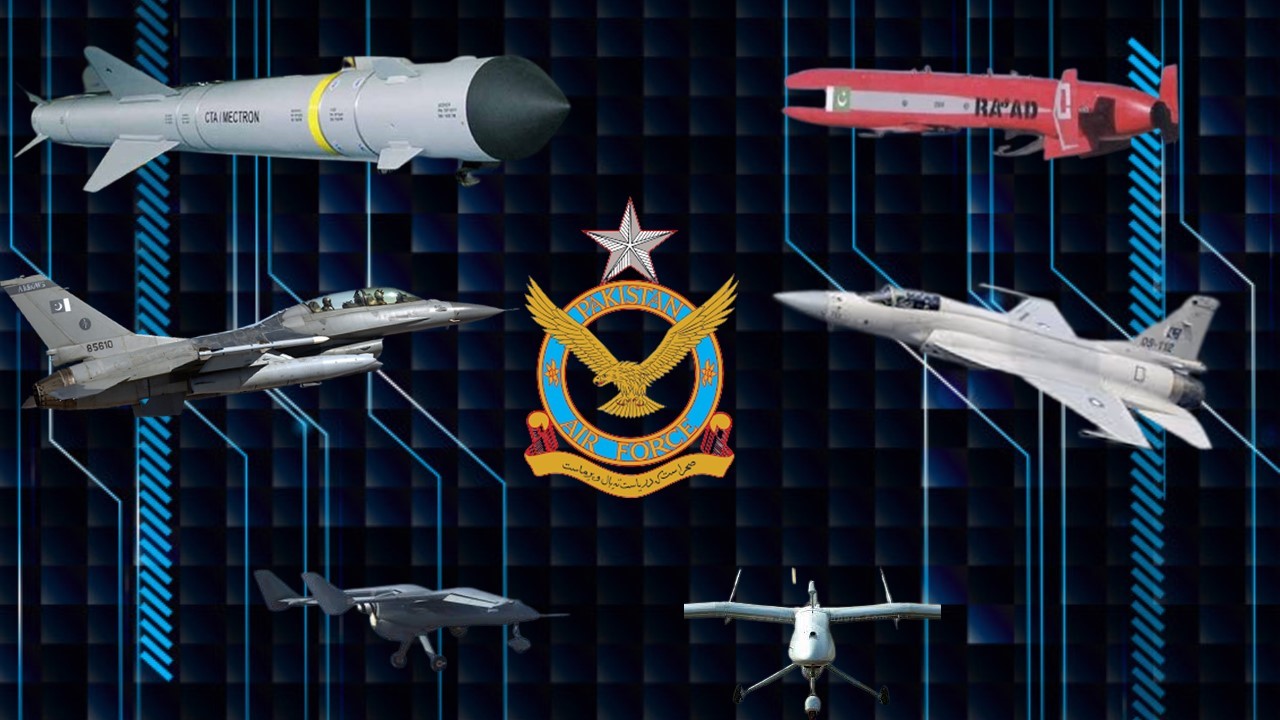
As a result of developments in advanced technology, rigorous training and the role of leadership at the operational level of war, airpower has now reached a point where it has become truly strategic in terms of its potential effects. Even more so given the advent of stealth, precision targeting capability and rapidly enhancing situational awareness about the battlefield.
Closer to home as well air operations have proved to be relatively effective and swift as compared to the land forces at all levels. For instance, the February 2019 action by the Pakistan Air Force (PAF) proved the significance of airpower in terms of prompt, quick and decisive action which caused effective damage to the enemy and had significant influence on the subsequent course of action and outcome.
If we look at the Indian military modernization pattern, it has rapidly increased in different dimensions. Indian procurement of S-400, induction of Rafale and development of BrahMos hypersonic cruise missiles reflect its future ambitions. These latest developments by India are having a destabilizing impact on the strategic stability of the region, and it subsequently requires that the PAF constantly review its offensive and defensive capabilities at the operational, strategic and tactical levels to remain potent against IAF which is much larger in size.
At the operational level, the synergy between electronic warfare (EW) and kinetic capabilities is significant to achieve overwhelming success in modern combat. In February 2019, India lacked expertise in EW and was not able to integrate and disseminate information securely. On the other hand, Pakistan effectively used EW and outsmarted the IAF, but in future, this domain has to be developed further.
Situational awareness in the battlespace is not limited to battlefield information only. Intelligence Surveillance & Reconnaissance (ISR) capability enhances real-time situational awareness of the battlefield and synergistic fusion of information with precision strike capability. Under the US-India Basic Exchange and Cooperation Agreement (BECA), India is enhancing its ISR capabilities, which makes it essential for Pakistan to put every effort in this domain, as this capability is likely to be a game changer in any future conflict that may be short but intense. Pakistan can collaborate with China in developing remote sensing satellite capabilities as well as consider improving its UAVs/UCAVs capabilities with Chinese assistance.
Speaking of UAVs/UCAVs, the use of which has already transformed the battlefield as we witnessed in the recent Armenia-Azerbaijan conflict, drones reduce technological and affordability constraints and act as an enabler that can facilitate the use of airpower. IAF has hundreds of drones and is indigenously developing swarm drones and also planning High Altitude, Long Endurance (HALE), an unmanned aircraft to strengthen its ISR capability. Pakistan has an indigenous drone program and has developed unmanned combat aerial vehicle (UCAV) Buraaq, capable of carrying two air-to-surface laser-guided missiles and can easily target stationery and mobile targets. Pakistan is also planning to acquire 48 UCAVs Wing Loong II from China. A Medium Altitude Long Endurance (MALE) drone, is primarily intended to provide surveillance and reconnaissance support to the Air Force and effectively perform combat operations, besides other uses.
Gaining control of the air is going to be the first and foremost challenge for any air force. Concerning technological acquisitions, after the humiliation faced by the IAF post-Balakot strikes, IAF acquired state-of-the-art Rafale fighter jets from France, and it is set to receive all 36 jets by April 2022. Keeping in view budgetary constraints, Pakistan is focusing on developing the latest variant of its JF-17 ‘Thunder’ Block III multi-role fighter aircraft. Since development, it has undergone multiple tests and it will also be capable of carrying PL-15 missiles. Its integration with the Block-III will enable PAF to defeat IAF’s beyond- visual-range (BVR) capability.
Besides up-gradation of JF-17 Thunder, the acquisition of J-10C from China will provide an edge to the PAF. J-10C is capable of carrying both PL-10 and PL-15 and has an improved AESA radar and is able to carry much heavier payload than JF-17. The integration of PL-15 with the JF-17 Block-III and J-10C will provide an edge to PAF over IAF in BVR capability of the Meteor (long-range BVR) on Rafale, Matra MICA (Medium Range) on Mirages and R-77 on SU-30 MKI. PL-15, offering a range much longer than the Meteor, will significantly enhance PAF’s air-to-air strike capability.
In February 2020, Pakistan conducted a successful test of its nuclear-capable air-launched cruise missile Ra’ad-II with a reported range of 550 km. Ra’ad II is the latest variant of Ra’ad-I that had a reported range of 350 km. As per the Inter-Services Public Relations (ISPR), “Ra’ad II significantly enhances air delivered strategic standoff capability on land and at sea. The weapon system is equipped with state-of-the-art guidance and navigation systems ensuring the engagement of targets with high precision.”
Indian S-400, which is primarily developed for aerial defense, poses significant A2/AD challenges to Pakistan. Whether it is peace time or war, Pakistan will have to review its options to counter such a threat as air operations will become more challenging and costly, and hence needs to come up with cost effective options to neutralize these growing threats. Long-range surface-to-air missile (SAM) system as standoff weapons delivery will be essential to counter the Indian’s S-400.
India also indigenously developed an Anti-Radiation Missile Rudram-1 in October 2020, which can be launched from Su-30 MKI to target radars and surveillance systems. Having already developed MAR-I to perform SEAD (Suppression of Enemy Air Defenses) operations, Pakistan has an edge over India in this domain. Furthermore, with improved ISR capability, Pakistan can keep track of the deployment of S-400 batteries and the actual performance of the system and devise a strategy to counter and neutralize it.
Advancement in combat capability in the airpower domain has led to new operational tactics. However, expert human resource and training is even more important now than it was before. In order to meet the expectations of PAF leadership and achieve operational excellence, young and talented youth need to be recruited and provided Next Generation Training to enable them to meet the challenges posed by emerging technologies. Due to its present economic conditions, it would also be wise for Pakistan to invest more in niche technologies in particular not only to deter its enemy, but also give befitting response when deterrence is challenged.
Etfa Khurshid Mirza is a researcher at the Centre for Aerospace & Security Studies (CASS) in the Nuclear and Strategic Affairs program and her area of interest is emerging technologies and warfare. The article was first published in The Geopolitics. She can be reached at cass.thinkers @gmail.com



