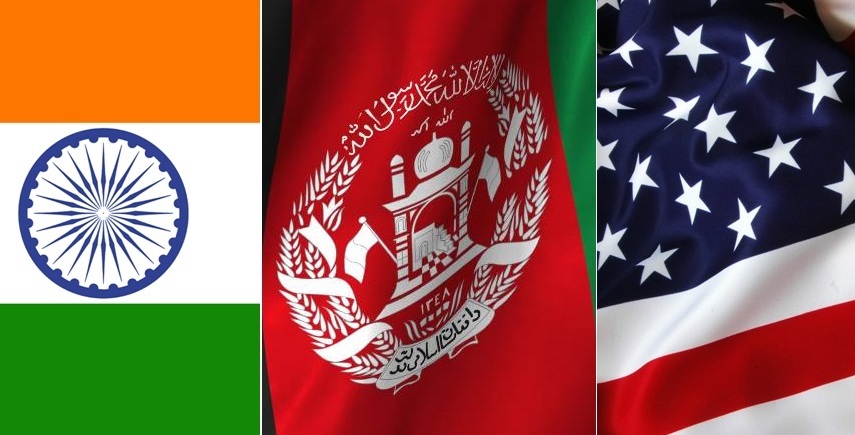
The hasty US exit from Afghanistan is being criticized by friends and foes alike. Some are calling it a humiliating defeat after a 20-year war. Images of staff being airlifted from the roof of the embassy building in Kabul are reminiscent of US exit from Saigon, exactly in the same manner, some five decades ago. If the US has been defeated in her longest ever war, so has been its new pliant state in the region, India.
Announcement of general amnesty by the Taliban reminds one of North Vietnamese Colonel Bui Tin’s statement while accepting the surrender of South Vietnam on 30 April, 1975, “You have nothing to fear; between Vietnamese there are no victors and no vanquished. Only the Americans have been defeated.” While the US is being severely criticized for its abrupt withdrawal from Afghanistan at home and abroad, has it really been defeated? It is difficult to comprehend that the US did not have a clear vision about its withdrawal.
Taliban advances far beyond US expectations also raise serious doubts about the American intelligence system and the ability of its military commanders to predict the exact post-withdrawal environment and outcome. It seems, there may be more to this than meets the eye. The US negotiated a peace deal with her sworn enemy, the Taliban, in exclusive meetings where even the facilitators were not permitted. So, what was exactly decided between the two parties is unknown.
Absence of any facilitators during these meetings raises serious questions about the exact nature of the deal. Unfortunately, we are not likely to learn the truth in the near future. Soon after announcement of US withdrawal from Afghanistan, Taliban initiated their offensive and rapidly captured almost the entire country and took over Kabul after the US- installed regime fled the country.
US-installed Afghan President Ashraf Ghani with bags full of US taxpayers’ dollars was provided political asylum by the United Arab Emirates, an ardent supporter of the Financial Action Task Force (FATF), with no mention of illegal wealth. While Taliban are in the process of forming an all-inclusive government, the US has frozen Afghan funds in American banks to the tune of USD 9 billion.
Under US coercion, IMF is withholding a tranche of USD 450 million. The World Bank has also frozen aid disbursement to Afghanistan. USD 4 billion promised by donors have also been held in abeyance. All these steps, on the behest of US are aimed at causing economic and financial strangulation of the country. Afghan banks have remained closed since August 15th, and ATMs are out of cash, thus denying citizens’ from purchasing daily commodities. There are also reports that suggest only two days of food supplies are left in the country.
With all funding stopped, the government would not be able to import urgently needed food and medicines. Lack of money and food shortages will cause dissatisfaction among the masses and ultimately result in loot and plunder. This, in turn, will create chaos in the country, which no government will be able to control, unless supplies are restored.
The denial of funding under US pressure, thus, appears to be a pre-planned step to create organized chaos in Afghanistan. Additionally, the US is also using Indian influence on Northern Alliance to create a civil war situation in certain parts of the country.
Chaos and a poor law and order situation in the country will put the region in turmoil, affecting all neighboring countries, including China, Russia, Iran and Pakistan. This will help US designs of creating unrest by seriously threatening China’s Belt and Road Initiative (BRI). A restive Afghanistan will deny Beijing’s planned connectivity to Central Asian states.
Turmoil in Afghanistan will also have its ramifications in Pakistan’s Northern provinces, thus threatening the China-Pakistan Economic Corridor (CPEC), as well as result in influx of refugees in neighboring countries, especially Pakistan and Iran. This in addition to creating economic problems, may also result in a precarious security situation for the two countries. While the US and its pliant state India may have their own designs to keep Afghanistan, and consequently, the region in turmoil, it is up to neighboring countries to thwart these plans.
Afghanistan’s neighbors, in their own self-interest, must join hands to stabilize Afghanistan. The most important aspect to be dealt with on war-footing is the provision of food and medicines on humanitarian grounds with UN food programme involvement, if possible. This one step will avert social unrest and lawlessness in the country, giving critical time to the government to strategize the future course of action. Failure of regional countries will fail the people of Afghanistan and create problems for the region. If Afghanistan stabilizes, President Joe Biden and PM Narendra Modi will be remembered for their failed strategies and downfall of their respective countries.
The author is a retired Air Marshal of the PAF who served as Pakistan’s Air Adviser at New Delhi from 2002-2006, presently working as Director Strategic Defence and Security at Centre for Aerospace & Security Studies. This article was first published in Pakistan Observer. He can be reached at [email protected]
Image Source: امریکا له هند څخه په افغان سوله کې د کلیدي رول لوبولو غوښتنه وکړه. تاند. September 30, 2020.