Ever since attaining independence in 1947, India has remained a cause of disturbance and conflict in the region, and the most distrusted country by its neighbours. It started with deceitfully moving troops into the state of Jammu and Kashmir, annexation of Goa and Sikkim, unilateral occupation of Siachen glacier to the most recent act of declaring IOK a part of India; its expansionist designs continue unabated. It has unresolved border and water disputes and extremely tense relations with all its neighbours. It faced humiliating defeat in a war with China in 1962 and more recently in a skirmish in Galwan valley as a consequence of its expansionist designs. With its Western neighbour Pakistan, it has had three major wars and many military stand offs. While it played a major role in fomenting trouble in erstwhile East Pakistan and creation of Bangladesh through military intervention, diplomatic, material and all other possible support, it continues to have problems and disputes with the country. It was responsible for starting and supporting the Tamil separatist movement in Sri Lanka. More recently, India has decided to act as a watchdog against its northern neighbour in support of US policy of containment of China. After all such acts, it still considers and continues to project itself as a victim, notwithstanding the fact that the country itself is the major cause of continued conflicts in the South Asian region.
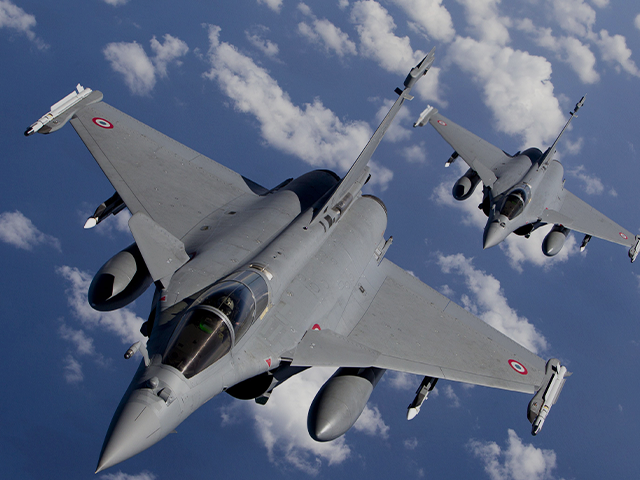
The humiliation suffered on 27th Feb, 2019 and in Galwan valley very recently has led India to expedite acquisition of French Rafale aircraft. It is also acquiring multibillion dollar military equipment from Russia, USA and Israel as part of IAF’s modernization plan. The Western world for both, economic interests as well as for containment of China, is willing to provide military hardware to their Chowkidar, what Narendra Modi prefers to call himself. The leadership as well as the media project India to have become invincible after the induction of Rafale aircraft. In reality, the objective is to project Modi as a tough leader to the domestic audience as well as to divert attention from an extremely expensive purchase; for obvious reasons.
Indian expansionist designs, jingoist attitude, conflicts with all its neighbours and modernization of armed forces at a huge cost, cannot be ignored by the neighbouring countries. Although India neither possesses military capability nor the political will to challenge China, the later cannot ignore Indian modernization plans especially when India has committed to be a watchdog in China containment policy. Pakistan on the other hand is aware that Indian leadership uses brinkmanship against Pakistan to divert public attention from its governance failures.
The situation thus, would force Indian neighbours in the West and North to strengthen their armed forces to counter any Indian designs, thus leading to an arms race in the region. And an arms race between three nuclear states with contiguous borders does not bode well for strategic stability of a region, home to more than one third of world population.
While Indian expansionist designs and colossal defence expenditures are likely to initiate an arms race, expected performance of Indian military in any future conflict with its neighbours may not be much different from the past. IAF’s performance in its 72 years of existence has been dismal at best. With its proven inability to exploit the capabilities of Mirage-2000 and SU-30 aircraft, upgraded Jaguars and Israeli AWACS and weapons, it is not likely to do any better in employing the newly inducted Rafale. The problem would be further compounded by IAF’s inability to integrate US, French, Israeli and Russian origin systems. Low motivation and poor training standards of its personnel when combined with morality issues the force has been facing, will further affect its performance during future military conflicts.
Pakistan Air Force cannot ignore new additions in the IAF, however, it would not be wise to get into an arms race. PAF’s past performance can be attributed to vision and boldness of its leadership, reliance on indigenous developments, novel ideas both, in technology and doctrine and motivation and professional competence of its personnel. PAF, therefore, should continue to work for capability enhancement through indigenous developments, essential acquisitions from abroad, focus on training of its personnel and making doctrinal changes to face future challenges and maintain a strategic balance.
– The writer is Director for Strategic Defence and Security at Centre for Aerospace & Security Studies (CASS). This article was first published in The News newspaper. He is a retired air marshal who served as Pakistan’s air adviser at New Delhi (2002-6). He can be reached at ashfaquearain58yahoo.com