President Macron was in the lead in the first round of the French Presidential Elections, securing 27.8% votes, trailed closely by far-right leader Marine Le Pen with 23.1%. Once again, thus, Emmanuel Macron will face Rassemblement National (RN) leader Le Pen in the Presidential runoff on 24th April similar to the 2017 contest. This time, however, the contest is expected to be much closer than the one five years ago. While Macron is expected to win the runoff, his victory could be aided by unlikely supporters from the Left, only to keep Le Pen out of the top slot. Incidentally, Le Pen was not the farthest-right candidate in the recent election. The leader of ‘Reconquete’ (meaning Reconquest) party, Eric Zemmour, with his ultra-right views, and an immensely provocative campaign far exceeded Le Pen’s standing as a right-wing ideologist. Incidentally, the name of his party, ‘Reconquest’ is derived from the historic campaigns of the Christian states, aimed at recapturing Iberian Peninsula from Muslims. The current political reality in France was aptly summed up by Macron when he said, ‘When the far-right, in all its forms, represents that much in France, you can’t consider things are going well’.
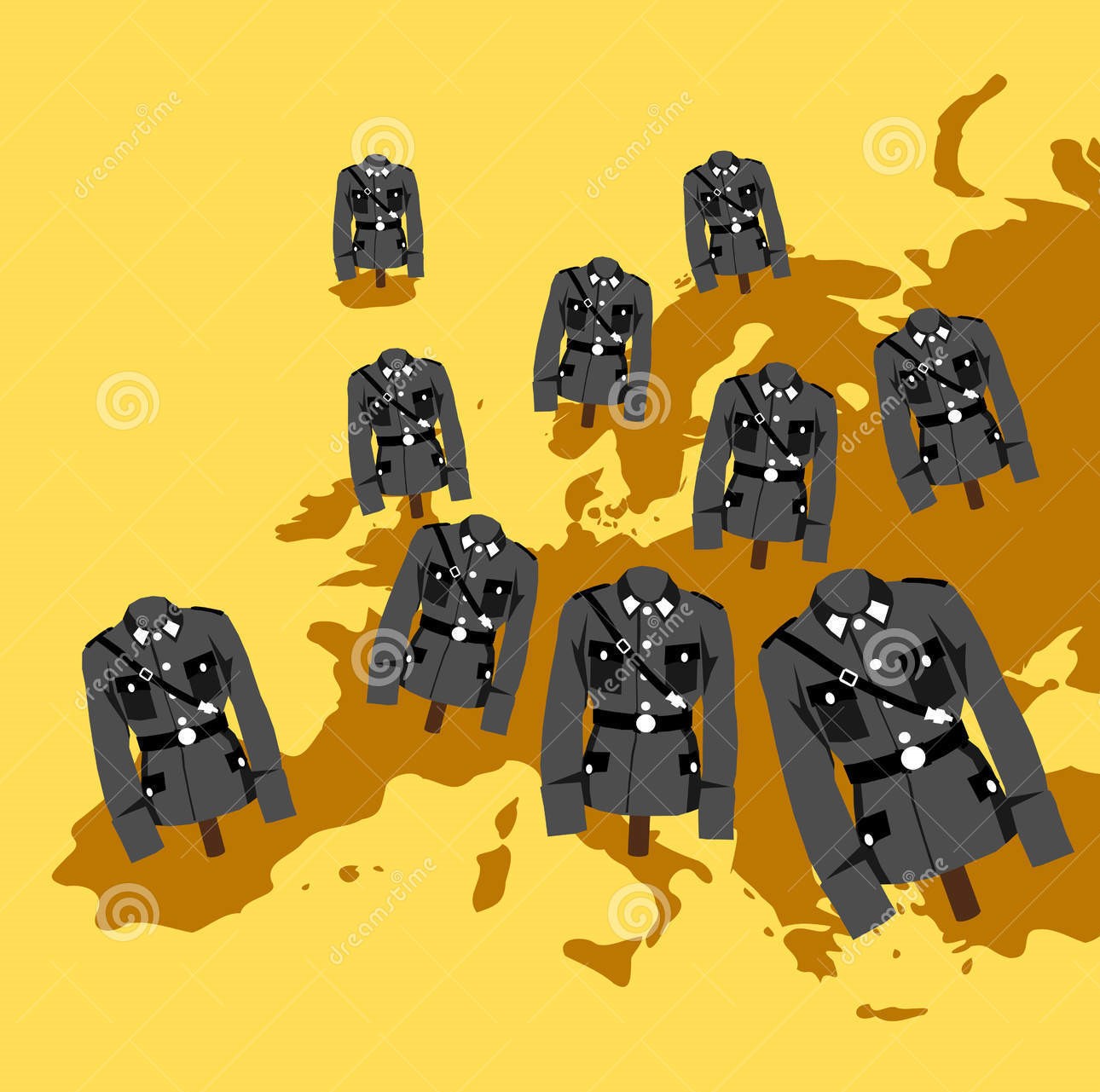
France may be in the news for emergence of far-right ideology at the moment, but this phenomena is neither new nor is the country the only one undergoing the same in recent times. At different points in history and especially, since the last century, similar movements have continued to emerge and resurge on both sides of the Atlantic. Ku Klux Klan was one of the earliest groups based on exclusionary politics of white supremacy which came into existence soon after the American Civil War. The group, though, could never become a mainstream political party, but succeeded in attracting millions of followers during its resurgence in the 20th Century. Meanwhile, Europe bore the brunt of far-right, ultra-nationalistic ideology in shape of Nazi and Fascist regimes in Germany and Italy. While these powers were completely defeated in World War II, neo-Nazi and neo-fascist groups in different forms, continue to crop up in the post war period. However, in the wake of huge investment in public welfare policies, and sustained economic growth after the war, the support for far-right parties largely remained muted in Europe and the United States (US).
The situation started to change after 1970s with rising socioeconomic inequality in the Western world and coinciding wave of migrants from developing countries due to economic reasons. These conditions perfectly suited the resurgence of far-right parties in the West, which saw an opportunity to harness the increasing dissatisfaction of the local populace. The situation was further compounded by a void created by the near absence of traditional left-wing ideology, which had hitherto attracted the underprivileged class in earlier times. With the historical division between classic right and left narrowing down to centrist politics, and no meaningful difference between their social, economic, and political agendas, far-right groups shrewdly exploited the situation with their chauvinistic, anti-immigrant and anti-European Union mantra. The anti-immigrant sentiments received further impetus in the wake of one of the largest influx of about one million immigrants in 2015 since World War II.
Immigration policy thus, emerged as one of main issues in European election campaigns. Consequently, right-wing nationalist parties, with authoritarian tendencies, have shown an upsurge in most European countries, with their presence in the parliaments of at least 18 countries in varying numbers. While these parties are already in power in countries like Hungary and Poland, they are catching up fast in others including those with legacies of liberal democracy like Sweden, Denmark and Switzerland. In Sweden, the far-right ‘Sweden Democrats’ which ‘rose from the white supremacist and neo-Nazi fringe’, sprang a surprise by getting 17.6% votes in the last elections, thus becoming the third-largest party in the Parliament. Sweden was also in the news recently due to anti-Muslim rallies and subsequent riots over desecration of the Holy Quran by Rasmus Paludan, a Danish far-right leader. In another important development, the combined far-right group is likely to become the second biggest force in the European Parliament which sits in Brussels. This situation prompted Miguel Urbán – a left-wing member of the European Parliament – to remark that ‘this movement shouldn’t be read only in terms of the European Parliament, but from the perspective of a wider-reaching political-cultural counter-revolution.’
To be fair, there have been attempts at the state level to resort to legal measures against hate politics of some of these far-right parties. For instance, France banned the ultra-wing, anti-immigration group ‘Gènèration Identitaire’ on account of promoting ‘discrimination, hate, and violence’. Similarly, Germany put its far-right party Alternative for Germany (AfD) under surveillance for its extremist activities which posed a threat to democracy. However, many experts have termed these measures ‘too little and too late’.
With classic left-wing politics on the decline in most parts of the world, and the underlying socioeconomic issues remaining unresolved, it is no surprise that the far-right politics seem to be making rapid progress everywhere in the world– at least for the time being.
PS: Meanwhile in our East, India too, has been under the tight grip of ultra-right Hindutva nationalistic wave, which is becoming intense and violent each passing day under the BJP rule. The rise of Hindutva and its manifestation is a subject which merits a separate discussion.
Air Marshal Farooq Habib (Retd) is presently working as Senior Director at the Centre for Aerospace & Security Studies (CASS), Islamabad, Pakistan. The article was first published in The Nation. He can be contacted at: [email protected]