
The present study identifies major internal challenges in the way of effective water resource management in Pakistan at micro, meso, and macro levels through a semi-systematic literature review (SSLR) method. The review found 24 major internal challenges to the management of Pakistan’s water resources that were synthesised into eight categories: economic and financial; information; policy, legal and regulatory; institutional; technical; awareness; social, cultural, and behavioural; and mega trends. The results show that challenges related to mega trends, including the interconnected problems of rapid population growth and urbanisation were discussed the most in selected publications. The second most discussed challenges were institutional ones, including coordination and capacity issues. Technical and policy, legal, and regulatory challenges also had a prominent representation in selected publications, compared to other challenges, except institutional and those related to mega trends. Social, cultural, and behavioural challenges were the least discussed in the reviewed literature. The study notes that there is a need to recognise and take required measures to manage population growth and urbanisation rates, implement institutional reforms in the water sector, and pursue a collaborative approach involving multiple stakeholders if Pakistan is to tackle its worsening water scarcity threat decisively.
The Extraction Trap
Trump’s declaration to “run Venezuela” after Maduro’s capture is a seeming promise of a sudden cure to Venezuela’s ills. However, it ignores the nation’s terminal diagnosis of a century of plunder. The rhetoric of imminent revival on the basis of the speedy return of international oil capital and the promise of 100 billion US dollars in reconstruction funds made the intervention seem like a unique opportunity.
Future Shield: The Saudi-Pakistan Security Partnership
Although the SDMA does not identify an adversary, effectively functioning as a deterrent, it cannot be viewed in isolation from the Israeli belligerence in the Middle East. Israel’s war against Hamas has expanded beyond the genocide of Gaza; it has bombed the West Bank, Lebanon, Syria, Yemen, Iran, and recently Qatar. Tel Aviv’s campaign under the banners of ‘anti-Semitism’ and ‘terrorism’ has engulfed the whole Middle East in a war-like situation, which has generated new enemies and has deepened the instability of the region.
The Trilateral Shift
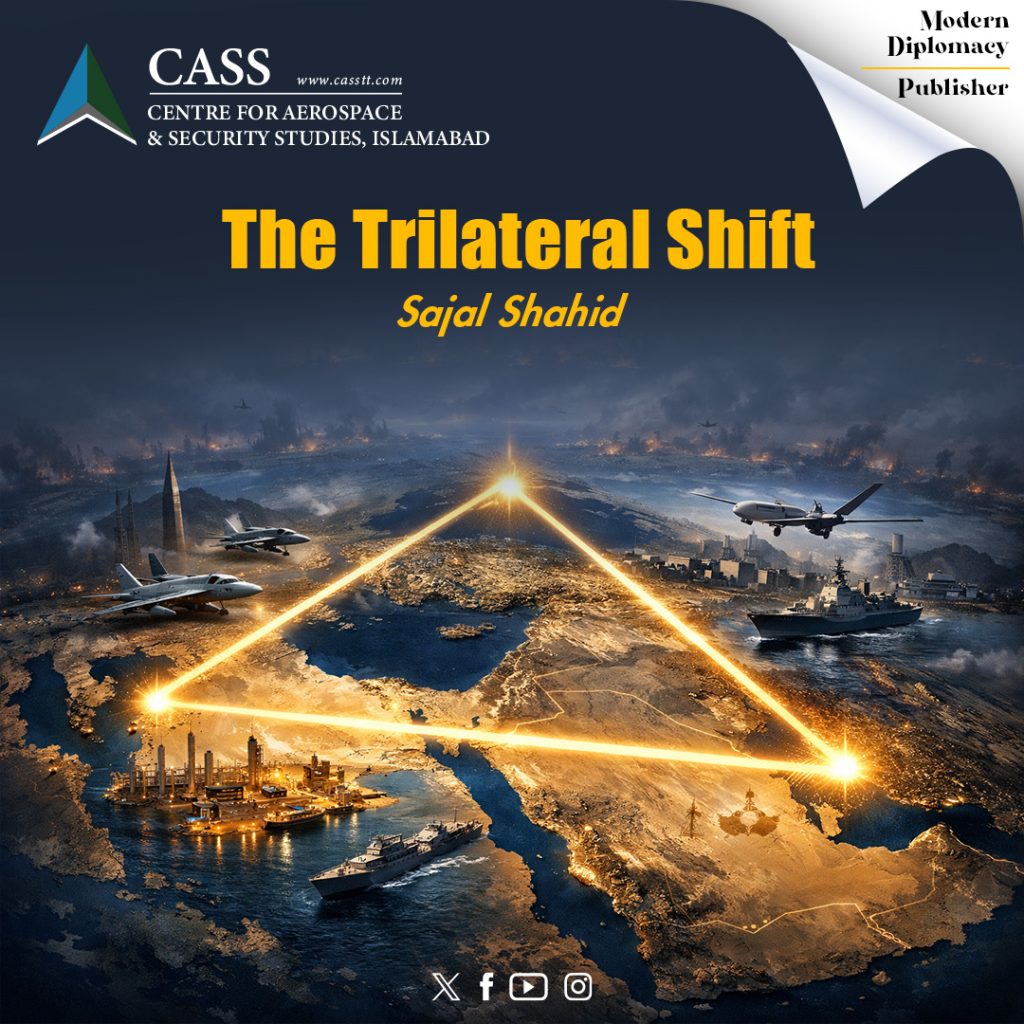
On 15 January 2026, the Pakistani defence production minister confirmed that an agreement for a new trilateral defence deal between Pakistan, Saudi Arabia, and Türkiye is in the pipeline, other than the Pakistan-Saudi bilateral deal announced last year.
