The global nuclear order that was created as part of the post-war system and selfishly guarded against the shockwaves of the Cold War is on the verge of becoming a casualty of war in Ukraine. According to scholar William Walker, the nuclear order largely established through (i) a managed system of deterrence where nuclear armed countries, led by the United States and Soviet Union/Russia achieved some sort of deterrence stability; and (b) a managed system of abstinence where many erstwhile aspirant states abstained from acquiring nuclear weapons under the grand bargain of the Non-Proliferation Treaty (NPT). Signs of the unravelling of the nuclear order were visible much before the Ukrainian war as various Cold War agreements notably the 1987 Intermediate-Range Nuclear Forces (INF) Treaty and the 1972 Anti-Ballistic Missile (ABM)Treaty, succumbed to the inflating ambitions of both the US and Russia. The war in Ukraine, however, has accelerated this faltering process with less likelihood of its reversal in the near future.
While the war in Ukraine will have a far-reaching impact on regional and global security, its impact on nuclear deterrence and nuclear abstinence is growing faster especially on the following three counts. The first and foremost challenge is increasing pressure on the sanctity of nuclear deterrence. Right at the beginning of the conflict, Vladimir Putin brandished nuclear threats by putting its nuclear forces on high alert. Russia’s nuclear brinkmanship achieved its immediate purpose to put off US/NATO’s direct involvement in the conflict. However, as a consequence, it has also led to the readiness of US nuclear forces to an ‘all-time high.’ Although Washington perceives that the chances of nuclear use by Russia are at around 1%, the risk of accidental use or inadvertent miscalculation in a heated and volatile environment cannot be ruled out.
The relative calm on the nuclear deterrence front is fast deteriorating especially in view of US/NATO’s continuous indirect involvement in the form of massive supplies of arms and ammunition to Ukraine on the one hand, and imposition of punitive economic sanctions on Russia, on the other. These developments are likely to strangle Russia’s conventional choices pushing it further towards its long-standing doctrine of ‘escalate to deescalate’ which essentially means that in case Russia faces a non-nuclear attack beyond its conventional defence capacity, Moscow will ‘de-escalate’ hostilities by launching a limited nuclear strike. Russia’s Foreign Minister Sergei Lavrov has already warned not to underestimate the nuclear dangers of this conflict. With reduced face-saving options for Russia, failure of nuclear deterrence remains a real possibility.
The second challenge is the survival of the nuclear arms control regime. Global arms control trends were already on a negative trajectory, especially after the US and Russia’s withdrawal from the INF and Anti-Ballistic Missile Treaty (ABM) treaties. However, despite this downward spiral, the mutual agreement to extend the Strategic Arms Reduction Treaty (New START) for another five years till 2026 just two days before its expiration along with the P5 joint statement earlier this year on ‘preventing nuclear war and avoiding arms races’ had provided some much needed positivity. However, the positive momentum took a negative turn after the war in Ukraine. New START – the last standing bilateral treaty between the US and Russia has come under massive strain as nuclear threats in Ukraine have intensified. Russia has vowed to strengthen its land, naval and air forces in the Baltic Sea and deploy hypersonic nuclear missiles, thereby, ending the possibility of any nuclear-free status for the Baltic region in response to Sweden and Finland’s expected NATO membership sooner than later. Belarus has already revised its neutrality agreed under the Budapest Memorandum on Security Assurances and has introduced a constitutional amendment for hosting Russian nuclear weapons on its soil. The arms control challenges are not just limited to Europe. Another indirect but significant victim of the war in Ukraine is the joint US-Russia front on the reinstatement of the 2015 Iran nuclear deal. The Vienna talks faced a serious impasse when Russia cited Western sanctions as a ‘stumbling block’ for further progress on the JCPOA. These developments have caused irreversible damage to the trust between the US and Russia in any important arms control debates.
The third challenge, albeit a remote one at the moment, is the risk to the system of nuclear abstinence agreed under the NPT framework. The war in Ukraine has once again brought into debate the centrality of nuclear weapons in deterring war by a stronger adversary. At the time of Soviet disintegration, Ukraine was hosting about 2000 Soviet nuclear weapons and returned them to Russia as part of the Budapest Memorandum that guaranteed Ukrainian security against any external threat. The US/NATO’s collective inability to stop this war may raise questions in the minds of leaders and the public of other countries under extended deterrence, especially Japan and South Korea. Although public opinion is largely against acquiring nuclear weapons in Japan, a conversation questioning Tokyo’s ‘pacifist constitution’ had started even before the war in Ukraine. The endgame in Ukraine is likely to have a far-reaching impact on the future of the nuclear abstinence debate in Japan and other countries.
The global nuclear order was facing pressure as the growing polarisation between disarmament and deterrence proponents had created a tense environment, especially since the launch of the Humanitarian Initiative and subsequent developments, notably the Treaty on the Prohibition of Nuclear Weapons (TPNW) and Creating an Environment for Nuclear Disarmament (CEND) initiative etc. However, the disruption within the existing nuclear order as a result of the war in Ukraine has created new challenges that require urgent attention. This divide is likely to increase in the coming years. Therefore, it is time for a reset with the aim of restoring the global nuclear order. In that regard, it is important to start thinking about ways and means to consolidate the existing gains and accommodate new realities coming to the surface as a result of this war.
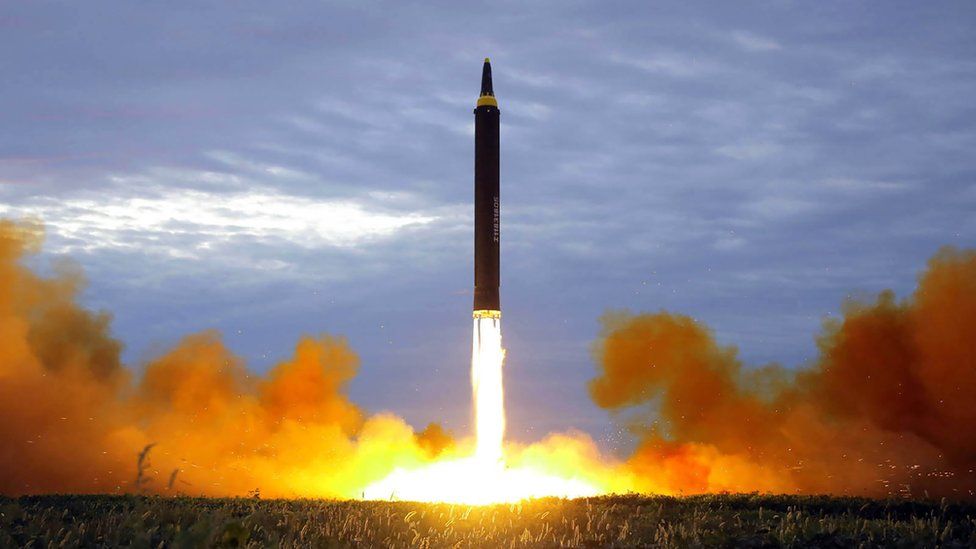
Image Source: BBC