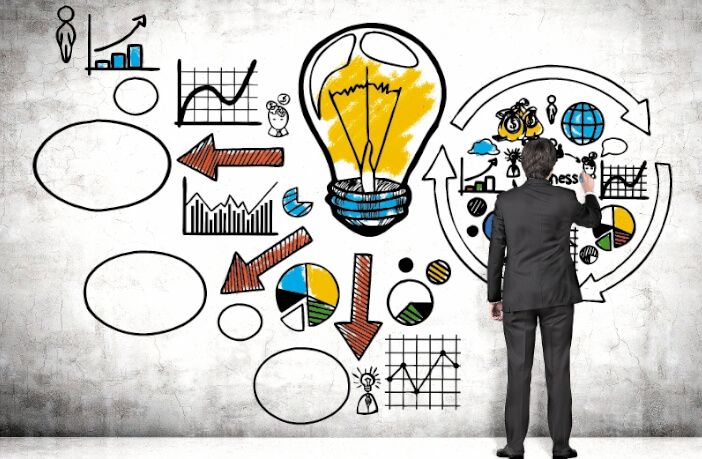
The world is proceeding towards digitalisation at an unbelievably fast pace. Emphasising its importance, Marc Andreessen, an American entrepreneur wrote , ‘Software is eating the world’. Indeed, digitalisation has revolutionised every other field of life. Amongst the many areas, where its impact is visible is entrepreneurship.
Digital technologies are rapidly facilitating both ‘Small and Medium Enterprises’ (SMEs) and ‘Innovation-Driven Enterprises (IDEs).’ SMEs rely more on traditional business approaches and their scope is limited to local markets. The potential net revenues of such businesses are relatively easier to forecast and are less risky. Digital applications (or apps) have especially enabled SMEs to structure and manage their businesses and services. Furthermore, social media has also aided SMEs to expand their work by promoting it on various platforms. In contrast, IDEs aim for a business style guided by the pursuit of products or services for regional and global markets. This does not necessarily refer to giant technological discoveries rather such ventures offer new approaches for various economic activities ranging from provision of services to development of innovative products but the innovation itself is technology driven. Such innovation demands consistent investment of time, resources, and effort. Given that global markets are the target, the risk involved is also higher than SMEs. However, exponential growth is more likely in this case.
While both SMEs and IDEs contribute to a country’s economy, it is the latter which bring about transformative impact due to wider scope, extended reach, and high growth prospects. There is more chance of IDE start-ups turning into ‘unicorns’ (companies valued at USD one billion) as opposed to SME businesses or services.
When it comes to Pakistan, the number of such enterprises has soared recently, particularly SMEs. According to a World Bank report, Pakistan improved its position vis-à-vis ease of doing business from 136 to 108 in 2021 which is reflective of good progress. In 2019, there were approximately 3.2 million SMEs in the country. The figure reached around 5 million by late 2021. The growing number SMEs is a positive development and must be encouraged.
On the other hand, it is equally important to pay attention to empowering IDEs – which are fewer in the country – so that their (rather Pakistani) products and services can reach global markets. In the first three quarters of 2021, Pakistani start-ups raised USD 244 million, which is more than the amount of previous six years combined. Start-ups such as Bazaar, Airlift and Maqsad have emerged as multimillion dollar enterprises. This shows that there are immense growth opportunities for IDEs, especially in sectors like health, agriculture, climate change, green infrastructure, and education, amongst others.
On a positive side, the Government of Pakistan (GoP) has been trying to cultivate a business environment that supports IDEs. From providing tax relief of three years to regulation of local Venture Capital (VC) firms to zero tax on IT freelancers, measures have been taken to reduce existing barriers. There is a vast potential for the IT industry in Pakistan. Last year, Pakistan’s IT sector grew by 47% and is expected to reach 75% in 2022. In one year, IT exports rose from USD two billion to USD 3.75 billion. These are expected to rise to USD 7.5 billion by end of this year and nine billion by next year. The government is expecting that IT exports could reach USD 50 billion over the next few years.
Recently, the Prime Minister inaugurated an E-commerce Portal to encourage entrepreneurs and freelancers. Speaking at the occasion, he urged youth to avail the incentives being offered by the government since IT was being promoted on ‘emergency’ footing. The recent visit of Microsoft co-founder Bill Gates was put in motion to get him involved in Pakistan’s IT sector. The government is also working to shift 50,000 SMEs to digital platforms.
Pakistan is the fastest growing freelancing market in the region and fourth largest in the world which shows its immense potential. With a young generation entering the workforce, it is imperative to foster an environment where technology-driven entrepreneurship is promoted. Hassle-free government policies, reinforced by funding from the private sector, can play an effective role in supporting young entrepreneurs. Pakistani conglomerates should also invest in tech start-ups to help them grow and provide employment platforms. However, awareness must be created in young people to explore IT related fields. This trend can become more prevalent if universities and schools nurture an environment where the importance of both entrepreneurship in general and IDEs, in particular, is cultivated in the younger generation.
Shaza Arif is a Researcher at the Centre for Aerospace & Security Studies (CASS), Islamabad, Pakistan. The article was first published in Pakistan Today. She can be reached at [email protected]
Image Source: Lorenzo, O.2019, “Entrepreneurship, Innovation and Technology: A Guide to Core Models & Tools,” CFE, January 4, https://oswaldolorenzo.com/en/general-en/entrepreneurship-innovation-and-technology-a-guide-to-core-models-tools-2/